
Basement Storage Ideas That Survive a Damp Basement

Basement Storage Ideas That Survive a Damp Basement
What is the best way to store things in a basement? Get everything off the floor and into sealed containers on shelving or in cabinets — this single rule prevents most basement storage failures, because floor-level moisture, occasional water and pests all attack from below. Use plastic bins with gasketed lids rather than cardboard, which wicks moisture and collapses. Keep at least a few inches of clearance beneath the lowest shelf, label every container on the end that faces out, and store nothing you cannot afford to lose to humidity — photographs, documents and anything electronic belong upstairs.
  • Off the floor is the whole game. Floor-level damp, the occasional inch of water and pests all come from below. Everything on shelves, feet or wall mounts.
  • Plastic bins, not cardboard. Cardboard wicks moisture up from a concrete slab, softens, and collapses under whatever is stacked on it.
  • Concrete floors sweat even when they look dry — a slab passes moisture vapour continuously, which is why a box that has sat on one for a year is damp at the bottom.
  • Shelving for bulk, cabinets for the things you actually want to find. Open shelving is cheaper per foot; closed cabinets keep dust off and look finished in a used basement.
  • Never store down there: photographs and documents, anything upholstered, paint you plan to use again, and electronics.
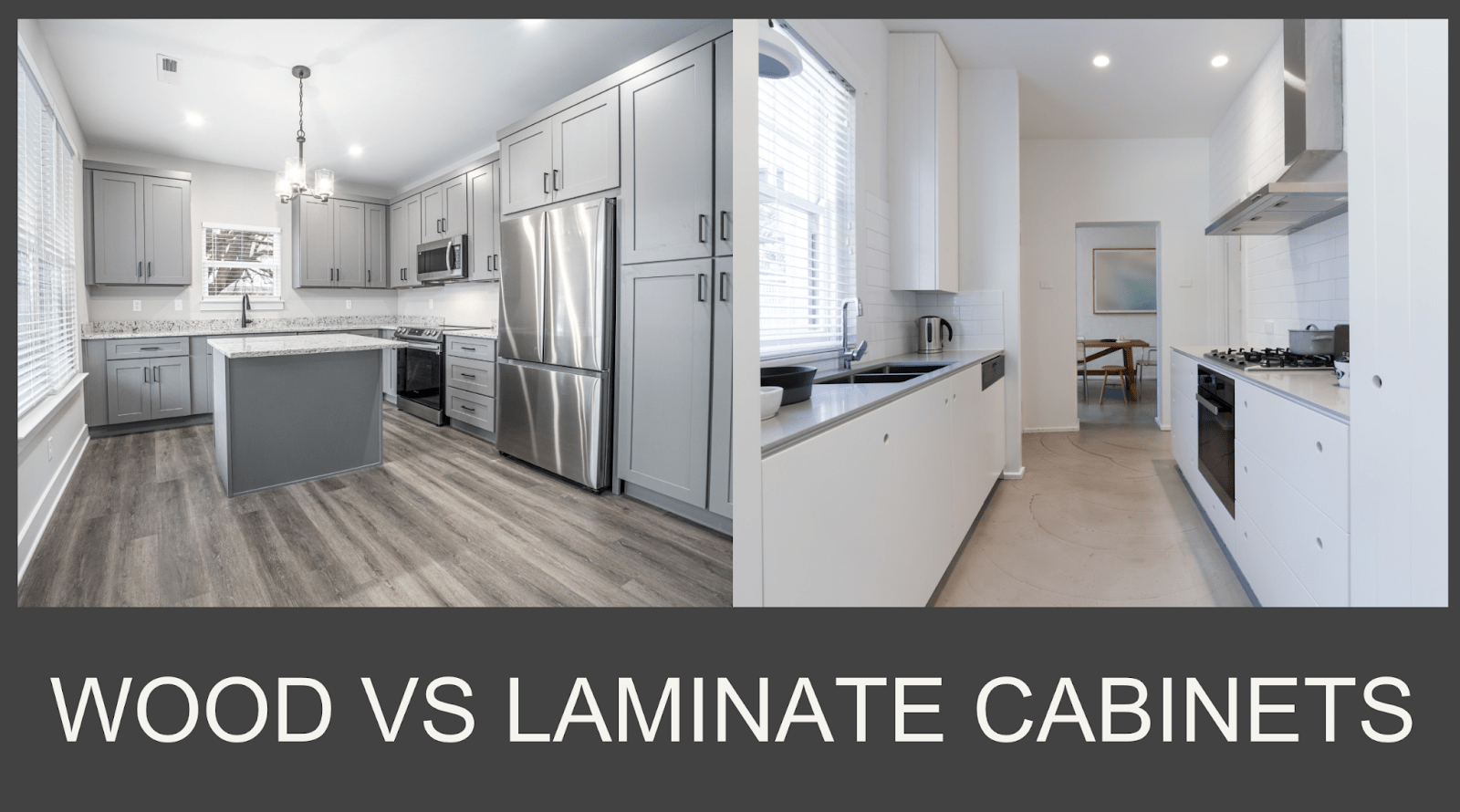
  • If the basement is finished, use real cabinetry. Kitchen-grade cabinets in a basement are the same money as garage cabinets and look like part of the house.

The One Rule: Nothing Sits on the Floor

Every recurring basement storage failure — mould, musty smells, collapsed boxes, ruined contents — traces back to something resting on the concrete. Get everything at least a few inches off the floor and most of the problem disappears.

The reason is that a concrete slab is not a moisture barrier. Concrete is porous, and ground moisture moves through it continuously as vapour even in a basement that has never flooded and never feels wet to the touch. A cardboard box sitting on that slab is in contact with a slow, permanent supply of moisture on its underside.

Add the occasional real event — a heavy storm, a water heater that lets go, a washing-machine hose — and floor-level storage is where the losses happen. An inch of water across a basement floor destroys everything at floor level and touches nothing on a shelf.

So the foundational decisions are all about height:

  • Lowest shelf at least 4–6 inches up. Enough to clear vapour, casual damp and a minor spill.
  • Anything irreplaceable higher still. If it cannot be replaced, it should not be within reach of a flood, and ideally should not be in the basement at all.
  • Freestanding units on feet, not on their base panel. A cabinet or shelf standing directly on the slab wicks moisture into its own bottom panel.
  • Wall-mounted where possible. Shelves, racks and pegboards on the wall take the floor out of the equation entirely.

Containers: Plastic With Gaskets, Never Cardboard

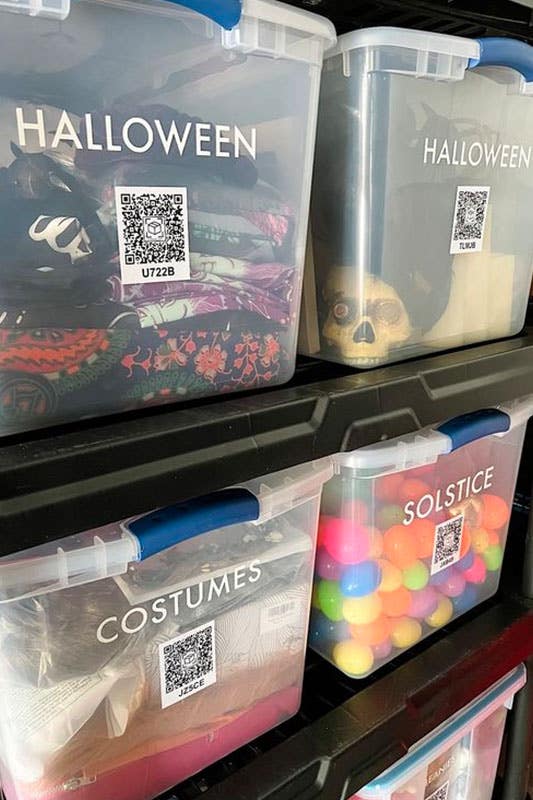
Labelled plastic storage bins stacked on basement shelving

Use rigid plastic bins with lids that seal against a gasket. Cardboard absorbs moisture from the air, loses its structure, and is the preferred nesting material of every pest that gets into a basement.

What separates a bin that works from one that does not:

  • A gasketed, latching lid. A lid that just rests on top keeps dust out and humidity in. A gasket and latches make the bin genuinely closed.
  • Rigid walls that stack without bowing. Flexible bins deform under load and the stack becomes unstable, which is how basements end up with things stored at floor level again.
  • Clear or labelled on the short end. Bins are stored end-out on shelves. A label on the long side faces a wall.
  • Consistent sizes. One or two sizes across the whole basement means shelves can be set to a known height and space is not wasted.

Two exceptions worth naming. Cardboard is fine for something you will move out within weeks. And genuinely archival storage — photographs, documents — should not be in the basement at all, in any container.

Shelving: The Cheapest Storage Per Foot

Wall-mounted floating shelves in a basement storage area

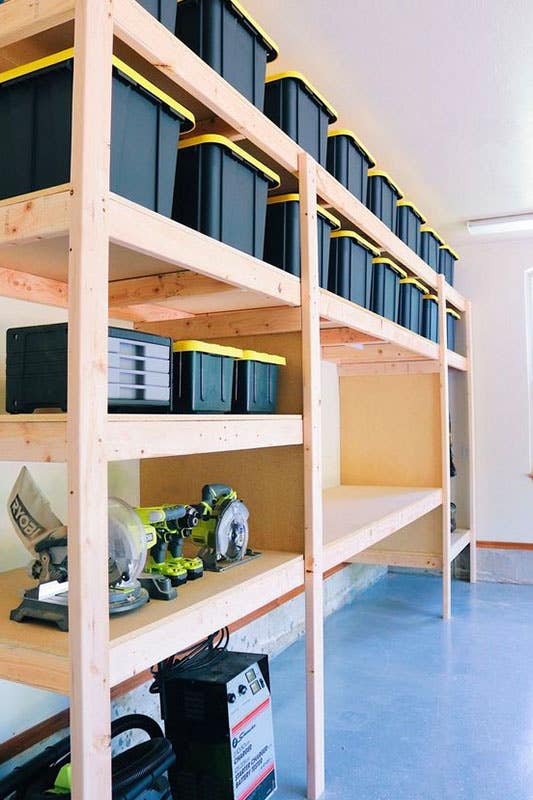
Open shelving stores the most for the least money and is the right answer for bulk items in bins. Depth matters more than people expect: 16–18 inches suits most bins, and anything deeper becomes a place things get lost at the back.

Freestanding steel or resin racks

The default basement solution. They are inexpensive, they assemble without tools, and adjustable shelves handle changing bin sizes. Check two things: that the unit stands on feet rather than flat on the slab, and that the load rating is per shelf rather than for the whole unit — the numbers on the box are often the latter.

Wall-mounted shelving

Better where the floor needs to stay clear or the basement floods. It must be fixed into studs or into masonry with the right anchors — a basement wall is often concrete or block, and a drywall anchor in a poured wall holds nothing.

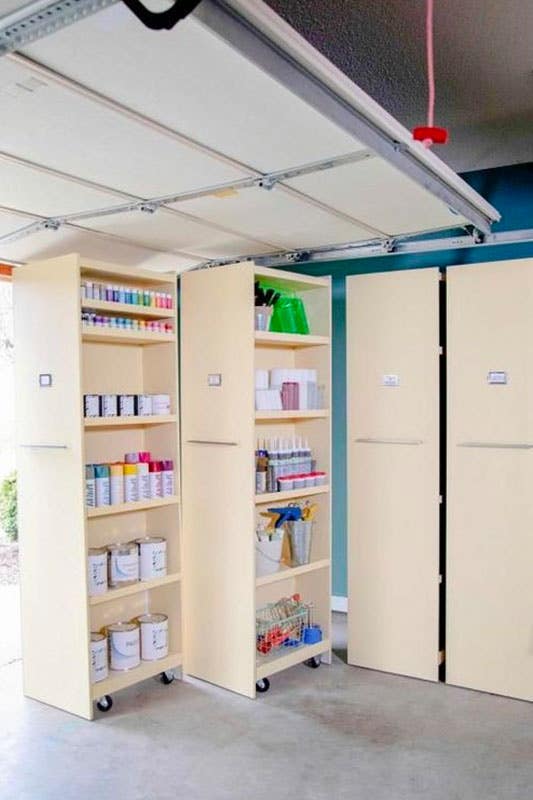
Sliding storage shelves that pull out for access in a narrow basement space

Under-stair shelving

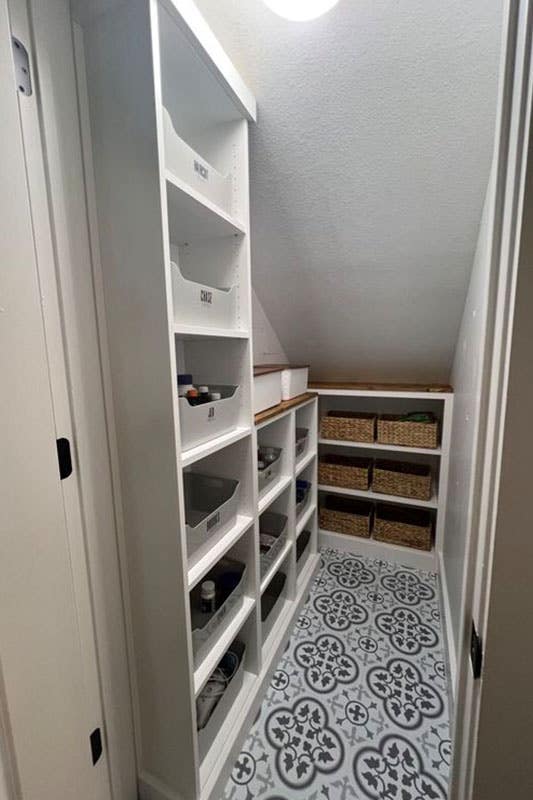
Under-stair basement storage with graduated shelf heights

The space under basement stairs is usually the most wasted volume in the house. It suits graduated shelving — tall at the high end, shallow at the low end — or pull-out units on castors that bring the back of the space to you. If you build it in, keep any part touching the slab up on a plinth or feet.

Overhead racks

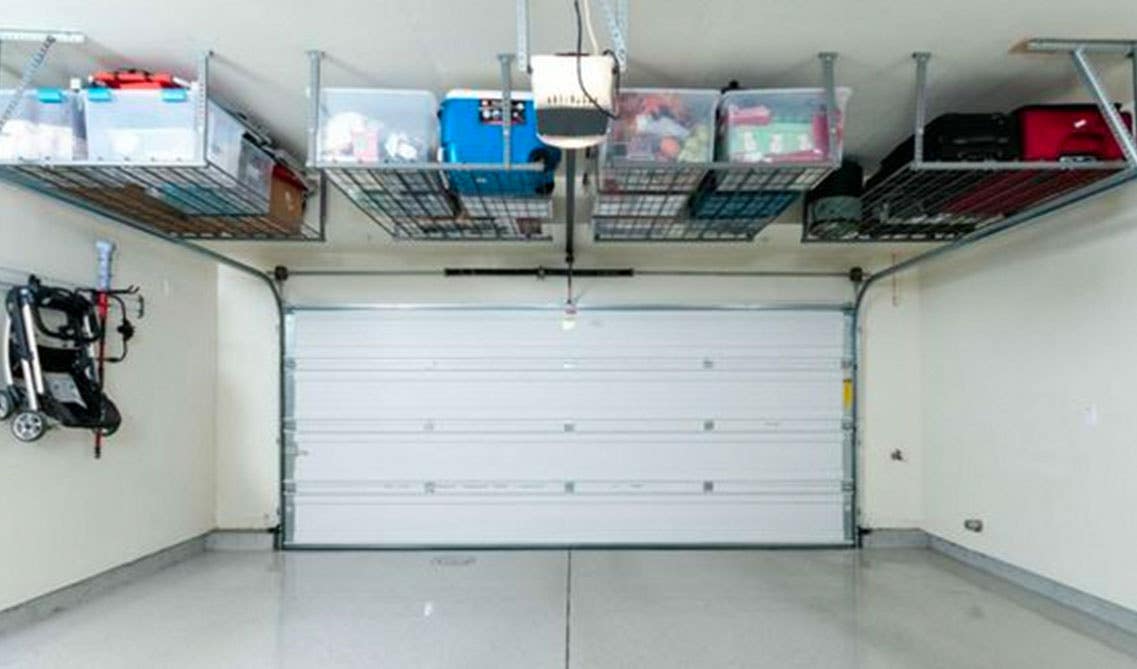
Ceiling-mounted overhead storage racks holding bins above head height

Ceiling-mounted racks are the safest place in a basement from a water perspective and the right home for seasonal items you touch twice a year. Two cautions: they must be fixed into joists, not just into the ceiling surface; and nothing heavy or frequently needed belongs overhead, because retrieving it means a ladder.

Cabinets: For the Things You Want to Find Again

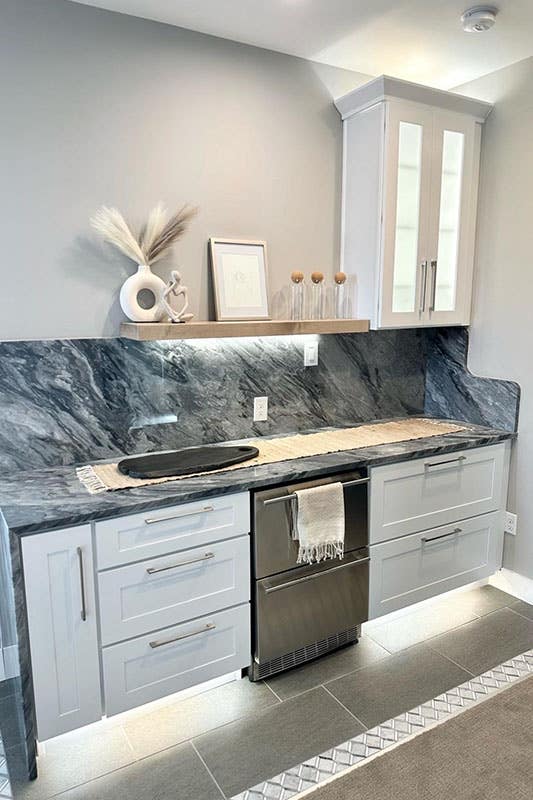
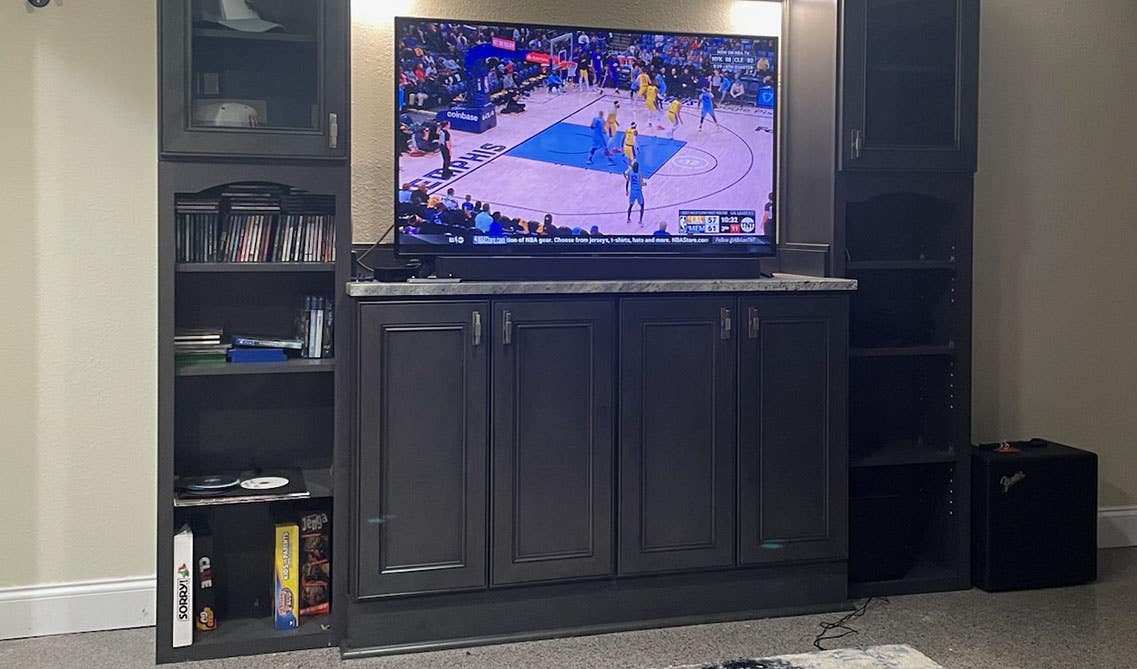
Basement cabinets providing closed storage along a finished basement wall

Closed cabinets cost more per foot than shelving and are worth it for anything you use regularly, anything that suffers from dust, and any basement that is finished or partly finished.

The practical case for cabinets over open shelving in a basement:

  • Dust. Basements are dusty — concrete, HVAC, laundry lint. Open shelving means everything on it needs wiping before use. A door solves that permanently.
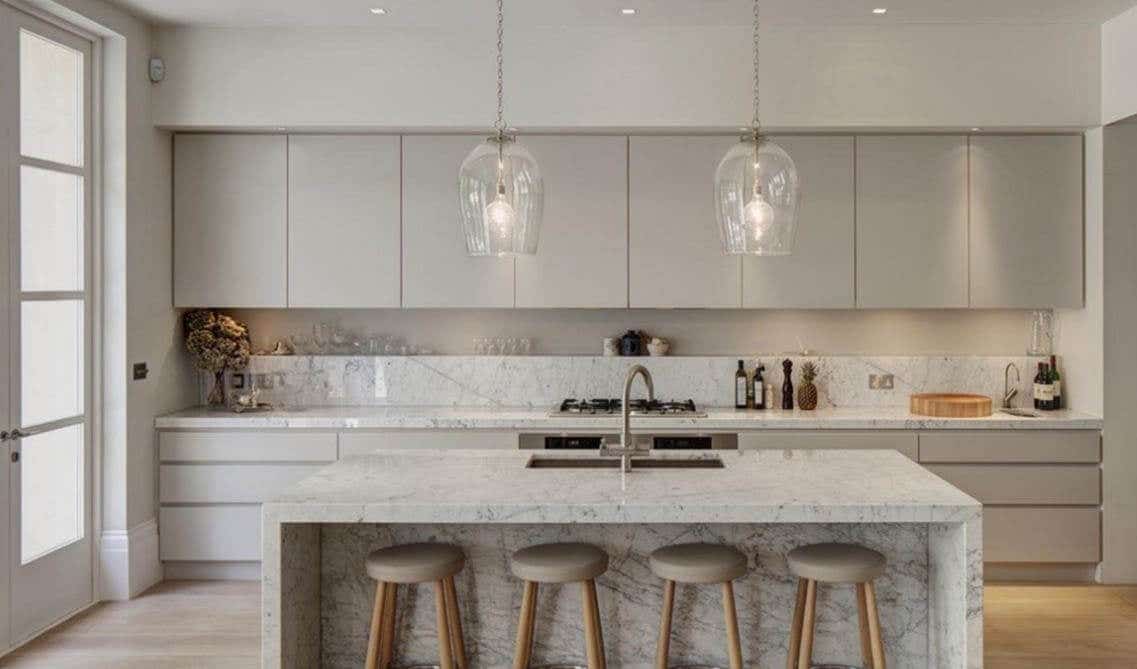
  • It looks finished. A wall of mismatched bins reads as storage. A run of cabinets reads as a room. In a basement that doubles as a laundry, workshop, playroom or bar, that difference is most of what makes the space usable.
  • Drawers for small things. Shelving is bad at small items — they migrate to the back and disappear. A drawer keeps hardware, tools and craft supplies findable.
  • Worktop. A run of base cabinets gives you a work surface at the same time, which is what turns a basement into a laundry room or a workshop rather than a place things go.

Use real cabinetry, not utility cabinets

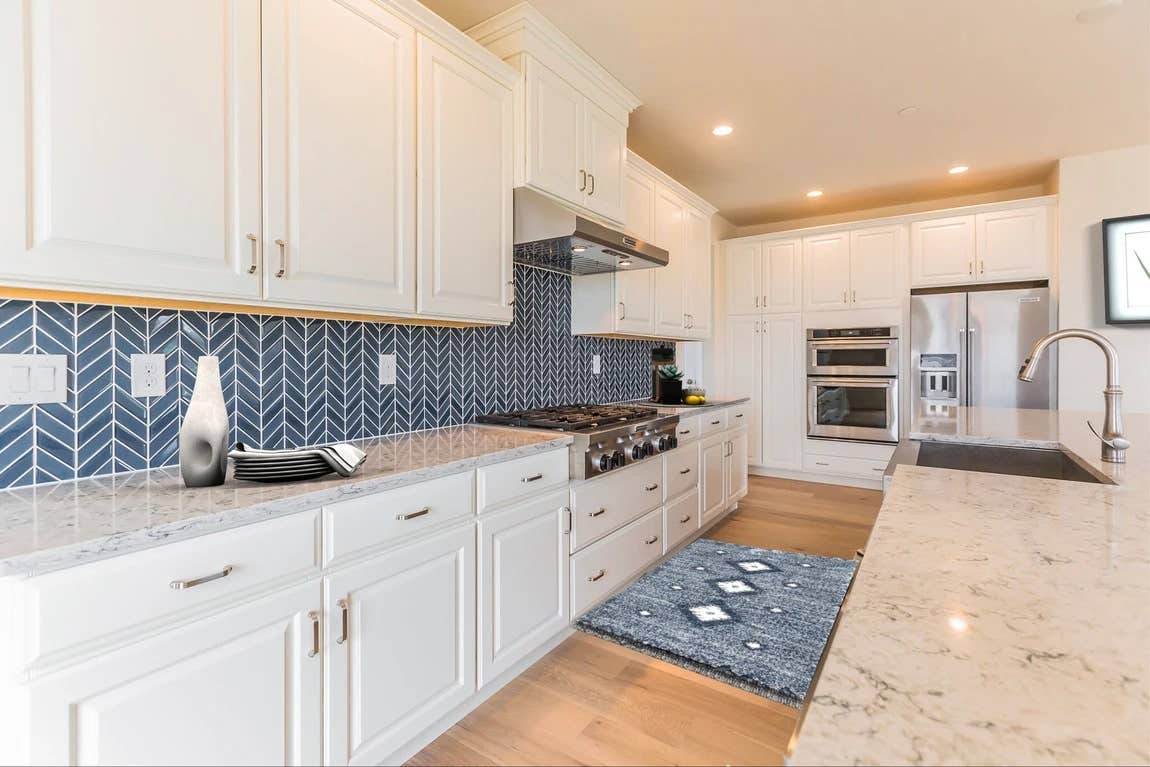
This is where most basements are under-served. The reflex is to buy plastic or thin steel utility cabinets, which are fine for a garage and read as temporary indoors. Kitchen-grade cabinets are often comparable money and are built to a completely different standard — plywood boxes, dovetailed drawers, soft-close hardware, and a finish that suits a finished room.

If the basement is dry and finished, ready-to-assemble kitchen cabinets are a genuinely good basement solution: they ship flat, which matters when the destination is down a narrow staircase with a turn in it, and they assemble in the room. That last point is not a small one — a pre-assembled 36-inch cabinet does not always make it round a basement stair, and a flat pack always does.

Set them on a plinth or on levelling legs rather than directly on the slab, and keep the run away from any wall with a known damp problem. For a laundry-focused basement corner, laundry room cabinet ideas covers the layout in more detail; for organising what goes inside them, see pull-out cabinet organizers, or which organizer fits which cabinet for the full range by cabinet type. If the basement stair doubles as the household drop zone, the same three-cabinet arrangement works there — see mudroom cabinets.

Zoning: Give the Basement a Plan

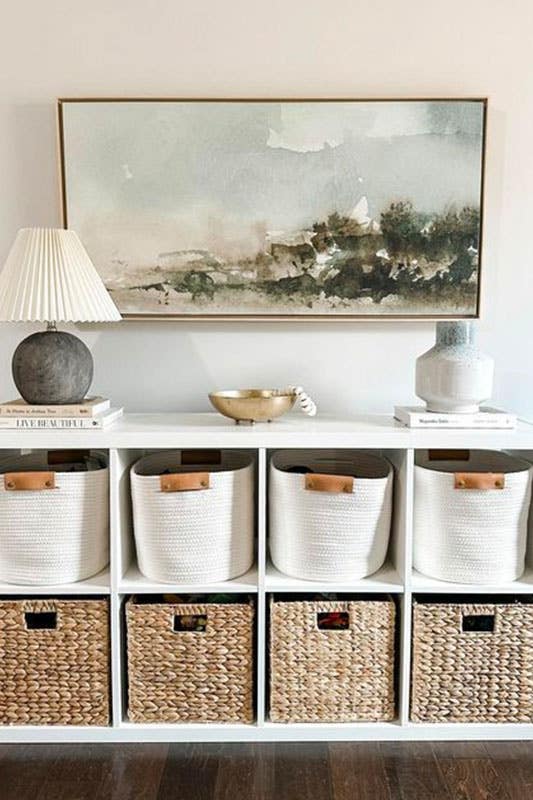
Cubby storage units organising a basement area into zones

Divide the basement into zones by how often you need things, and put frequency in charge of height and distance. Rarely-used items go high and far; frequently-used items go at eye level near the stairs.

Most basements fail organisationally rather than physically — there is enough shelving, but nothing has an address, so new items land wherever there is a gap. Zoning fixes that:

  • Near the stairs, eye level: what you fetch monthly or more. Tools, cleaning supplies, pantry overflow.
  • Mid-basement, waist to shoulder: seasonal — decorations, camping gear, off-season clothing in sealed bins.
  • Overhead and far corners: annual or archival. Luggage, spare furniture.
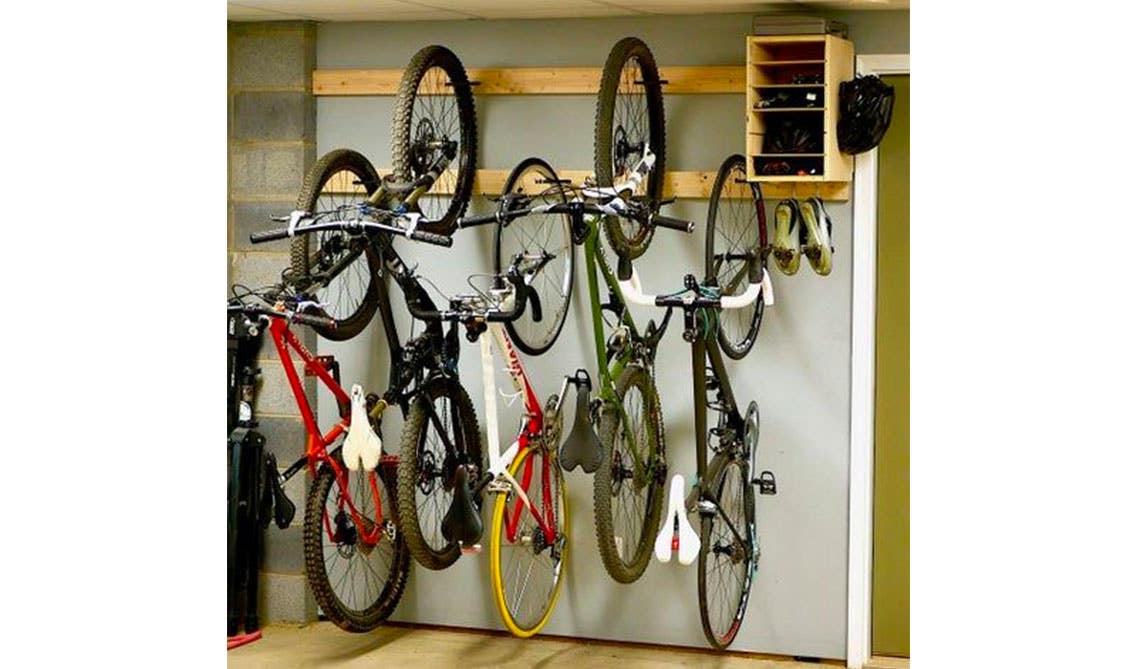
  • Wall-mounted vertical: long awkward items — bikes, ladders, lumber, garden tools. These waste enormous floor space when stored flat.
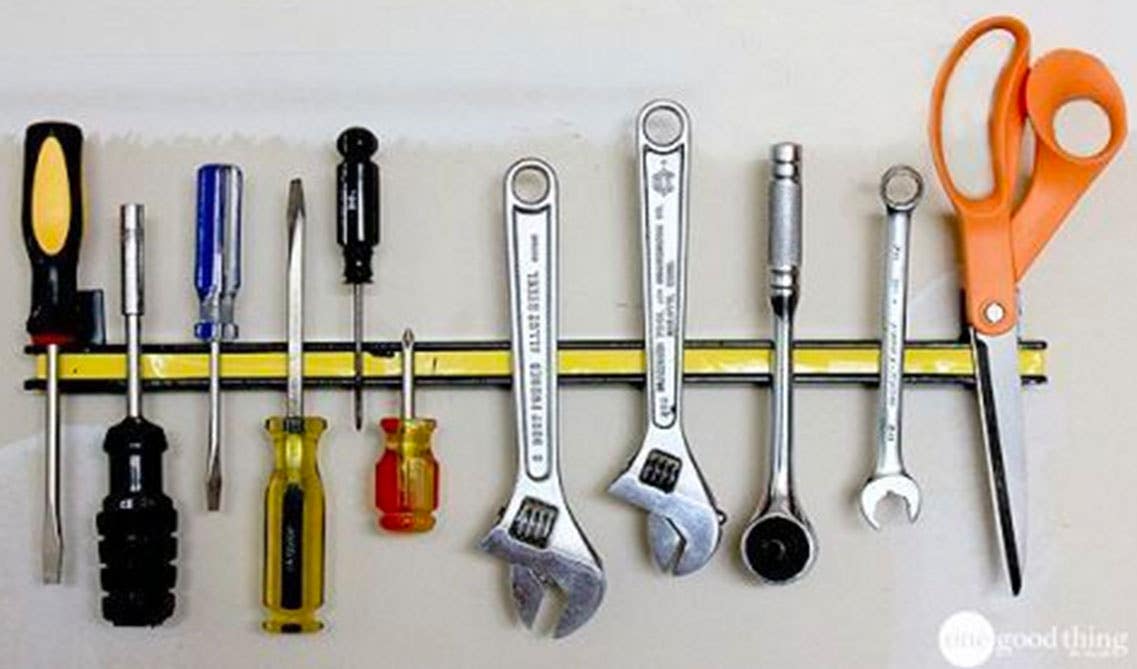
Wall-mounted pegboard organising hand tools in a basement workshop area

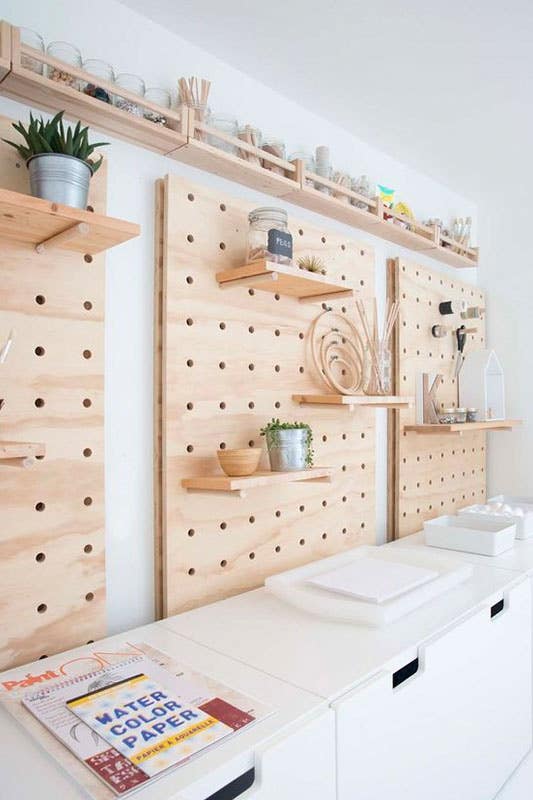
Pegboard deserves a specific mention for the workshop zone. It puts hand tools on a wall in a visible layout, which means they get returned rather than accumulating on a bench — the difference between a workshop that stays usable and one that has to be excavated before each project.

What Not to Store in a Basement

Some things should not go in a basement regardless of how good the storage is: photographs and documents, upholstered furniture, paint you intend to use again, and anything electronic.

  • Photographs, negatives and documents. Humidity causes prints to stick together and paper to foxand cockle. This damage is not reversible and it happens slowly enough that you find out years later.
  • Upholstered furniture and mattresses. Fabric and foam absorb humidity and hold it. Even without visible mould they acquire a smell that does not come out.
  • Paint. A basement that drops near freezing can ruin latex paint, and repeated temperature swings shorten its life even above freezing. Store paint somewhere temperature-stable.
  • Electronics. Condensation forms on cold circuit boards when warm air reaches them, and corrosion follows.
  • Anything you would be upset to lose. The honest test. If a burst pipe would be a disaster rather than an inconvenience, it does not belong down there.

Fix the moisture before you buy the storage

No storage system compensates for a wet basement. If there is standing water after rain, efflorescence on the walls, or a persistent musty smell, that is a drainage or waterproofing problem, and it needs solving before anything is stored. A dehumidifier helps with ambient humidity and does nothing about water coming through a wall.

Making It Look Like Part of the House

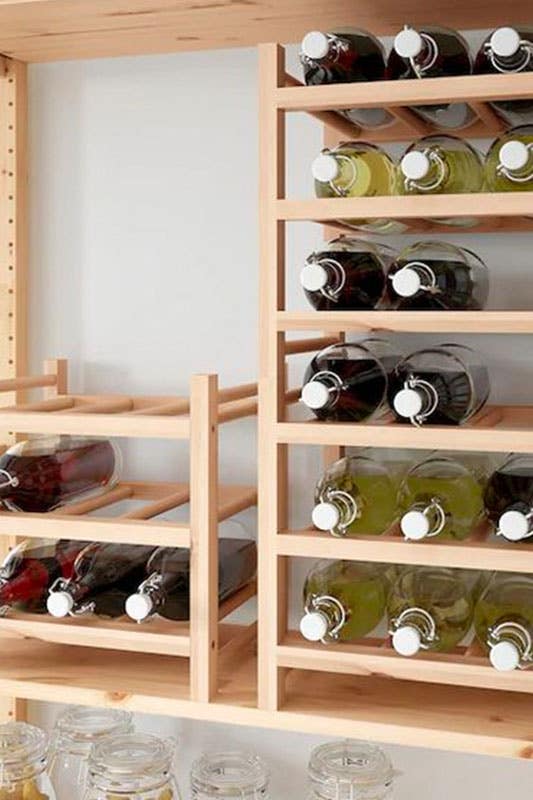
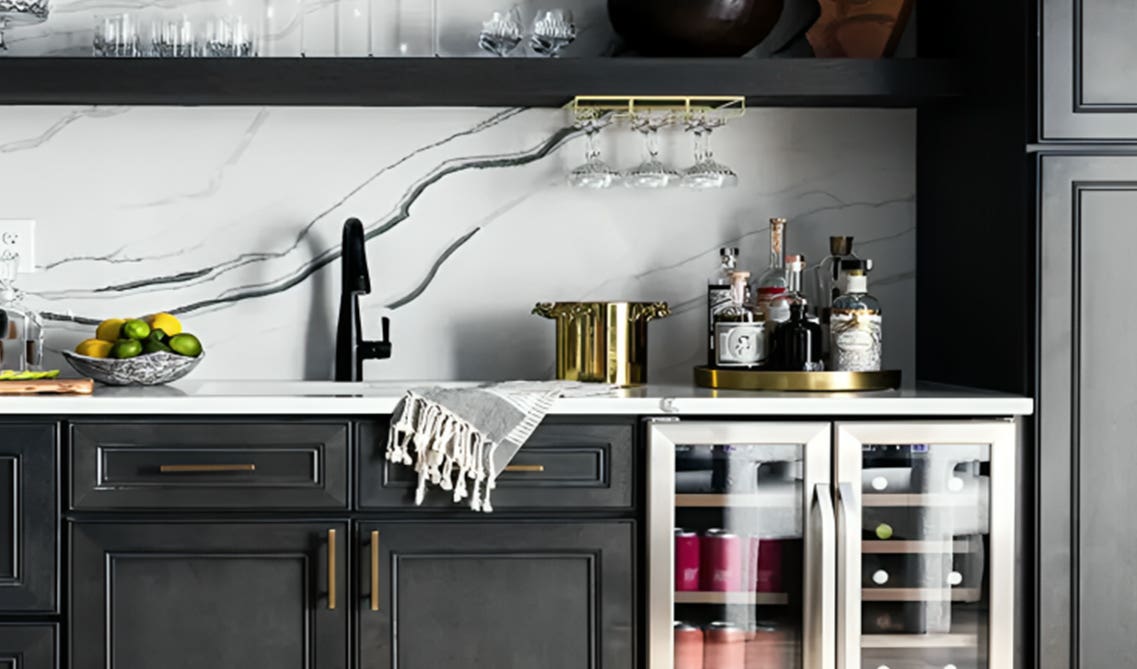
Wine rack storage built into a finished basement cabinet run

In a finished basement, the difference between storage and a room is whether the storage matches the rest of the house. Consistent cabinet fronts, a continuous worktop and lighting at the right height do most of that work.

Three things that change how a basement reads:

  • One cabinet finish, not several. Mixed units read as accumulated; a single finish reads as designed. Lighter finishes matter more here than upstairs because basements have little natural light — the white and grey ranges suit low-light rooms best.
  • Task lighting under wall cabinets. Overhead basement lighting is usually a single fixture casting shadows exactly where you are working.
  • Close the storage that is not decorative. Bins behind doors; wine, glassware and books on open shelving. Open storage should hold things worth looking at.

If the basement includes a bar or entertaining area, basement bar design ideas covers that end of it, and free door samples let you check a finish under the basement's own lighting — which is the lighting that will actually be judging it.

Frequently Asked Questions

1. What is the best way to store items in my basement?
Off the floor, in sealed plastic bins, on shelving or in cabinets with at least four to six inches of clearance underneath. Floor-level moisture, occasional water and pests all attack from below, so height is the single most effective decision. Label bins on the end that faces out.
2. What not to store in the basement?
Photographs, negatives and documents; upholstered furniture and mattresses; paint you intend to use again; and electronics. Humidity damages all of them slowly enough that you discover it years later. The general test: if losing it to a burst pipe would be a disaster rather than an inconvenience, it belongs upstairs.
3. What is the best way to organize my basement?
Zone it by how often you need things. Frequently-used items go at eye level near the stairs; seasonal items go mid-basement at waist-to-shoulder height; annual and archival items go overhead or in far corners; long awkward items like bikes and ladders go on the walls. Most basements have enough shelving and no addressing system.
4. What are some good shelving options for a basement?
Freestanding steel or resin racks are the cheapest per foot and handle bins well — check they stand on feet rather than flat on the slab. Wall-mounted shelving keeps the floor clear but must be anchored into studs or masonry properly. Overhead ceiling racks fixed into joists are the safest place from a water perspective.
5. What are some good ideas for storing things in my basement on a budget?
Freestanding steel racks and consistent plastic bins give the most storage per dollar. Pegboard is inexpensive and turns a bare wall into tool storage. Under-stair space is free volume most houses waste entirely. Spend on gasketed bins rather than on shelving — the containers are what protect the contents.
6. What are some DIY storage shelf ideas?
Under-stair graduated shelving, wall-mounted brackets and boards fixed into studs or masonry anchors, and simple lumber-and-plywood racks on a plinth so nothing touches the slab. Whatever you build, keep the lowest shelf several inches off the floor and use feet rather than a base panel sitting on concrete.
7. Are cardboard boxes OK for basement storage?
No, for anything long-term. Cardboard wicks moisture out of the air and up from a concrete slab, loses its structure, and is the preferred nesting material for pests. Rigid plastic bins with gasketed, latching lids are the correct choice. Cardboard is only acceptable for something moving out within weeks.
8. Can you put kitchen cabinets in a basement?
Yes, and in a dry finished basement they are usually the better choice over utility cabinets — comparable money, far better construction, and they look like part of the house. Ready-to-assemble cabinets have a practical advantage here: they ship flat and assemble in the room, which matters when the route is a narrow basement staircase with a turn.
9. How high off the floor should basement shelving be?
At least four to six inches for the lowest shelf. That clears the moisture vapour that passes continuously through a concrete slab, ordinary damp, and a minor spill. Anything irreplaceable should be considerably higher — or, more honestly, should not be in the basement at all.
10. Why do things get damp in a basement even without a leak?
Concrete is porous, and ground moisture moves through a slab or wall as vapour continuously — even in a basement that has never flooded and feels dry to the touch. That is why a box that has sat on the floor for a year is damp underneath. A dehumidifier reduces ambient humidity but does not stop vapour coming through the concrete.
11. What can I use instead of a shelf?
Wall-mounted pegboard for tools, ceiling-mounted overhead racks fixed into joists for seasonal items, wall hooks and vertical racks for bikes and ladders, and stacking bins on a low plinth. Vertical wall storage is the most under-used space in most basements and takes bulky awkward items off the floor entirely.
12. Should I fix basement moisture before adding storage?
Yes. Standing water after rain, white efflorescence on the walls or a persistent musty smell are drainage or waterproofing problems, and no storage system compensates for them. A dehumidifier manages ambient humidity; it does nothing about water coming through a wall.

Recent Blogs

Stock vs. Semi-Custom vs. Custom Cabinets: The Real Difference
Best Semi-Custom Kitchen Cabinet Brands (2026)
Oak Kitchen Cabinets: Red vs. White Oak, and Which to Choose
Free 3D Kitchen Design
2 Free Samples