Eco-Friendly Kitchen Cabinets: Which Claims Are Actually Checkable

Eco-Friendly Kitchen Cabinets: Which Claims Are Actually Checkable
What makes kitchen cabinets eco-friendly?

Three things are genuinely checkable, and the rest is adjectives. First, formaldehyde emissions from the composite wood inside the cabinet — though in the United States meeting the EPA's TSCA Title VI limits is a legal requirement, so it is a floor rather than a distinction. Second, where the wood came from, evidenced by a chain-of-custody certification such as FSC, which tracks timber from a certified forest through every handler. Third, how the factory operates, evidenced by a manufacturing programme such as the Kitchen Cabinet Manufacturers Association's Environmental Stewardship Program. Ask which of the three a supplier holds and ask for the certificate. "Eco-friendly" on its own means nothing.

  • "Sustainable" and "eco-friendly" are not standards. Neither term has a definition, an issuing body or an audit behind it.
  • Low formaldehyde is the law, not a feature. Composite wood sold in the US must meet EPA TSCA Title VI limits — advertising compliance is advertising legality.
  • Chain of custody is the real timber claim. FSC and similar schemes track wood from a certified forest through every handler, with a certificate number you can look up.
  • Manufacturing programmes cover the factory, not the wood. KCMA's Environmental Stewardship Program audits the plant — different claim, also checkable.
  • The largest environmental variable is how long the kitchen lasts. A cabinet replaced at ten years has roughly double the lifetime footprint of one replaced at twenty, whatever it is made of.
  • Lily Ann does not publish any of these certifications, and this page does not claim them. Ask us, and ask every supplier, for the certificate rather than the adjective.

The Problem With the Word

"Sustainable" and "eco-friendly" have no definition in cabinetry. There is no issuing body, no audit and no threshold, so any manufacturer can use either word about any product without saying anything false. That is why almost every cabinet website has a sustainability page and almost none of them contains a checkable fact.

The useful move is to stop evaluating the adjective and start asking which of three specific, verifiable things a supplier actually holds. Each one is a different claim about a different part of the product, and each comes with a document.

ClaimWhat it coversEvidence to ask for
EmissionsFormaldehyde released by the composite wood inside the cabinetTSCA Title VI / CARB Phase 2 compliance documentation
SourcingWhere the timber came from and whether it was legally and responsibly harvestedA chain-of-custody certificate number, e.g. FSC
ManufacturingHow the factory operates — waste, energy, recycling, air qualityA programme certification, e.g. KCMA's Environmental Stewardship Program

Those three do not overlap. A cabinet can be made from certified timber in a factory with no environmental programme, or in an audited factory from uncertified timber. Asking about "sustainability" gets you a paragraph; asking which of the three gets you a document or an honest no.

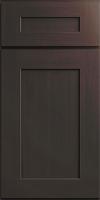
Craftsman Natural Shaker kitchen cabinets with visible wood grain

Formaldehyde: Why It Is a Floor, Not a Feature

Formaldehyde is used in the resins that bind plywood, MDF and particleboard, and it off-gasses into the room. It is also the most heavily regulated aspect of cabinet manufacture in the United States: under the EPA's TSCA Title VI rule, composite wood products sold in the US must meet defined emission limits, harmonised with California's CARB Phase 2 standard. Compliance is therefore a legal requirement, not an environmental achievement.

This matters because "low formaldehyde" and "CARB2 compliant" are widely used as green selling points, and they are really statements that the product may lawfully be sold. It is worth knowing that so you can tell the difference between a supplier meeting the standard and a supplier exceeding it.

Where the genuine distinctions sit:

  • NAF — no added formaldehyde. Resins that do not use formaldehyde at all. A real step beyond compliance.
  • ULEF — ultra-low-emitting formaldehyde. Resins tested below the standard limits, with reduced testing obligations as a result.
  • Compliant. Meets TSCA Title VI. The floor everyone stands on.

If indoor air quality is the reason you are on this page — and for a lot of people it is the real reason, more than forests are — NAF is the term to ask about. Not "eco-friendly."

Two practical points worth more than any label. New cabinetry off-gasses most in its first weeks, so ventilate well after installation. And a finished, sealed interior contains emissions better than a raw one, which is another reason interior finish is worth checking.

Sourcing: Chain of Custody Is the Only Real Timber Claim

A claim about where wood came from is only meaningful if somebody tracked it. Chain-of-custody certification — the Forest Stewardship Council's scheme is the best known — follows timber from a certified forest through the mill, the manufacturer and the distributor, with each handler audited and certified. That produces a certificate number, which is the thing to ask for.

What it is not:

  • "Responsibly sourced" with no scheme named. An assertion.
  • "From sustainable forests" with no certificate. Also an assertion.
  • A supplier holding certification for some products. Chain of custody is product-specific. Ask whether the product you are buying is covered.

Worth saying plainly: most mass-market cabinetry does not carry chain-of-custody certification, because it adds cost and administration through every step of the supply chain. That is not a scandal, but it does mean a supplier who genuinely holds it will name the scheme and quote the number, and one who does not will use adjectives.

Manufacturing: What KCMA's Programme Actually Audits

The Kitchen Cabinet Manufacturers Association runs an Environmental Stewardship Program that certifies cabinet manufacturers against criteria covering air quality, product resource management, process resource management, environmental stewardship and community relations. It is a claim about the plant rather than about the timber or the emissions, and it is verifiable through the association.

It is the most industry-specific of the three and the least understood by buyers, largely because it does not describe anything you can see in the finished cabinet. Its value is that it is audited and named — which puts it in a different category from a paragraph on a website.

KCMA also runs a separate performance and construction certification, which is about durability rather than environment. The two are frequently conflated in marketing. If a supplier says "KCMA certified," ask which programme.

Where Lily Ann Stands, Plainly

Lily Ann Cabinets does not currently publish any of the three certifications described above. We are not going to imply otherwise on a page about how to spot unsupported claims.

What we do publish, on every collection page, is construction detail: 1/2" solid plywood (birch) carcasses, 5/8" dovetailed solid wood drawer boxes, soft-close adjustable hinges, full-extension undermount glides, and a UV coated finished interior. That is a durability specification rather than an environmental one — but as the next section argues, on a kitchen the two are closer than they look.

If a named certification is a requirement for your project, ask us directly and ask every supplier you are considering. A supplier who holds one will produce it.

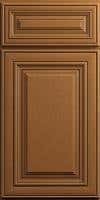
Craftsman Lily Green Shaker kitchen cabinets

The Variable Nobody Certifies: How Long It Lasts

The largest environmental cost in a kitchen is making it and disposing of it, and both of those happen on a schedule set by how long the kitchen survives. A kitchen replaced after ten years carries roughly double the lifetime impact of one replaced after twenty, regardless of what either was made of. No certification measures this, and it outweighs most of what certifications do measure.

Which means the specifications that make a cabinet last are also, in practice, the environmental ones:

  • Hardware that does not fail. Soft-close adjustable hinges and full-extension undermount glides. Hardware is what wears out first, and a cabinet run scrapped because the drawers no longer work is a whole kitchen thrown away over a component.
  • A plywood carcass with a sealed interior. This is what survives the slow leak under the sink that otherwise ends a run of cabinets.
  • Dovetailed drawer boxes. They do not come apart.
  • Repairability. Adjustable hinges, replaceable glides, a finish that can be recoated, doors that can be replaced without replacing boxes.
  • A finish and a style you will not tire of. The most common reason a functioning kitchen is removed is that its owner dislikes it. That is an environmental decision as much as an aesthetic one, and it argues for restraint.

We go through the failure modes in detail in what actually fails first in a kitchen cabinet.

Reusing Rather Than Replacing

The lowest-impact kitchen is the one already installed. Before specifying anything new, it is worth establishing whether the existing boxes are sound — because if they are, refacing or refinishing removes the largest single material item from the project entirely.

Three routes, in ascending order of material use:

  • Refinishing. Existing doors and boxes, stripped and recoated. Least material, most labour.
  • Refacing. Existing boxes, new doors, drawer fronts and end skins. Keeps the carcasses, which are the bulk of the material and the part most likely to still be fine.
  • Replacement. Everything new. The right answer when boxes are damaged, swollen or in a layout that does not work.

The honest test is the boxes. If they are square, dry and sound, replacing them is a choice rather than a necessity. We compare the three in cost to replace kitchen cabinets.

Two smaller points in the same direction: donate or resell removed cabinets rather than skipping them — architectural salvage outlets and reuse charities take them — and when you do replace, order carefully, because returned and surplus cabinetry is a real waste stream.

Materials, Honestly Ranked

Material choice matters less than the durability and reuse questions above, but it is not nothing. The honest summary is that every option involves a trade, and the ones marketed hardest as green are not always the ones with the best case.

  • Plywood. Uses timber efficiently — thin plies from a peeled log yield far more usable panel than sawing boards — and it lasts, which is the main thing. The resin is the emissions question.
  • Solid hardwood. Long-lived and repairable, and chain-of-custody certification is available for it. Also the most timber-intensive option per cabinet.
  • MDF and particleboard. Made substantially from wood residues that would otherwise be waste, which is a genuine argument in their favour. Weaker on longevity in wet areas, which counts against them on the durability axis.
  • Bamboo. Grows extremely fast, which is the whole case for it. Weigh that against shipping distance from where it is grown and processed, and note that bamboo panels are laminated with adhesives like any other engineered panel.
  • Reclaimed timber. The strongest case on materials, since no new tree is involved, and the hardest to obtain consistently at kitchen scale.

Note what is missing from that list: a clear winner. Anyone presenting one is simplifying.

What to Actually Ask

Six questions turn a sustainability conversation into a factual one. They work on any supplier, and the pattern of answers tells you more than any individual answer does.

  1. Is the composite wood NAF, ULEF, or compliant? Compliance is the legal floor; the first two are beyond it.
  2. Do you hold chain-of-custody certification, and does it cover this product? Ask for the scheme and the certificate number.
  3. Are you certified under a manufacturing environmental programme? If yes, which, and which programme — KCMA runs more than one.
  4. Where is the cabinet made, and where is the panel made? Frequently two different countries.
  5. Are parts available separately? Hinges, glides, doors. Repairability is the least-discussed environmental property of a cabinet.
  6. Is the interior finished? It affects both emissions containment and how long the box survives water.

A supplier answering with documents is telling you something. So is one answering with adjectives — including, on the certification questions, us.

To see the construction detail we do publish, look at any collection page — Colorado White Shaker or Craftsman Shaker, for instance — or browse RTA kitchen cabinets and wood cabinets.

Frequently Asked Questions

1. What makes kitchen cabinets eco-friendly?
Three checkable things, and everything else is adjectives. Formaldehyde emissions from the composite wood inside — though meeting the EPA's TSCA Title VI limits is a legal requirement in the US, so it is a floor rather than a distinction. Where the timber came from, evidenced by a chain-of-custody certificate number such as FSC. And how the factory operates, evidenced by a programme such as KCMA's Environmental Stewardship Program. Ask which of the three a supplier holds.
2. Is 'CARB2 compliant' a meaningful green claim?
Less than it sounds. CARB Phase 2 emission limits are harmonised with the EPA's TSCA Title VI rule, and composite wood products sold in the United States must meet them — so compliance is a legal requirement rather than an environmental achievement. The claims that go beyond it are NAF (no added formaldehyde) and ULEF (ultra-low-emitting formaldehyde). Those are the terms worth asking about.
3. What is FSC certification and does it matter for cabinets?
The Forest Stewardship Council runs a chain-of-custody scheme that tracks timber from a certified forest through every handler — mill, manufacturer, distributor — each of them audited. It matters because it is the only common way a claim about where wood came from becomes verifiable rather than asserted. It is product-specific, so ask whether the certification covers the item you are buying, not just the company.
4. What is the KCMA Environmental Stewardship Program?
A certification run by the Kitchen Cabinet Manufacturers Association covering how a cabinet plant operates — air quality, product and process resource management, environmental stewardship and community relations. It is a claim about the factory rather than about the timber or the emissions. Note that KCMA also runs a separate performance and construction certification about durability; the two get conflated, so if a supplier says "KCMA certified", ask which programme.
5. Does Lily Ann have sustainability certification?
We do not currently publish one, and this page is not going to imply otherwise while telling you to distrust unsupported claims. What we do publish on every collection page is construction detail: 1/2" solid plywood birch carcasses, 5/8" dovetailed solid wood drawer boxes, soft-close adjustable hardware and a UV-coated finished interior. That is a durability specification — which, as this page argues, is closer to an environmental one than it first appears.
6. Are bamboo cabinets more sustainable than wood?
Bamboo's case rests on growth rate — it regenerates far faster than hardwood — and that is a genuine advantage. Weigh it against two things: the shipping distance from where bamboo is grown and processed, and the fact that bamboo panels are laminated with adhesives like any other engineered panel, so the emissions question applies equally. It is a reasonable choice, not an automatic win.
7. Which is greener, refacing or replacing kitchen cabinets?
Refacing, clearly, when the existing boxes are sound — it keeps the carcasses, which are the bulk of the material in a kitchen, and removes the largest single item from the project. Refinishing is lower still. Replacement is the right answer when boxes are damaged, swollen or in a layout that genuinely does not work. The honest test is the boxes: if they are square, dry and sound, replacing them is a choice.
8. Do new kitchen cabinets off-gas?
Composite wood panels release formaldehyde from their binding resins, most heavily in the first weeks after installation and declining over time. Products legally sold in the US meet TSCA Title VI limits, and two things reduce exposure further: ventilating well for the first few weeks, and a finished rather than raw interior, which contains emissions better. If this is your main concern, ask specifically about NAF resins.
9. Are MDF and particleboard bad for the environment?
They have a better materials argument than their reputation suggests — both are made substantially from wood residues that would otherwise be waste, so they use a tree more completely than sawing boards does. Where they lose is longevity in wet areas: both swell irreversibly at a raw edge, and a cabinet replaced early has a worse lifetime footprint than a durable one. Their right place is dry areas and painted door panels.
10. What is the single most sustainable choice in a kitchen?
Keeping the kitchen you have, if the boxes are sound. After that, buying cabinetry that will still be working in twenty years — because the largest environmental cost is manufacture and disposal, and both are scheduled by how long the kitchen survives. No certification measures longevity, which is why the specifications that make a cabinet last are also, in practice, the environmental ones.
11. How do I check a supplier's environmental claim?
Ask for the certificate rather than the description. Which scheme, which certificate number, and does it cover the specific product you are buying. Chain-of-custody certification is product-specific, and manufacturing certifications are plant-specific — so "we are certified" is not the same as "this cabinet is covered". A supplier who holds a certification will produce it immediately.
12. Should I choose reclaimed wood cabinets?
On materials alone it is the strongest case available, because no new tree is involved. The practical difficulties are consistency and supply: getting enough matched reclaimed stock for a whole kitchen is hard, and prices reflect that. It works best on a feature — an island, a run of open shelving, a single wall — rather than as a whole-kitchen specification.

Recent Blogs

Cabinet Above Refrigerator: Sizes, Depth & When to Skip It
Standard Bathroom Vanity Height (and Comfort Height) Explained
Wall Oven Cabinets: What Size You Need and How to Fit Your Oven
Free 3D Kitchen Design
2 Free Samples