


A shiplap accent wall is a single wall covered in horizontal or vertical wood-look planks, usually spaced with a small, even gap between rows, that stands out from the room's other plain walls. It can be left as natural wood, painted, or stained any color, and it's most often used behind a sofa, around a fireplace, or as a kitchen backdrop behind open shelving. Real wood planks run roughly $1.50 to $20 per linear foot depending on the wood species, plus $5 to $15 per square foot in labor if it's professionally installed rather than done as a DIY project.
- Best rooms: living rooms (behind the sofa, around the fireplace) and kitchens (as a backsplash or behind open shelving) are where shiplap works hardest — this guide stays to those and other non-bathroom rooms.
- Real material cost: $1.50–$4/linear ft for pine, $3–$7/ft for cedar, $5–$20/ft for reclaimed wood; an MDF panel kit runs about $6.50/sq ft in materials as of September 2026 (Home Depot/Lowe's pricing).
- Real labor cost: professional installation runs $5–$15 per square foot on top of materials, per stikwood.com's current pricing (fetched 2026-09-19) — which is why most shiplap accent walls are DIY projects.
- Drywall is still cheaper. Contrary to a claim on an earlier version of this page, real cost data shows drywall beats shiplap on price; shiplap's advantage is durability and texture, not cost.
- Layout: horizontal is the classic, easier-to-install farmhouse look; vertical reads more modern and has real, growing search demand of its own.
- Not sure if it's shiplap you want? This guide also compares it to beadboard, tongue-and-groove and board and batten, three look-alike wall treatments people often mean instead.
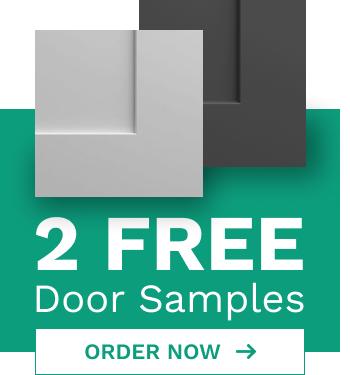
- Lily Ann Cabinets' Shaker Espresso, White Shaker Elite, Navy Blue Shaker and Grey Shaker Elite lines are the finishes shown here paired with a shiplap wall.
Shiplap is horizontal or vertical wood-look board paneling, installed with a small, even gap between each row, that turns one wall into the focal point of a room. It's been a staple of farmhouse and modern-farmhouse design for about a decade, and it still shows up constantly in living room and kitchen renovations because it does something paint alone can't: it adds real texture and shadow lines you can see and feel.
This guide covers where shiplap works best in the kitchen and living room, the real cost per square foot, how to choose horizontal vs. vertical, how shiplap compares to drywall and a few look-alike wall treatments, and which Lily Ann cabinet finishes pair with it.
What Is a Shiplap Accent Wall?
A shiplap accent wall is a single wall covered in horizontal or vertical wood-look planks, usually with a rabbet joint or a small spacer ("nickel gap") between boards, so each row sits flush with a clean shadow line. It can be left as natural wood, stained, or painted any color, and it's used as a stand-alone accent behind a sofa, around a fireplace, or as a backdrop in a kitchen or dining area — the rest of the room's walls stay plain so the shiplap wall reads as the focal point.
Shiplap in the Living Room
The living room is where shiplap accent walls show up most: it's the room with the fewest cabinets, appliances or plumbing to work around, and the biggest flat run of wall to cover. A few ways it's used well:
- Behind the sofa or media console — the most common spot, since it's the wall people face when they're in the room.
- Framing a fireplace — shiplap runs up and around the firebox and mantel, replacing plain drywall with texture that reads as more finished, not more busy.
- Ceiling and beam accents — the same boards run overhead instead of on a wall, which works well in a living room with exposed beams or a vaulted ceiling.
- Built-in bookcases or shelving — shiplap as the backdrop behind open shelves adds depth so the shelves don't look like they're floating against a blank wall.

White and light-neutral shiplap is still the most common choice in living rooms, but a painted color — navy, deep green, black — on just the shiplap wall is a common way to add a bold color without painting (and later repainting) an entire room.
Shiplap in the Kitchen
In a kitchen, shiplap has to work around cabinets, appliances and outlets, so it shows up in a few specific spots rather than as one open wall:
- As a backsplash — shiplap behind the range or sink in place of tile. It needs a sealed, wipeable finish (paint or a clear coat) since it sits close to cooking splatter.
- Above open shelving — a shiplap backdrop behind open shelves is one of the most common kitchen uses, since it fills the wall space shelves leave exposed.
- On a kitchen island end panel — a small, contained way to add the texture without covering a full wall.
- On the wall behind a breakfast nook or dining table, where a kitchen opens into a dining area.

Because a kitchen already has strong horizontal lines from countertops and cabinet rails, horizontal shiplap tends to blend in more than stand out here — a vertical run, or shiplap confined to one focal wall (like the range wall), usually reads better against a full run of cabinetry.
More Places to Use It
Beyond the living room and kitchen, shiplap works in several other spots without needing its own deep dive:
- Dining room walls — a full or half-height accent wall behind the table.
- Entryway and staircase walls — along a stairwell or foyer, where a plain wall otherwise gets little attention.
- Bedroom headboard wall — shiplap behind the bed in place of a purchased headboard.
- Home office built-ins — as a backdrop behind a desk or shelving unit.
- Covered porch or exterior accent — exterior-rated shiplap on a porch ceiling or accent wall (a different material spec than interior shiplap; confirm it's rated for outdoor use before buying).
Horizontal vs. Vertical Shiplap
Horizontal shiplap is the classic farmhouse look and is the easier, faster install, since boards run the width of the wall with fewer cuts. Vertical shiplap reads more modern and makes a room feel taller, and real search demand for it has grown enough that "vertical shiplap accent wall" and "vertical shiplap wall ideas" are now common searches in their own right — it costs slightly more to install since each board needs to be cut to the wall's height and any outlet or switch cutouts are harder to hide cleanly.
A mixed layout — horizontal on most of the wall with a vertical section, or a herringbone pattern — is a more advanced option that costs more in labor for the extra cuts and layout planning.
Real Cost of a Shiplap Accent Wall
Real wood shiplap boards run about $1.50 to $4 per linear foot for pine, $3 to $7 per linear foot for cedar, and $5 to $20 per linear foot for reclaimed wood, before installation. Engineered MDF/wood-look panel kits are priced by square footage covered instead of linear foot — as of September 2026, a 6-pack of prefinished panels covering roughly 16.5 square feet runs about $108 at Home Depot and Lowe's, or a little over $6.50 per square foot in materials.
Labor is the bigger swing. Stikwood, a shiplap-alternative panel maker, puts professional installation at $5 to $15 per square foot installed as of its current pricing (fetched September 2026) — on top of the material cost above. A DIY install with basic tools (stud finder, level, brad nailer, construction adhesive) skips that labor cost, which is why most of the accent walls in the ideas above are homeowner projects rather than contractor jobs.
Shiplap vs. Drywall (and a Few Look-Alikes)
Drywall with paint is cheaper in materials and labor than real wood shiplap or an MDF panel kit — it's the standard wall finish for a reason. Shiplap costs more upfront, but it's more durable once installed (solid wood resists dents and scuffs better than painted gypsum board) and it can be sanded, repainted or restained years later instead of patched and repainted like drywall.
Shiplap also gets confused with a few similar wall treatments, worth knowing apart before you buy materials:
| Treatment | What it looks like | How it reads |
|---|---|---|
| Shiplap | Horizontal or vertical boards with a visible shadow gap between rows | Farmhouse, modern-rustic |
| Beadboard | Narrow vertical panels with small raised ridges ("beads") | Cottage, traditional |
| Tongue-and-groove | Interlocking boards with flush joints, no shadow gap | Smoother, more formal than shiplap |
| Board and batten | Wide vertical planks with narrow strips over the seams | Bolder, more architectural |
Which Lily Ann Cabinet Finishes Pair with a Shiplap Wall
Shiplap is a texture and color choice as much as a material choice, so it's worth picking it alongside your cabinet finish rather than after:
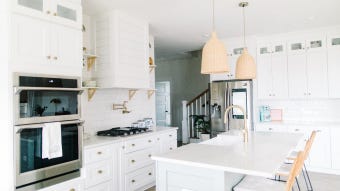
- White or natural shiplap pairs with darker cabinet finishes so the wall and cabinets don't blend together — our Shaker Espresso line is a common match.
- Painted color shiplap (navy, black, deep green) works well against light, simple cabinet doors that don't compete with the wall color — see our White Shaker Elite line.
- Navy or another bold cabinet color can be the statement instead, with a neutral white or natural-wood shiplap wall as the backdrop — our Navy Blue Shaker collection is built for that look.
- Warm-gray shiplap is a middle ground that works with most cabinet colors, including our Grey Shaker Elite line.
If you're set on real wood cabinets to match a natural-finish shiplap wall, our full range of wood cabinet finishes is worth a look before you commit to a stain color for the wall.
The Takeaway
A shiplap accent wall is one of the few upgrades that adds real texture, not just color, for a materials cost most homeowners can plan for ahead of time. Start with the room and wall you actually look at most — behind the sofa, around the fireplace, or the kitchen wall behind open shelving — pick horizontal or vertical based on the look you want, and price real wood against an MDF panel kit before you buy.
We'd love to help with your kitchen. Contact Lily Ann Cabinets today for a free design quote.







Comments