


Yes, if the bathroom has room for the machines, a drain and water lines, the right electrical circuits, and a way to vent moisture outside. Most people use a stacked pair in a closet or a side-by-side pair under a counter, hidden behind doors. Have licensed pros do the hookups.
- Yes, it can work with water, a drain, the right circuits and outside venting.
- Most space-saving layout: a stacked washer and dryer in a closet with doors.
- Standard dryers must vent outdoors; ventless dryers are the exception.
- Moisture is the main risk: the EPA recommends indoor humidity below 60%.
- Leave hookups to licensed pros; codes and permits vary by area.
- Hide it with bifold doors, a curtain, a countertop or doors that match the vanity.
- Lily Ann fit: matching wall cabinets, an 18-inch linen cabinet and vanities around the machines; our tall utility cabinets are shelved, not appliance enclosures.
Can You Put a Washer and Dryer in a Bathroom?
Yes. A washer and dryer can go in a bathroom if the room has space for the machines, a drain and water lines, the right electrical circuits, and a way to vent moisture outside. The most common setups are a stacked pair in a closet or a side-by-side pair under a counter, hidden behind doors. Hire a licensed plumber and electrician for the hookups.
Putting laundry in the bathroom is a popular fix in smaller homes, condos and older houses with no laundry room. The bathroom already has water and a drain, and it is where towels and dirty clothes pile up anyway. But a bathroom is also the most humid room in the house, and a washer and dryer add water, heat, lint and noise. This guide covers the layouts that work, what the hookups involve, how to hide the machines, and how to protect your cabinets and floors.
Pros and Cons of a Bathroom Laundry Combo
| Pros | Cons |
|---|---|
| Frees up space you would otherwise give to a laundry room | Adds humidity to a room that is already damp |
| Water supply and a drain are often already nearby | New circuits, a dryer vent or a new drain can still be needed |
| Towels and clothes are washed where they are used | Machines are noisy, especially during the spin cycle |
| Machines can be hidden behind doors or a curtain | Someone doing laundry can block a shared bathroom |
| Useful in a small home with no laundry room | A leak can damage the floor and the cabinets below or nearby |
It works best in a primary bathroom or a second bathroom that isn't the only one in the house, so laundry day doesn't compete with showers.
5 Bathroom Laundry Combo Layouts
1) Stacked Washer and Dryer in a Closet
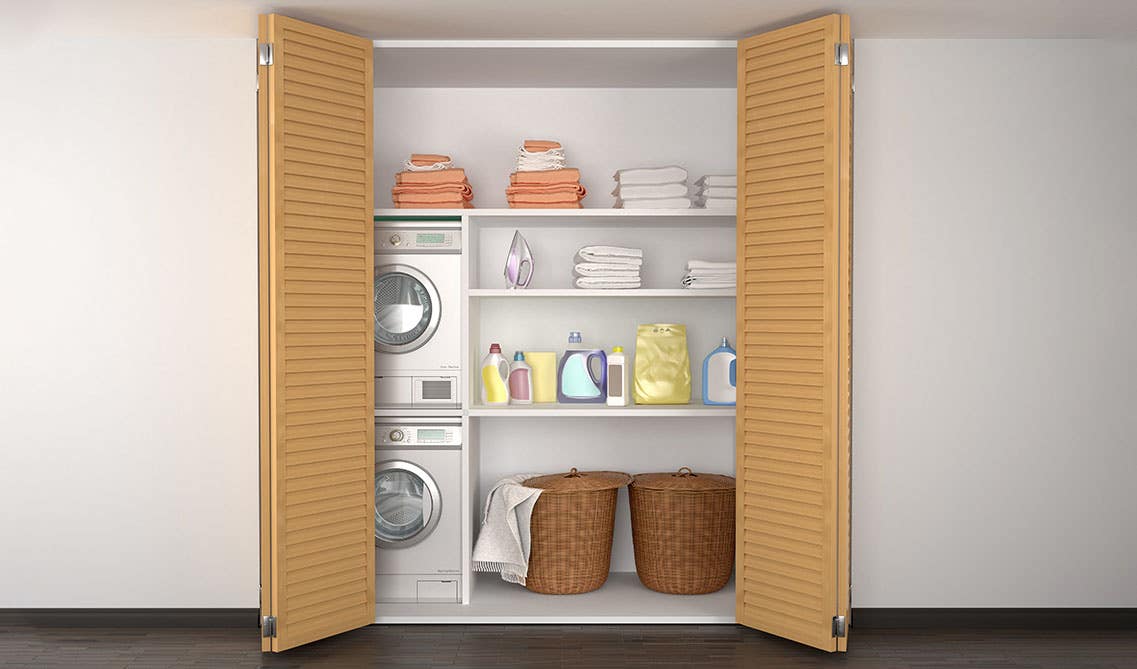
Stacking takes the least floor space, which is why it is so common in bathrooms. The washer goes on the bottom and the dryer sits on top, using the stacking kit made for that pair. A closet with bifold or sliding doors hides the machines, and shelves beside or above them hold detergent and towels. Stacking only works with front-loading machines that the manufacturer says can be stacked, so check that before you buy.
2) Side-by-Side Under a Countertop
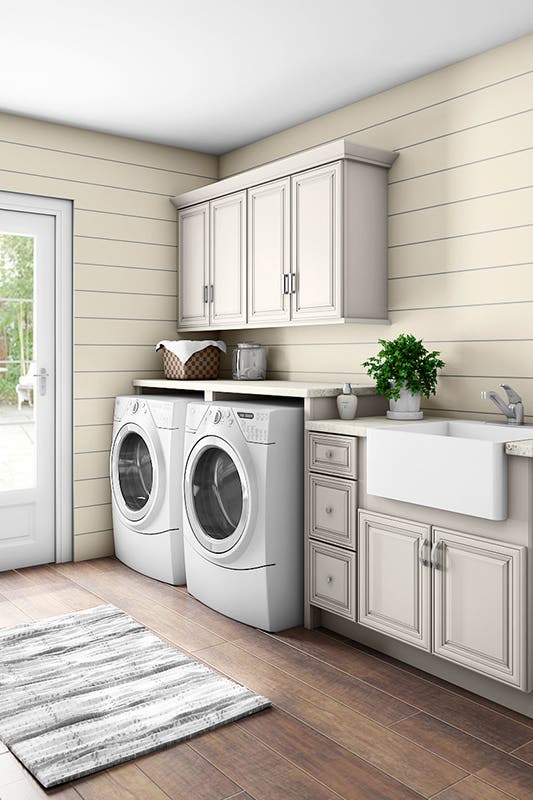
If the bathroom is long enough, two front-loaders can sit side by side under a counter. The counter gives you a place to fold clothes, and it lines up with a vanity or sink base next to it. Leave room behind the machines for hoses, cords and the dryer vent, and keep the counter removable or high enough that the machines can be pulled out for service.
3) Behind Cabinet-Style Doors Next to the Vanity
For a built-in look, frame the machines into an alcove beside the vanity and close it off with doors that match your bathroom cabinets. This makes the laundry disappear, but the doors and the space behind them need airflow, and a dryer still needs its vent. Follow the clearances in your machines' installation manuals for any enclosed space.
4) A Separate Laundry Zone
In a larger bathroom, a partial wall, a pocket door or a frosted glass door can split the laundry from the toilet and shower. This keeps the noise and lint in one corner, and lets someone do laundry without blocking the whole room. It is often called a split or semi-private layout.
5) One All-in-One Washer Dryer Combo
If the space is very small, a single machine that washes and dries in one drum takes the footprint of one appliance. Many of these are sold as ventless models, so they can suit a bathroom where running a dryer vent outside is hard. They can hold smaller loads and take longer to finish, so check the manufacturer's specs against how much laundry your household does.
What It Takes: Plumbing, Electrical and Venting
This is the part to leave to licensed pros. Code rules vary by state and city, new plumbing and electrical work often needs a permit, and mistakes here can cause leaks, shocks or fires. What follows is a general overview so you know what to ask about, not installation instructions.
- Water and drain. A washer needs hot and cold water supply lines with shutoff valves, and a drain, usually a standpipe or a recessed laundry box. Being near the bathroom's pipes helps, but a licensed plumber still needs to confirm the drain is the right size and properly trapped and vented.
- Electrical. Washers and dryers need their own circuits. An electric dryer normally needs a 240-volt circuit, and a gas dryer needs a gas line as well as power. Outlets in bathrooms and laundry areas also need ground-fault (GFCI) protection under current electrical codes. A licensed electrician can tell you what your panel can handle.
- Dryer vent. A standard dryer must vent outdoors through a proper duct, not into the bathroom, an attic or a wall. The EPA's moisture guide specifically says to vent clothes dryers to the outside where possible. Ventless condensing and heat pump dryers are the exception; follow their manuals.
- Bathroom exhaust fan. Bathrooms need an operable window or an exhaust fan vented outside. With laundry added, a good fan matters even more.
- Floor. A stacked pair full of wet laundry is heavy and shakes during the spin cycle. The floor should be solid and level, and on an upper floor it is worth having a contractor check the framing.
Many local building codes in the U.S. are based on the International Residential Code (IRC), which covers bathroom ventilation, dryer exhaust ducts and plumbing drains, usually with local changes. Your local building department can tell you which version applies to you.
How to Hide a Washer and Dryer in a Bathroom
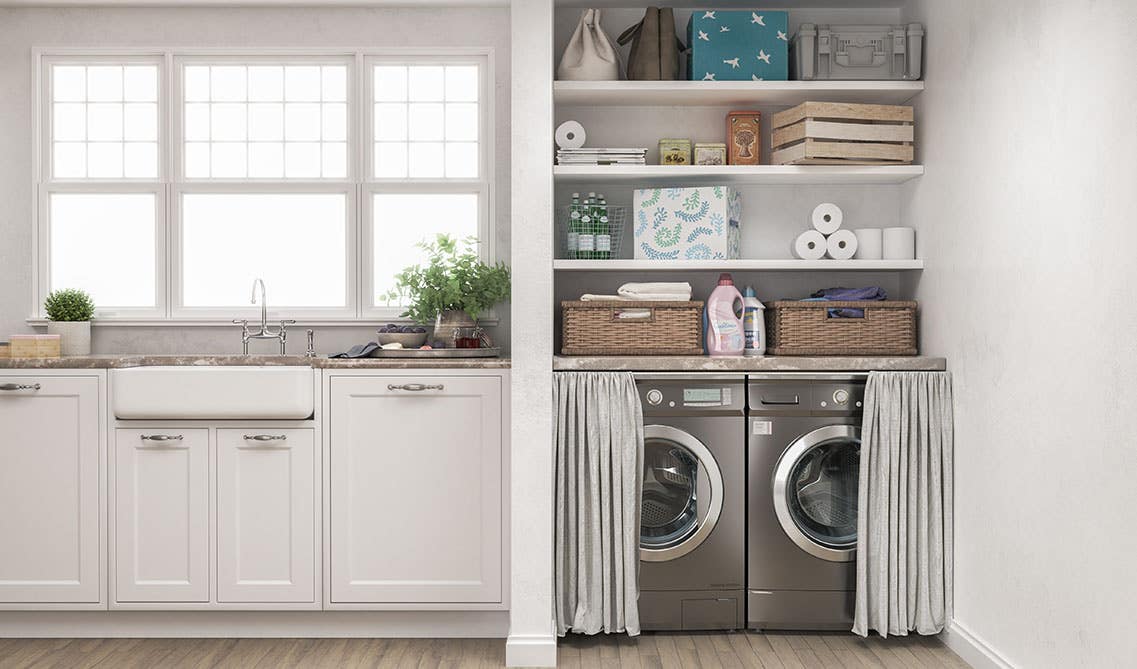
- Bifold or sliding doors. The simplest way to hide a stacked pair in a closet. Louvered doors let air move.
- A curtain. A fabric curtain on a rod under a counter hides side-by-side machines and costs little. It is also easy to pull aside for service.
- Cabinet-style doors. Doors that match the vanity make the laundry look like part of the bathroom cabinets. Leave airflow and follow the appliance manual's clearances.
- A countertop. A counter over side-by-side front-loaders turns the machines into a base for folding and makes them look built in.
- Matching storage around the machines. Cabinets above and beside the machines in the same finish as the vanity pull the whole wall together.
Can a Cabinet Enclose a Stacked Washer and Dryer?
Not a standard one. Stock tall cabinets are built with fixed and adjustable shelves inside, not as empty housings for appliances. Our widest tall utility cabinets, such as the White Shaker Elite 30 x 96-inch utility cabinet, are listed with 4 doors, 3 adjustable shelves and 1 stationary shelf. That makes them pantry and storage cabinets, not washer and dryer enclosures.
To enclose a stacked pair, the usual approach is a framed closet or alcove with doors, sized to the measurements and clearances in your machines' installation manuals. Cabinets then go around it: storage cabinets beside the closet and wall cabinets above side-by-side machines.
Storage Around the Machines
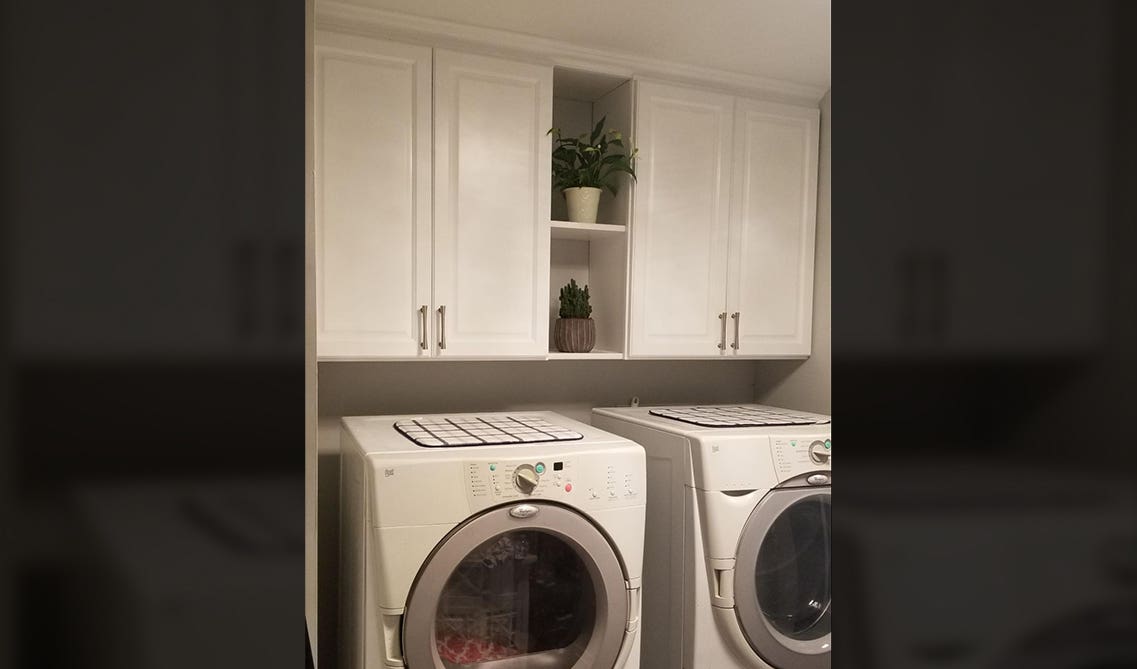
Laundry adds detergent, stain removers, dryer sheets and baskets to a room that already stores towels and toiletries. Plan storage for both.
- Wall cabinets above side-by-side machines. Short wall cabinets keep supplies within reach without blocking the top-loading lid or the dryer's controls. Our Grey Shaker Elite wall cabinets come in heights from 12 to 42 inches and many widths, so you can match the width of the machines below.
- A tall linen cabinet beside the stack. The Grey Shaker Elite vanity linen utility cabinet is listed at 18 inches wide, 80 inches tall and 21 inches deep with 2 doors, which fits towels and detergent in a narrow space next to a stacked pair.
- A vanity with drawers. Drawers in the bathroom vanity keep small laundry items like stain sticks and lint rollers off the counter.
- A hamper spot. Leave floor space or a cabinet for a hamper next to the washer so clothes go straight in.
For more ideas, see our laundry room cabinets, laundry room cabinet ideas and bathroom storage ideas.
Protecting Your Bathroom From Water and Humidity
A washer and dryer add moisture to a bathroom, and moisture is what leads to mold and damaged cabinets. The EPA's guide to mold and moisture recommends keeping indoor humidity below 60 percent, ideally between 30 and 50 percent, and drying wet materials within 24 to 48 hours of a leak or spill so mold does not grow.
- Run the exhaust fan while the dryer runs and after showers.
- Put a drain pan under the washer, and consider a water leak alarm on the floor.
- Replace rubber fill hoses when they show cracks or bulges, and turn off the water supply when you are away for a long time.
- Clean the dryer lint filter after every load, and have the vent duct cleaned regularly.
- Choose water-resistant flooring, like tile or SPC vinyl. Our guide to the best flooring for a laundry room compares the options.
- Pick cabinet finishes that handle humidity. See the best cabinet finishes for high-humidity bathrooms.
Planning Checklist
- Measure the space, then check your machines' installation manuals for the width, height, depth and clearances they need, including room to open the doors.
- Decide on stacked, side-by-side or an all-in-one combo unit.
- Have a licensed plumber check the water supply and drain.
- Have a licensed electrician check the circuits and GFCI protection.
- Plan the dryer vent route to the outside, or choose a ventless dryer.
- Check the bathroom exhaust fan and the floor.
- Ask your local building department which permits you need.
- Plan how you will hide the machines and where supplies will go.
Working out a small bathroom layout? See our bathroom layout ideas and small bathroom ideas.
Bathroom and Laundry Cabinets From Lily Ann
We sell bathroom vanities, linen cabinets and wall cabinets in matching door styles, so the storage around your washer and dryer can match the rest of the bathroom. Browse our Grey Shaker Elite bathroom vanities or our laundry room cabinet collections, and order free samples to see the finish in your bathroom's light. Our design team can also lay out the cabinets around your machines with a free design.











Comments