


A walk-in shower costs about $4,000 to $20,000 installed, with a typical project near $12,000, according to This Old House (updated March 12, 2026). The Spruce (updated July 19, 2024) puts it lower, at $1,150 to $8,000 with a $6,700 average. The gap is mostly scope: a prefab kit in an existing alcove is at the low end, and a custom tile shower with frameless glass is at the high end. Converting a tub to a shower runs $2,000 to $12,000, per This Old House (March 4, 2026).
- Installed cost: $4,000 to $20,000, about $12,000 typical (This Old House, March 2026). The Spruce's 2024 guide says $1,150 to $8,000.
- Why they differ: the date, and whether the price is a pro-installed shower with glass or a prefab kit with the plumbing already in place.
- Tub-to-shower conversion: $2,000 to $12,000 (This Old House, March 2026). Removing the old tub is $300 to $1,200 of that.
- Biggest drivers: prefab vs. tile, the glass, and any pipe that moves. Moving the drain alone is $900 to $1,100.
- Hidden costs: nearly 70% of conversions hit at least one. Hold back 10% to 20% of the budget.
- Resale: keep at least one bathtub in the house.
- Lily Ann Cabinets doesn't build showers. We sell the bathroom vanity that usually gets replaced in the same remodel.
A walk-in shower can cost $1,150 or $20,000. Both numbers come from well-known home sites, and both are honest. The difference is what gets built. This guide puts the published price ranges side by side, with the source and the date for each one, so you can see where your project fits.
It covers a new walk-in shower, a tub-to-shower conversion, what each part costs, and the surprise costs that show up once the old tub is out. One note up front: Lily Ann Cabinets doesn't build or install showers. We make the vanity that usually gets replaced in the same remodel, and that part is covered near the end.
How Much Does a Walk-In Shower Cost in 2026?
A walk-in shower costs $4,000 to $20,000 installed, with a typical project around $12,000, according to This Old House (updated March 12, 2026). The Spruce (updated July 19, 2024) gives a lower range of $1,150 to $8,000, with a $6,700 average. A prefab kit in an existing alcove sits at the low end. A custom tile shower with frameless glass sits at the high end.
| Source | Last updated | Walk-in shower range | Average | Where the numbers come from |
|---|---|---|---|---|
| This Old House | March 12, 2026 | $4,000 to $20,000 | About $12,000 | Homewyse cost data and a 2026 survey of 1,000 homeowners |
| The Spruce | July 19, 2024 | $1,150 to $8,000 | $6,700 | Not stated on the page |
| Bob Vila (shower remodel guide) | April 18, 2024 | $4,200 to $8,500 for a walk-in; $200 to $15,000 for any shower remodel | $8,000 for any shower remodel | Angi and HomeAdvisor data |
All three pages were read on October 5, 2026. These are national figures, not quotes. Local labor rates move them up or down.
Why the Sources Disagree
The gap between $1,150 and $20,000 looks huge, but three things explain most of it.
- The date. Two of the three guides were last updated in 2024. The This Old House guide was updated in March 2026.
- What counts as a walk-in shower. The Spruce's low end is a small prefab kit going into a bathroom that already has the right plumbing. It prices the kit at $700 to $3,000 and the labor at $400 to $2,000. This Old House starts at $4,000 for a prefab shower that a contractor installs.
- What is inside the number. This Old House's price tiers include the glass, the waterproofing and the labor. The Spruce lists a glass door ($550 to $1,400), waterproofing and plumbing as extra costs on top of its base range.
There is also real spending data. In This Old House's 2026 survey, most homeowners who put in a walk-in shower spent between $10,000 and $20,000, and 38% said they paid more than they expected.
For a budget, use the newer and wider range. Use the lower range only if you want a prefab unit, the plumbing stays where it is, and you plan to do part of the work yourself.
Walk-In Shower Cost by Type
The biggest price driver is whether the shower is a factory-made kit or built from tile on site.
| Type | This Old House (March 2026) | The Spruce (July 2024) | What it usually includes |
|---|---|---|---|
| Prefab | $4,000 to $7,000 installed | $700 to $3,000 for the kit, plus $400 to $2,000 labor | A fiberglass or acrylic base and wall panels in an existing alcove. Plumbing stays put. |
| Midrange tile | $8,000 to $13,000 | $4,200 to $8,500 with labor | Ceramic or porcelain tile, a tiled base, a waterproof membrane and a glass door. |
| High-end custom | $14,000 to $20,000 or more | Not broken out | A bigger footprint, moved plumbing, heavy frameless glass, a bench and niches. |
This Old House gives two prefab figures in the same guide: $4,000 to $7,000 in its price tiers and $3,000 to $6,000 in its cost-factor section. Both are shown here.
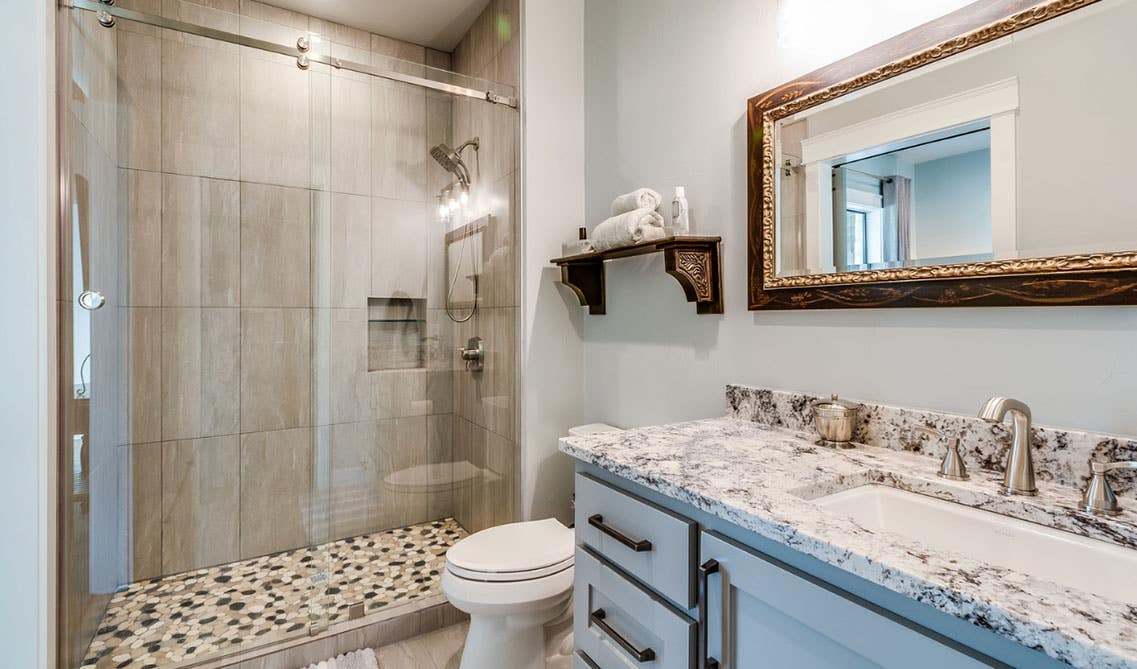
Tile costs more mainly because of labor. A tiled shower needs backer board, a waterproof membrane, a sloped base and a tile setter's time. A prefab unit skips most of that. If you are weighing tile types, see our guide to porcelain vs. ceramic tile.
Tub-to-Shower Conversion Cost
Converting a tub to a shower costs $2,000 to $12,000, according to This Old House (updated March 4, 2026). A prefab stall in the old tub's footprint is the cheapest route. Tile, a curbless floor or a bigger footprint push the price up. The Spruce puts a prefab conversion at $1,200 to $8,000, and Bob Vila lists $1,200 to $3,600 or more.
| Shower you convert to | Cost (This Old House, March 2026) |
|---|---|
| Prefab shower stall | $2,000 to $6,000 |
| Walk-in shower | $5,000 to $12,000 |
| Tile shower | $6,000 to $12,000 |
| Curbless shower | $8,000 to $15,000 |
Source: This Old House, tub-to-shower conversion cost, which says its data comes from Homewyse and The Home Depot. The curbless row runs past the guide's own $12,000 headline figure. That is how the page prints it.
A conversion can cost less than a brand-new shower because the drain and the water lines are already in the right place. This Old House notes that most standard tubs are about 60 inches long and 30 to 32 inches wide, and that staying inside that footprint is the cheaper path. Our standard shower size guide shows which shower sizes fit a tub space.
Taking out the old tub and hauling it away adds $300 to $1,200, per the same guide. A heavy cast-iron tub sits at the top of that range.
Where the Money Goes: Cost by Part
This Old House lists these installed costs for the main parts of a walk-in shower (March 2026):
| Part | Installed cost |
|---|---|
| Ceramic or porcelain tile | $12 to $30 per square foot |
| Natural stone tile | $20 to $50 per square foot |
| Prefab shower pan | $800 to $1,500 |
| Custom tile shower pan | $1,200 to $3,000 |
| Backer board and waterproofing | $800 to $1,500 |
| Framed glass door | $500 to $1,200 |
| Frameless glass enclosure | $1,000 to $3,000 or more |
| Shower valve and trim | $500 to $1,200 |
The Spruce's 2024 numbers for some of the same parts are lower: $550 to $1,400 for a glass door, and $500 to $1,000 for a sheet waterproofing membrane or $50 to $800 for a liquid one.
Glass is the part people most often underestimate. Our guide to frameless vs. framed shower doors explains why the two are priced so differently. If you are adding a niche or moving the controls, see shower niche sizes and shower valve height before the walls are closed.
Plumbing, Demolition and Permit Costs
- Moving the drain: $900 to $1,100 (This Old House).
- A new or upgraded shower valve: $700 to $1,200 (This Old House).
- New or moved water lines: $700 or more. With several plumbing changes, the total can pass $2,000 (This Old House).
- Plumbing when the hookups already exist: $600 to $1,600. New rough-in plumbing, where there was no shower before, can reach $7,000 (The Spruce).
- Demolition: $50 to $100 to remove an old shower and about $250 to haul away debris (The Spruce).
- Permit: $250 to $500 (The Spruce). This Old House says fees vary by town and can add several hundred dollars.
The pattern is simple. Every pipe that moves adds money. A shower that goes exactly where the tub was is the cheapest shower you can build.
Hidden Costs to Plan For
You can't see behind a tub until it is gone. In This Old House's 2026 survey, homeowners who did a tub-to-shower or shower-to-tub conversion ran into at least one hidden cost nearly 70% of the time. The most common were:
- Structural repairs: 38%
- Water damage: 32%
- Unplanned plumbing upgrades: 29%
Mold is another one. Bob Vila's guide puts mold cleanup at $1,100 to $3,400.
This Old House recommends setting aside 10% to 20% of the budget for surprises. On a $10,000 quote, that is $1,000 to $2,000 held back.
How Long Does It Take?
Plan on weeks, not days, for a tiled shower. In This Old House's 2026 survey, 37% of bathroom renovations that included a walk-in shower took three to four weeks, and 22% took one to two months. The Spruce gives a wider window of three days to four weeks for a shower remodel, depending on the size, the materials and how many people are working on it. A prefab unit is at the short end.
DIY or Hire a Pro?
Among homeowners in the This Old House survey who installed a walk-in shower, 51% hired licensed professionals, 24% mixed professional and do-it-yourself work, and 20% did most or all of it themselves.
A prefab kit is the realistic DIY job, if the plumbing is already in place. A tiled shower is harder. The floor has to slope to the drain and the waterproofing has to be continuous, and a mistake in either one shows up later as a leak. The Spruce puts the labor you would save at $400 to $2,000, which is small next to the cost of fixing water damage.
The Vanity: The Other Big Purchase in the Same Remodel
A shower rarely gets replaced alone. In This Old House's 2026 survey, about 67% of walk-in shower projects included plumbing work and 60% included new tile. Once the room is torn up, the vanity is usually next.
This is the part of the bathroom Lily Ann Cabinets sells. Our bathroom vanity cabinets ship ready to assemble, in the same door styles and finishes as our kitchen lines, such as Colorado White Shaker, Grey Shaker Elite and Craftsman Natural Shaker. We have left vanity prices out of this article because they change with sales. The category pages show today's price.
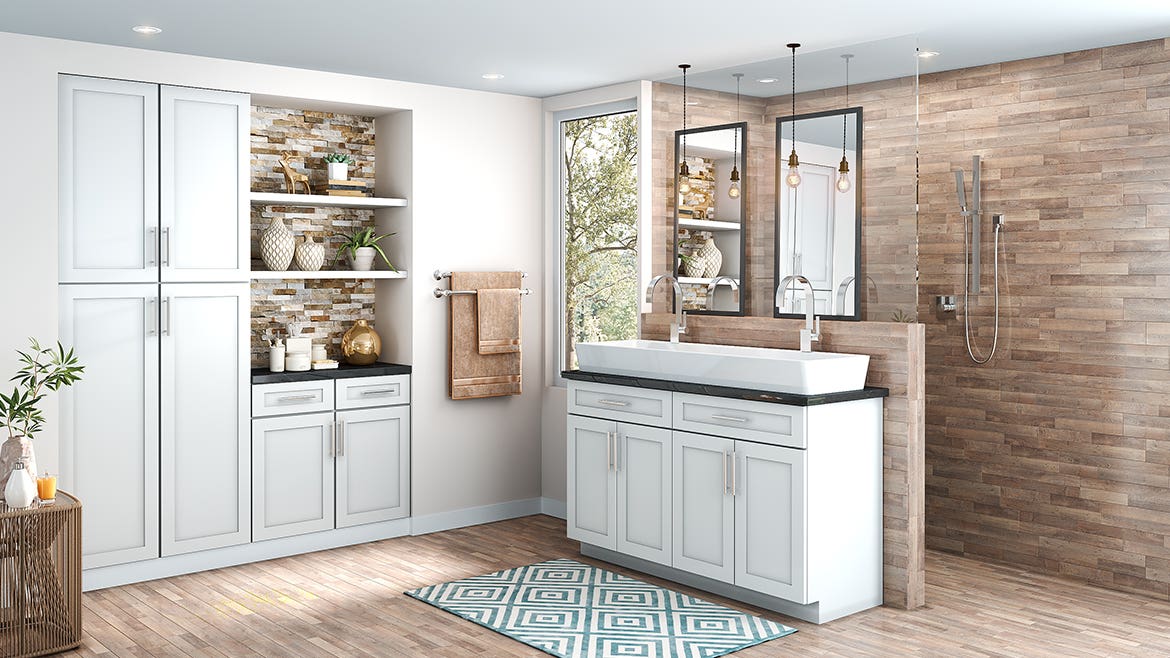
Lily Ann Cabinets: Colorado White Shaker
Three things to do before you order a vanity for a bathroom that is getting a new shower:
- Set the shower size first. If the shower grows past the old tub, the vanity wall may shrink. Our bathroom vanity size guide covers the widths that fit.
- Check the door swing. A hinged glass door needs room to open without hitting the vanity.
- Price the whole room. Our small bathroom remodel cost guide breaks down the rest of the bathroom, and sink installation cost covers the plumbing side of a new vanity.
If you plan to set the vanity yourself, our bathroom vanity installation guide walks through it.
How to Keep the Cost Down
- Leave the plumbing where it is. This Old House lists this first, and The Spruce says plumbing stays cheap when the hookups are already there.
- Choose a prefab base or a full prefab unit. It cuts tile labor and waterproofing work.
- Pick midrange finishes. Ceramic or porcelain tile and a framed door cost less than stone and heavy frameless glass.
- Skip custom glass. This Old House notes a custom frameless enclosure can double the cost of the door.
- Decide everything before demolition. Changes made mid-project cost extra labor.
- Get more quotes. In the This Old House survey, 21% of homeowners said they would get more quotes next time, and 31% said they would set a higher budget.
For more ways to save on the rest of the room, see our bathroom remodel ideas on a budget.
Does a Walk-In Shower Add Value?
Often, with one condition. In This Old House's 2026 survey, 64% of homeowners who installed a walk-in shower felt it raised their home's value, and 60% said they were very satisfied. The Spruce adds the catch: a walk-in shower can add value as long as it does not replace the only full bathtub in the home. Many buyers, especially families with young children, want at least one tub.
So if you have two bathrooms, convert the tub in one and keep the tub in the other.
The Takeaway
Budget $4,000 to $20,000 for a new walk-in shower and $2,000 to $12,000 to convert a tub, using This Old House's 2026 figures. Older guides from The Spruce and Bob Vila run lower, mostly because they are older and price a simpler job. Keep the plumbing in place, decide between prefab and tile early, and hold back 10% to 20% for what is hiding behind the old tub.
Replacing the vanity at the same time? Get a free 3D design and we will lay out the vanity wall for you.
Frequently Asked Questions
It costs $5,000 to $12,000 to turn a tub into a walk-in shower, according to This Old House (updated March 4, 2026). A prefab shower stall in the same spot is cheaper, at $2,000 to $6,000. Removing and hauling away the old tub is $300 to $1,200 of that. The Spruce (July 2024) gives $1,200 to $8,000 for a conversion to a prefab walk-in shower.
Published figures put a tub-to-shower conversion at $2,000 to $12,000 overall, and $5,000 to $12,000 when the new shower is a walk-in (This Old House, March 2026). Bob Vila's guide (April 2024) lists a lower $1,200 to $3,600 or more. The price depends mostly on prefab versus tile and on whether the drain has to move.
Replacing a tub with another tub is usually cheaper than building a tiled shower, and about the same as a basic prefab conversion. Bob Vila's guide (April 2024) puts a new tub-and-shower combination at about $3,000 on average and a tub-to-shower conversion at $1,200 to $3,600 or more. This Old House (March 2026) puts conversions at $2,000 to $12,000, with tile and curbless showers at the top.
Usually not. Medicare's page on durable medical equipment lists items such as walkers, wheelchairs, hospital beds and commode chairs. A walk-in shower, or any other change to the house, is not on that list. Ask your own plan before you count on any coverage.
The main one is losing the bathtub. The Spruce notes that a walk-in shower helps home value only if it is not replacing the home's only full tub. A custom tile shower also costs more than a tub-and-shower combination. And a shower with no door can let water splash onto the bathroom floor.
An accessible shower costs more than a basic one because of the floor work and the safety parts. This Old House (March 2026) puts a tub-to-curbless-shower conversion at $8,000 to $15,000. It lists grab bars at $150 to $500 each installed and a fold-down seat at $300 to $800 installed. The Spruce (July 2024) prices grab bars at $85 to $300 and a custom curbless shower pan at about $2,500.
The curbless walk-in shower, where the bathroom floor tile runs straight into the shower with no step. Designer Lauren Lerner told House Digest in April 2026 that she expects it to lead shower design this year. It costs more than a standard walk-in shower because the floor has to be rebuilt to slope to the drain.
Most take a few weeks. In This Old House's 2026 survey, 37% of bathroom renovations that included a walk-in shower took three to four weeks, and 22% took one to two months. The Spruce gives three days to four weeks for a shower remodel. A prefab unit with no plumbing changes is the fastest.
It can. In This Old House's 2026 survey, 64% of homeowners who installed one felt it raised their home's value. The Spruce says it adds value as long as it is not replacing the only full bathtub in the home. Keep at least one tub if you can.
















Comments