


The six main types of wainscoting are beadboard, board and batten, raised panel, flat (recessed) panel, picture frame molding and shiplap. Raised panel is the most formal; beadboard and board and batten feel casual and cottage-like; flat panel and picture frame boxes sit in between. Most wainscoting covers the lower third of the wall and is capped with a chair rail.
- Six types: beadboard, board and batten, raised panel, flat panel, picture frame molding, shiplap.
- Beadboard vs. wainscoting: wainscoting is the category; beadboard is one grooved type of it.
- Formal to casual: raised panel → flat panel and picture frame → board and batten → beadboard and shiplap.
- Picture frame boxes: keep them about 1 high to 1.6 wide and the same size along a wall (Family Handyman).
- Height: about one-third of the wall including the cap, or two-thirds for a tall look; never halfway (Bob Vila).
- Lily Ann Cabinets sells bead board and shiplap panels in our cabinet finishes, so wainscoting can match your cabinets (in stock October 1, 2026).
Wainscoting is one of the cheapest ways to make a plain room look finished. The hard part is picking a style. Beadboard, board and batten, raised panel, flat panel, picture frame and shiplap all count as wainscoting, and each one changes the feel of a room.
This guide walks through each type, what it looks like, where it works, and how it's built, with photos. It also covers chair rail ideas, beadboard vs. wainscoting, and which Lily Ann panels match our cabinet finishes, so your walls and cabinets can work together.
What Is Wainscoting?
Wainscoting is any paneling or trim that covers the lower part of a wall, usually the bottom third to half, and is often topped with a chair rail. Beadboard, board and batten, raised panel, flat panel, picture frame molding and shiplap are all types of wainscoting. It started as wall protection and is now mostly decorative.
The Spruce describes wainscoting as paneling on the lower one-half to one-third of a wall, usually around the whole room, that protects the wall in spots that take bumps, like dining rooms and kids' rooms. Bob Vila adds the history: it first went into houses centuries ago to keep moisture off the walls and add some insulation. Today it's mostly about looks, though it still earns its keep in mudrooms, where drywall takes a beating.
Types of Wainscoting at a Glance
| Type | What it is | Look |
|---|---|---|
| Beadboard | Narrow vertical boards with a small rounded bead between them | Cottage, coastal, farmhouse |
| Board and batten | Vertical strips (battens) spaced evenly over a flat wall or board | Craftsman, country, bungalow |
| Raised panel | Panels with deep beveled edges inside a frame | Formal, traditional |
| Flat (recessed) panel | Flat panels inside a frame of rails and stiles | Shaker, transitional, modern |
| Picture frame molding | Rectangles of thin molding applied to a painted wall | Classic, formal, budget-friendly |
| Shiplap | Wide horizontal boards with a small gap between them | Modern farmhouse, rustic |
Descriptions follow The Spruce, Bob Vila and Family Handyman, linked in each section below.
1. Beadboard Wainscoting
Beadboard is the classic cottage wainscot. The Spruce describes it as long vertical grooves with raised beads spaced every inch or two. You can buy it as single boards about 3 to 4 inches wide, or as big panels up to 8 feet long that go up much faster. Family Handyman calls it a traditional choice for wainscoting because it's durable, and notes it's made in wood, MDF, PVC and vinyl. It's popular in country, cottage and farmhouse homes.
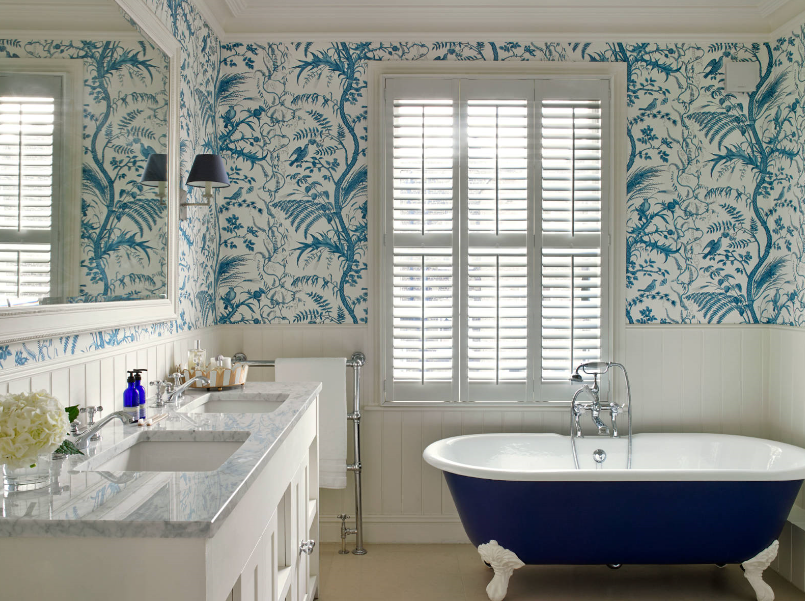
Photo: Houzz
Where it works: bathrooms, powder rooms, laundry rooms, mudrooms and kitchens. Paint it semi-gloss or gloss, which Family Handyman recommends because it holds up to cleaning, and work paint into the grooves with a brush.
Ideas: pair white beadboard with a bold wallpaper above, as in the bathroom above. Run it up to the window sills for one clean line. In a kitchen, carry it onto the back of the island or the end of a cabinet run. Our guide to beadboard cabinets shows where the panel looks best around cabinets.
Beadboard vs. Wainscoting: What's the Difference?
Wainscoting is the whole category of lower-wall paneling. Beadboard is one type of it, with narrow vertical boards and a small bead between each one. So beadboard used on the lower part of a wall is wainscoting, but wainscoting can also be raised panels, flat panels, board and batten or picture frame molding.
The difference matters when you shop. "Wainscoting" kits can mean any of the styles in this guide, while "beadboard" always means the grooved look. Family Handyman notes that beadboard is often confused with board and batten too: board and batten has wide flat panels with thin strips between them, while beadboard has a narrow, repeating groove.
2. Board and Batten Wainscoting
Board and batten uses vertical strips, called battens, spaced evenly across the wall. According to Bob Vila, it moved indoors in the late 1800s to stop chairs from denting plaster walls, and became a popular look in bungalows, Arts and Crafts and country homes. Indoors, the battens usually go straight onto the drywall, with no base boards behind them. The Spruce says battens can be from about an inch to several inches wide, spaced 6 to 10 inches apart.
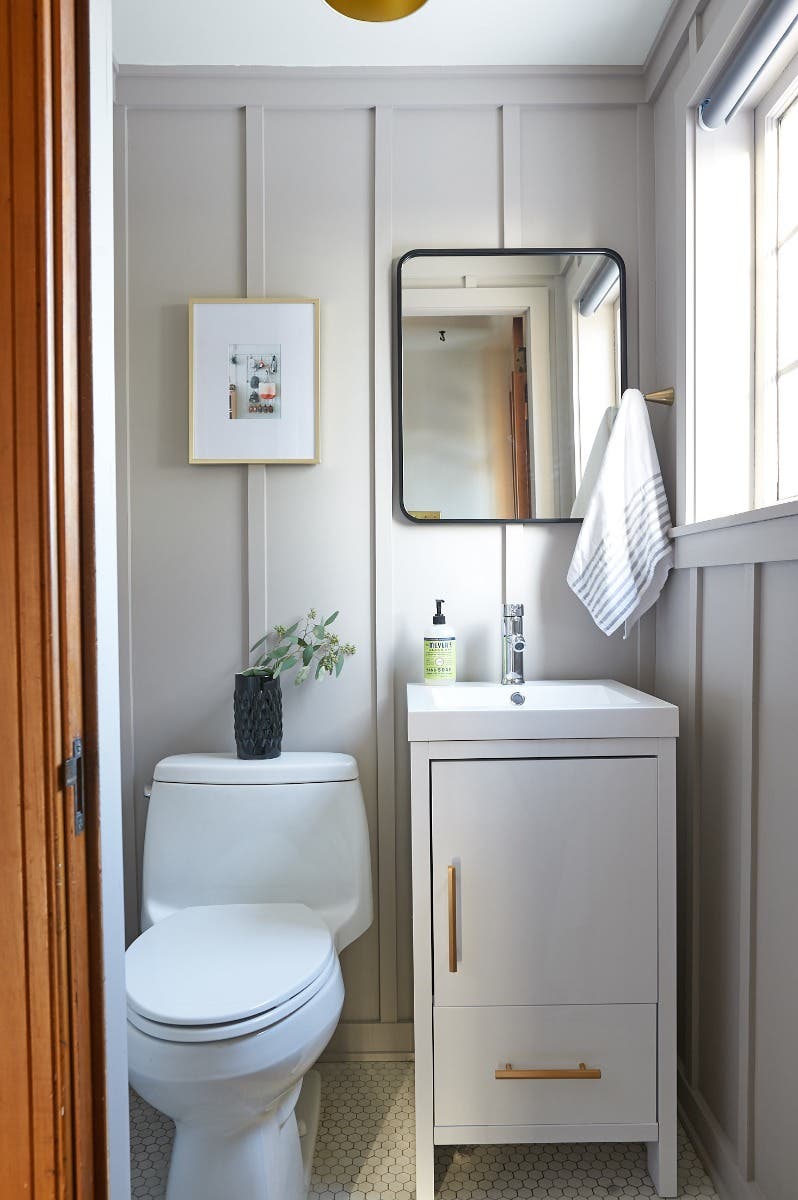
The Sweet Beast Blog
Ideas: paint the battens and wall the same color for a quiet, built-in look. Run it to the ceiling in a small powder room, as above, to make the room feel taller. Add a shelf ledge on top in a mudroom or entry. Bob Vila's tip: sketch the layout to scale first, so you don't end up with a 12-inch space at one corner and a 3-inch space at the other.
A note on our own trim: Lily Ann sells batten molding in our cabinet finishes, listed at 3/4" wide x 96" long x 1/4" deep. It's made to cover seams on cabinet panels. At 3/4 inch it's at the very thin end of the batten widths above, so it suits a fine, delicate grid, not a chunky farmhouse look. Our guide to cabinet trim and molding types shows where it goes on cabinets.
3. Raised Panel Wainscoting
Raised panel is the most formal wainscot. The Spruce describes rectangles or squares with deep V-shaped bevels, set in a line between vertical strips 4 to 8 inches wide, with rails at the top and bottom. The bevels throw deep shadows, which is why it's often found in older, more expensive homes. You can buy it pre-built in MDF or polystyrene, or build the look by adding molding to flat panels.
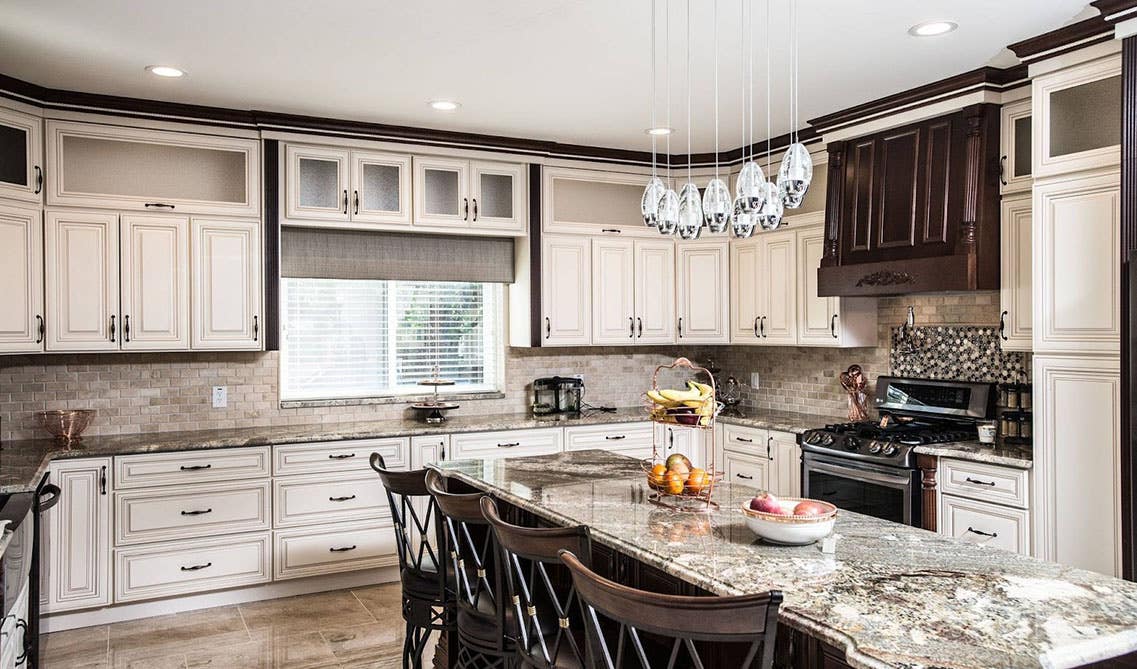
Lily Ann Cabinets
Where it works: dining rooms, studies, entry halls and formal living rooms. It also echoes raised-panel cabinet doors. Lily Ann's raised panel cabinets page lists lines such as Key Largo White and Charleston Linen (sample cabinets in both showed In Stock on October 1, 2026). Raised panel walls in the dining room and raised panel doors in the kitchen next to it read as one house. Our cabinet door styles guide compares raised panel with Shaker and slab doors.
4. Flat Panel Wainscoting
Flat panel (also called recessed panel) wainscoting is the plain version: flat panels framed by rails and stiles, with no bevel. The Spruce calls smooth, unadorned paneling a hallmark of modern and contemporary design. It's the wall version of a Shaker cabinet door, which makes it easy to pair with Shaker cabinets.
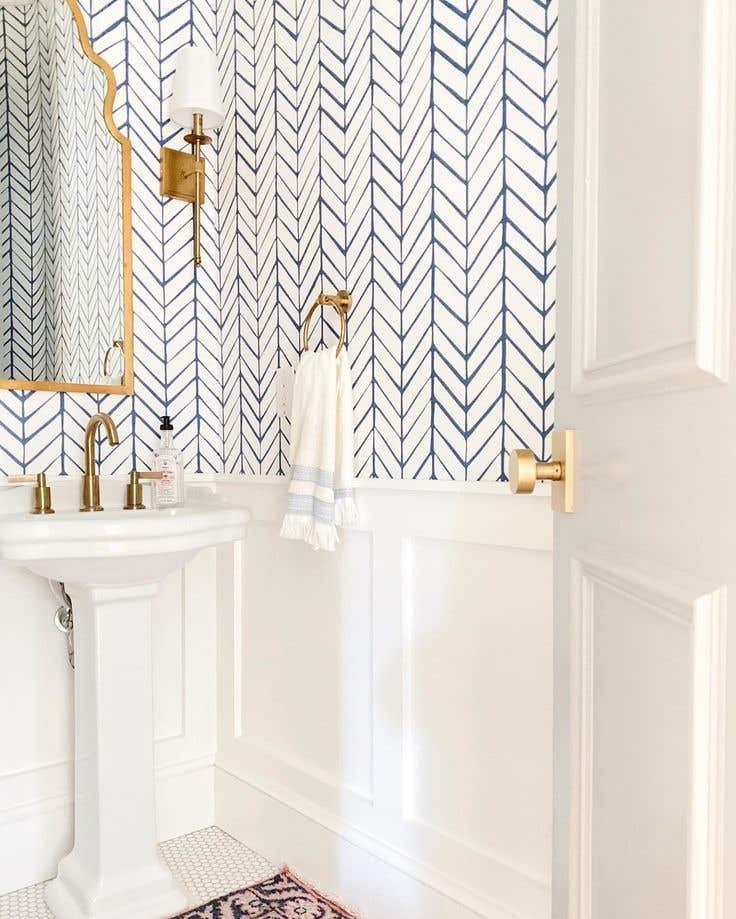
Family Handyman's build is a good model: 1x6 boards run around the room as top and bottom rails, with narrower vertical boards every 30 inches or so, then trim is added to finish the panels. Their top rail sits at 31 1/2 inches.
Ideas: paint the panels and the wall below the chair rail one color, with wallpaper or a lighter color above. Go tall, about two-thirds of the wall, for a modern take, a look Bob Vila calls trending. Paint it a deep color like navy or green and keep the trim the same shade.
5. Picture Frame Molding
Picture frame molding is the easiest way to fake paneling. Thin strips of molding are mitered into rectangles and nailed to a painted wall, often under a chair rail. Painted the same color as the wall, the boxes look like flat panels for a fraction of the work. It's also the version most people mean when they search for wainscoting on an accent wall.
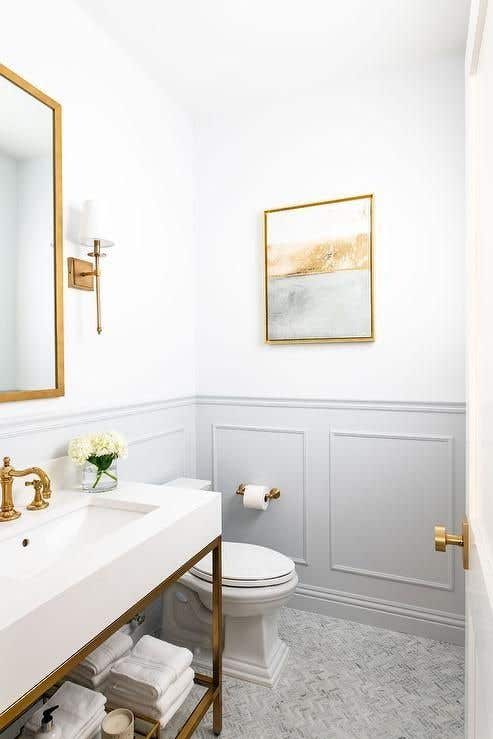
How to lay it out: Family Handyman's panel rules work well for picture frame boxes too.
- Start on the longest wall without doors or windows, and size the boxes there.
- Keep the boxes the same size along a wall. Smaller boxes in the corners are fine if both ends match.
- Aim for boxes about 1 high to 1.6 wide. As they get close to square, or longer than about 1 to 2, they start to look awkward.
- Plan around outlets so a cover plate doesn't land half on a frame.
- Lay it out with painter's tape first, and move the tape until it looks right.
6. Shiplap Wainscoting
Shiplap is made of wide horizontal boards that overlap along their long edges, borrowed from house siding. The Spruce says it gives dining rooms, bedrooms and halls a rustic, charming look. As a wainscot it runs to chair-rail height, often capped with a simple flat ledge. Our shiplap accent wall ideas and shiplap bathroom wall ideas show it in full-wall and half-wall form, including behind a York Driftwood Grey vanity.
Lily Ann's shiplap panel is listed at 96" wide x 42" high x 1/2" deep, in cabinet finishes such as Colorado White Shaker and Craftsman Lily Green Shaker (in stock as of October 1, 2026).
Chair Rail Ideas
Chair rail is the horizontal molding that caps wainscoting, but it also works on its own. Some ideas, from architect James Dixon in Remodelista and the styles above:
- Two-tone wall. Paint the chair rail and the wall below it one color and the wall above another, a combination Dixon describes.
- Stained rail. A dark stained rail instead of a painted one, which Dixon says you see a lot in Arts and Crafts homes.
- Wallpaper above. Paper only the wall above the rail. In a powder room it takes less paper, as in these budget powder room ideas.
- Rail over beadboard or panels. The classic: the rail finishes the top edge of any wainscot in this guide.
- Same trim family. Dixon's rule is that the chair rail should match the room's other trim in detail and proportion.
Wainscoting Ideas by Room
- Dining room: raised panel, flat panel or picture frame boxes under a chair rail. This is the room wainscoting was made for, since chairs bump the walls.
- Bathroom and powder room: beadboard or board and batten in a semi-gloss paint. Bob Vila suggests stopping bathroom wainscot around 40 inches, or about 8 inches above the rim of a tub.
- Kitchen: beadboard on the island back, a peninsula end, or a short wall. Bob Vila notes beadboard is often run up to the bottom of the wall cabinets; see our upper cabinet height guide for where that line falls.
- Mudroom and entry: tall board and batten with hooks or a shelf on top, where Bob Vila says the extra protection pays off.
- Hallway and stairs: flat panel or picture frame boxes, kept at one height all the way along.
How High Should Wainscoting Go?
The usual rule is one-third of the wall, including the cap: about 32 inches with 8-foot ceilings and 36 inches with 9-foot ceilings, according to Bob Vila. A tall version runs about two-thirds of the way up. Avoid stopping exactly halfway. Taller rooms and formal rooms usually look better with the wainscot a little lower than one-third, not higher.
Matching Wainscoting to Your Cabinets
If the wainscoting is in or next to the kitchen or bath, matching it to the cabinets ties the space together. Lily Ann doesn't sell chair rail or raised wall panels, but we do sell flat-backed wall paneling in the same finishes as our cabinet lines:
| Lily Ann product | Listed size | Example finishes in stock (Oct 1, 2026) |
|---|---|---|
| Bead board plywood panel | 96" W x 42" H x 1/4" D | Colorado White Shaker, Navy Blue Shaker, Grey Shaker Elite, Craftsman Black Shaker, York Linen |
| Shiplap panel | 96" W x 42" H x 1/2" D | Colorado White Shaker, Craftsman Lily Green Shaker |
| Batten molding | 3/4" W x 96" L x 1/4" D | Colorado White Shaker |
The bead board panel comes in 13 finishes that showed In Stock on October 1, 2026, two of them marked Final Sale. At 42 inches tall, it's a little over the one-third line on an 8- or 9-foot wall, so most rooms cut it down and add a cap. In the product photos the grooves run across the short side, so with the 96-inch edge along the floor the beads run up and down. Order free samples to see the finish and the grooves in your own light.

Lily Ann Cabinets: Craftsman Natural Shaker bead board panel
The Takeaway
Pick the wainscoting style that matches the rest of the house. Beadboard and board and batten feel casual. Raised panel feels formal. Flat panel and picture frame boxes sit in between and suit Shaker cabinets. Shiplap leans farmhouse. Keep it near one-third of the wall, cap it with a chair rail from the same trim family, and lay it out with tape before you cut.
Planning a kitchen or bath? Get a free 3D design and we'll show matching panels in your plan.
Frequently Asked Questions
Wainscot is the general name for paneling on the lower part of a wall; beadboard is one style of it. Beadboard has narrow vertical boards with a small rounded bead between each one. Other wainscot styles include raised panel, flat panel, board and batten and picture frame molding. So all beadboard on a lower wall is wainscoting, but not all wainscoting is beadboard.
Yes. The main types are beadboard, board and batten, raised panel, flat (recessed) panel, picture frame molding and shiplap. Raised panel is the most formal, beadboard and board and batten are casual, and flat panel sits in between. The Spruce also lists tongue-and-groove and coffered paneling as related wall paneling styles.
Flat panel wainscoting is the most modern style; The Spruce calls smooth, unadorned panels a hallmark of contemporary design. Running wainscoting about two-thirds up the wall is a current look, according to Bob Vila. Painting the wainscot and wall one deep color, and slim board and batten grids, also read modern.
A chair rail on its own, with two paint colors or wallpaper above and paint below, gives a similar split without the paneling. Shiplap and tongue-and-groove boards are other paneling options. Picture frame molding boxes are the cheapest way to get a paneled look, since they go straight onto a painted wall.
It depends on the room and finish. Family Handyman built painted panel wainscoting from poplar because it's easy to cut, nail and sand. Beadboard comes in wood, MDF, PVC and vinyl, per Family Handyman, and The Spruce notes raised panels can be bought pre-made in MDF or polystyrene. In damp rooms like bathrooms, a well-sealed, painted finish matters as much as the material.
The most common are vertical beadboard, evenly spaced board and batten, rows of raised or flat panels, and picture frame boxes. For panels and boxes, Family Handyman suggests keeping each one about 1 high to 1.6 wide and the same size along a wall. Shiplap adds a horizontal pattern.
It can. The Spruce says wood paneling adds to a remodel's cost but improves a home's durability and resale value, and protects walls from wear like chair bumps. We found no reliable figure for how much value it adds, so treat it as a finish upgrade, not an investment with a known return.
Pros: it's durable, protects walls from scuffs, goes up quickly in large panels and suits cottage and farmhouse rooms, per Family Handyman. Cons: the grooves take more care to paint and clean, which is why Family Handyman recommends semi-gloss or gloss paint brushed into the grooves. Its casual look also fits less well in a very formal room.
Both. Family Handyman's method is to apply adhesive to the back of the panel, set it level on the wall, then secure it with finish nails, lining the beads up from panel to panel. Nailing into studs where you can makes it stronger.
















Comments