


A Victorian kitchen is modeled on kitchens from the Victorian era (1837 to 1901). The original was a plain, washable work room used only for cooking: washing up happened in a separate scullery, and dishes sat on a tall freestanding dresser, not in built-in cabinets. A modern Victorian kitchen keeps that feel with raised-panel or painted cabinets, crown molding, glass-front uppers, a central table or island and simple white tile.
- The original was a work room: cooking only, plain whitewashed walls, stone or tile floors and no sink. Washing up happened in the scullery, per the Victorian Society.
- No fitted cabinets. Storage was a tall wooden dresser, about 7 feet high, plus a separate larder. So no cabinet door is truly "original."
- "Modern Victorian" is what people build: a modern kitchen with period details, often with the old scullery folded in or turned into a butler's pantry.
- Doors that fit: painted raised-panel doors in a matt-looking finish, or dark stained wood for the formal-house feel.
- Trim does the heavy lifting: crown molding, furniture valances, furniture base molding, a plate rack and glass-front uppers stand in for the old dresser.
- Lily Ann fit, stated plainly: raised-panel lines, matching trim, plate rack and glass-door cabinets, yes. Freestanding dressers, inset doors and porcelain sinks, no. Stock checked September 21, 2026.
What Is a Victorian Kitchen?
A Victorian kitchen is a kitchen from, or inspired by, the Victorian era (1837 to 1901). The original was a plain work room used only for cooking. Washing up happened in a separate scullery, and dishes lived on a tall freestanding dresser rather than in built-in cabinets. Today's "Victorian kitchen" is usually a modern fitted kitchen with period details: raised-panel doors, crown molding, glass-front uppers, a central table or island and simple white tile.
That gap matters when you remodel. The most authentic pieces of a Victorian kitchen are furniture, not cabinets. The rest of this page covers what the original looked like, what people build today, and which parts a cabinet order can and can't give you.
What a Real Victorian Kitchen Looked Like
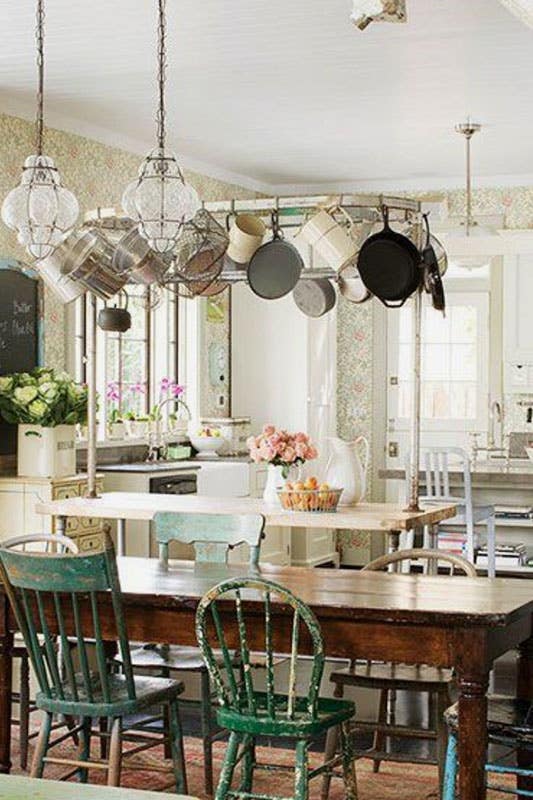
The Victorian Society, the UK charity that champions Victorian and Edwardian buildings, describes a room very different from a modern kitchen:
- Cooking only. Washing up, scrubbing vegetables and other wet jobs happened in the scullery. Even the smallest Victorian houses had one, and sinks were rarely put in kitchens before the 1900s.
- Plain, washable walls. Upper walls were plain plaster, whitewashed regularly. Lower walls had tall tongue-and-groove boarding painted in washable gloss, or tile or glazed brick.
- Hard floors. Stone slabs or unglazed tile were the norm, with wooden boards around the table where the cook stood.
- High windows. Open ranges threw off a lot of heat, so large kitchens had high ceilings and windows set high for ventilation.
- Coal before gas. Gas ranges were shown at the Great Exhibition of 1851, but they didn't start replacing solid-fuel ranges in real numbers until the 1890s.
The Victorian Emporium, a UK period-fittings supplier, adds the furniture. Larger kitchens had a big central table, usually pine, scrubbed clean with sand and soda. Pots, utensils and china went in a wooden dresser about 7 feet tall: open shelves on top, drawers in the middle and a cupboard at the bottom. Food was kept in a separate larder, because the range made the kitchen too warm.
Both sources describe British houses. Treat them as a guide to the feel of the room, not a rulebook for an American home of the same age.
Victorian vs. Modern Victorian Kitchens
Almost nobody rebuilds a true Victorian kitchen. The Spruce notes that because the original kitchens were small, people in period homes often move the kitchen and fold the old scullery idea into it. They keep a few period elements, like freestanding furniture and a large central work table or island.
That is what "modern Victorian" means: modern appliances, a sink in the kitchen and fitted cabinets, dressed in period details. It is also where cabinets come in. The Victorians didn't have fitted cabinet runs, so no cabinet door is "original." The goal is a door and trim package that looks at home in an old house.
The Victorian Kitchen Checklist: What You Can Buy as Cabinets
Here is each Victorian element, the modern way to get it, and whether Lily Ann carries it. We checked every row against the live Lily Ann catalog on September 21, 2026.
| Victorian element | Modern way to get it | Lily Ann carries it? |
|---|---|---|
| Tall wood dresser for china and pots | An antique dresser, or tall wall cabinets with a plate rack and glass doors | Partly. Plate rack and glass-door wall cabinets, yes. A freestanding dresser, no. |
| Central work table | A real table, or an island built from base cabinets | Island from base cabinets, yes. Freestanding tables, no. |
| Scullery | A butler's pantry or back prep room | Cabinets for it, yes. See below. |
| Raised-panel or painted doors | Raised-panel doors, painted or stained | Yes. Several raised-panel lines. |
| Inset doors (door sits flush inside the frame) | Inset cabinetry | No. Every line we checked is full overlay. |
| Crown and furniture-style trim | Crown molding, valances, furniture base molding | Yes, in matching finishes. |
| Large white porcelain sink | A farmhouse-style sink | Sink base cabinets, yes. We didn't find a white porcelain sink in the catalog. |
| Plaster, tile or boarded walls; stone or tile floors | Subway or brick-shaped tile, beadboard, stone-look floors | Not a cabinet item. |
Choosing Cabinets for a Victorian-Style Kitchen
Painted raised-panel doors

The Victorian Emporium suggests painted or stained wood cupboards in a matt finish rather than gloss. For a painted look, Lily Ann's raised-panel lines in white and cream are the natural fit. Lily Ann's own cabinet door styles guide explains the difference in detail:
- Bristol Linen has several framing lines along the inner and outer edges of the door, the more detailed profile. That extra detail suits the ornate side of Victorian style.
- Key Largo White has a single contour around the center panel. It is simpler and closer to the plain, practical kitchen the Victorians actually had.
- Charleston Linen is a cream raised-panel door in a warm off-white.
Ask for a sample and check the sheen yourself. We didn't find a sheen rating on the line pages, and it's the one detail that makes a painted door read period or modern.
Dark stained wood

The Spruce points out that Victorian homes as a whole used dark, ornate finishes and rich colors like emerald green and burgundy, while the real kitchen, out of sight, was decorated simply. So a dark wood kitchen reads more like the formal rooms of a Victorian house than its original kitchen. That is still a popular choice. Charleston Cherry is a cherry-colored stain with a chocolate glaze on a raised-panel door. Its spec sheet lists the wood species as birch. Some sizes were out of stock on September 21, 2026, so check your sizes first.
The turned posts on the island in this photo are sold separately, and the Charleston Cherry leg posts showed out of stock on September 21, 2026.
Mix the two
A cream or white perimeter with a dark stained island is a good middle path. It echoes the Victorian pairing of a painted room around a wood work table. See all of Lily Ann's raised-panel cabinets or the softer antique white cabinets to compare.
Period Details That Make It Read Victorian

Rebuild the dresser with cabinets
A plate rack and a few glass doors do most of what the old dresser did: they put plates and china on show. The Charleston Cherry Wall Plate Rack Cabinet (30 by 18 inches) showed in stock on September 21, 2026. For glass, the Charleston Linen Wall Open Frame Glass Door Cabinet (15 by 30 inches) was also in stock. Our guide to glass-front cabinets covers where to use them.

Add furniture-style trim
Trim is what turns a row of boxes into something that looks built for an old house. For the Charleston Linen finish, these all showed in stock on September 21, 2026:
- Large crown molding to finish the tops of wall cabinets. See our cabinet crown molding guide for profiles and installation.
- A furniture valance, a shaped trim piece that spans the gap over a sink window or between wall cabinets.
- Furniture base molding along the toe kick, so base cabinets look like freestanding furniture.
- Corbels under an island overhang or a hood.
Keep the rest simple and period
- Tile: white brick-shaped tile, the kind both sources describe on Victorian kitchen walls.
- Hardware: functional and unfussy, in a matt finish rather than shiny, per the Victorian Emporium.
- Lighting: plain, practical pendants hung over the central table or island.
- A ceiling rack: a suspended rack for drying towels or hanging pans, another Emporium suggestion.
What Lily Ann Doesn't Carry for a Victorian Kitchen
Some of the most Victorian pieces are furniture, and Lily Ann sells fitted cabinets. Here is what you'll need to source elsewhere:
- A freestanding dresser or hutch. An antique dresser next to a fitted run is a common mix. Our kitchen hutch ideas cover freestanding and built-in options.
- Inset doors. Some period-home renovators choose inset doors because they feel more traditional. Renovation Husbands' own Victorian kitchen plan used them. Every Lily Ann line we checked lists full-overlay doors. If inset is a must, Lily Ann isn't the right source.
- A freestanding work table. An island built from base cabinets is the fitted version.
- A white porcelain farmhouse sink. We found sink base cabinets but not this sink.
Bring Back the Scullery as a Butler's Pantry
The one Victorian room that works well today is the scullery. A back room for washing up, prep and storage keeps mess out of the main kitchen, which is exactly what the Victorians used it for. Our butler's pantry cabinets guide covers the layouts and cabinet sizes for that kind of room.
Planning a Kitchen in an Older Home
- Check the rules first. If your house is in a historic district, find out what needs approval before you move walls or windows.
- Measure every wall at several heights. Older houses can be out of square. Filler strips and scribe molding cover small gaps.
- Keep what's original. High windows, old flooring or a boarded wall are worth more to the look than any new cabinet.
- See the finish in your own light. Order free door samples and look at them next to your floor and tile in the morning and evening.
















Comments