


Tile countertops are a good idea if you want a low-cost, heat-resistant counter you can build yourself and you accept grout upkeep. They are a poor fit for a busy prep area, because grout lines stain and the surface is harder to wipe than a slab. Bob Vila puts professionally installed ceramic tile counters at $18 to $35 per square foot, against $75 to $200 for a granite slab. Design magazines say tiled counters are coming back, mostly as handmade tile on one feature surface such as an island.
- Are they back? In design magazines, yes. Homes & Gardens (2022) and House & Garden (2023) both say tiled counters are returning. We found no figure for how common they are.
- Pros: low cost, takes hot pans, DIY-friendly, any color or pattern (Bob Vila).
- Cons: grout stains and needs sealing at least once a year, the surface has joints, and tile can chip.
- Cost: ceramic tile installed runs $18 to $35 per square foot (Bob Vila) or from $19.10 to $32.35 (Homewyse, September 2026). Granite slab runs $80 to $150 (HomeGuide).
- Best tile: porcelain, in larger pieces with tight, sealed joints. Avoid wall-only tile and glass.
- Best spots: an island, coffee bar or bathroom vanity top. The main sink and range run is the hardest place for tile.
- Lily Ann Cabinets sells the cabinets the counter sits on: get the base cabinets level and fastened before any plywood or tile goes on.
Tile countertops were everywhere in the 1970s and 1980s, then fell out of favor as stone slabs took over. Now tiled counters are showing up in design magazines again, in handmade tile, on islands and bathroom vanities.
So are they really coming back, and should you put one in? This guide gives a straight answer: what the design press is saying, the real pros and cons, what tile costs next to granite, which tile to use, and how a tile counter sits on your cabinets. Every cost and claim has a named source, checked October 7, 2026.
Are Tile Countertops a Good Idea?
Tile countertops are a good idea if you want a low-cost, heat-resistant counter you can build yourself, and you accept grout upkeep. They are a poor fit for a busy prep area if you want a smooth surface you can wipe in one pass, because grout lines stain and the surface is not perfectly flat. Many kitchens get the look with less work by tiling one feature surface, such as an island.
| A tile countertop suits you if… | Think twice if… |
|---|---|
| Your budget is tight and you can do the work | You cook a lot and wipe counters many times a day |
| You set hot pans down on the counter | You roll dough or need one flat, smooth surface |
| You want color, pattern or a handmade look | You don't want to seal grout every year |
| The surface is an island, coffee bar or vanity top | It's the main counter around the sink and range |
The left column comes from Bob Vila's list of pros (cost, heat, DIY, design range). The right column comes from the cons that Bob Vila and Homes & Gardens describe: stained grout, an uneven surface and tile that can chip. The last row is our own summary.
Are Tile Countertops Coming Back?
Yes, in design magazines and custom kitchens, though not as the default counter. Bob Vila notes tile countertops peaked in the 1970s and 1980s and then lost ground to solid surface and stone slabs. Since 2022, Homes & Gardens and House & Garden have both run features saying tiled counters are returning, mostly in handmade tile and often on a single surface.
Here is what those sources say:
- Homes & Gardens (December 26, 2022) quotes kitchen maker Ben Burbidge saying "tile countertops are making a comeback," and calls them budget-friendly and easy to customize. The same article quotes a designer who thinks tile is an impractical counter in any form. Read it in The tile countertop trend is back.
- House & Garden (November 14, 2023) says tiled counters were at their height in the 1980s and are quietly returning in kitchens and bathrooms. It also says grout upkeep is why they fell out of favor. One designer in the piece suggests keeping tile to one feature surface, like an island, and using something simpler everywhere else. See It's time to reconsider tiled countertops.
- Bob Vila says today's popular designs run the same tile from the countertop up the backsplash for one continuous look.
What we can't tell you is how many kitchens actually have them. We found no survey or sales figure for tile countertops, so we won't quote one. "Back in the magazines" is a fair way to put it.
The new version also looks different from the one many people remember, which was small glossy squares with wide grout lines. The counters in these features are mostly handmade tile in rustic, relaxed kitchens. Homes & Gardens quotes one homeowner who chose handmade tile on purpose, because tile that starts out a little uneven hides chips and wear.
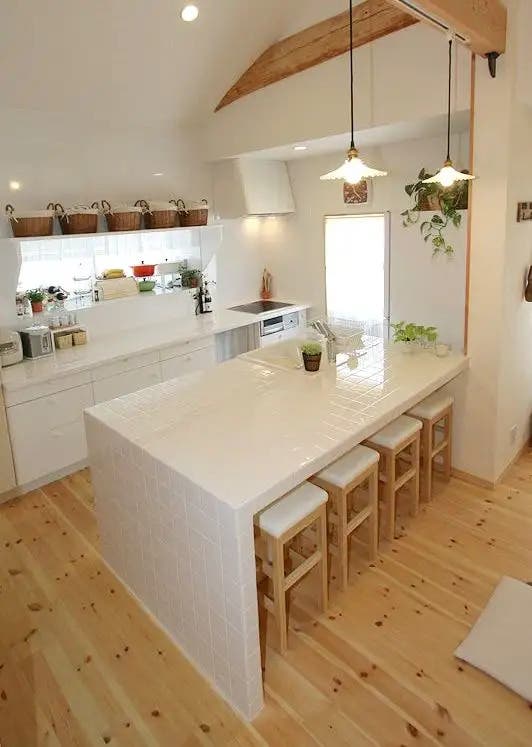
Tile Countertop Pros and Cons
| Pros | Cons |
|---|---|
| Low cost. Ceramic and porcelain tile average $2 to $3 per square foot, per Bob Vila. | Grout stains. Coffee, wine and other spills stain grout that isn't sealed regularly. |
| Takes heat. Bob Vila says you can set hot pans right on tile. | Not a smooth surface. Joints make it harder to wipe, and the Homes & Gardens writer calls her old tile counters uneven. |
| DIY-friendly. Family Handyman rates it an intermediate job of 2 to 3 days. Slab counters need a pro. | Tile can chip. A heavy pot dropped on the counter can chip a tile. |
| Endless looks. Any color, size, shape or pattern. | A beginner's work shows. Bob Vila warns a first-time tiler can end up with a less-than-perfect surface. |
| Cheaper than slab, even installed by a pro (see the cost table). | Stone tile needs sealing once or twice a year, on top of the grout. |
Sources: Bob Vila, All You Need to Know About Tile Countertops (updated October 1, 2020); Homes & Gardens (linked above); Family Handyman (linked below).
Is Tile Cheaper Than Granite?
Yes. Bob Vila puts professionally installed ceramic tile countertops at $18 to $35 per square foot, against $75 to $200 for a granite slab. Homewyse's September 2026 estimate for a basic ceramic tile counter starts at $19.10 to $32.35 per square foot, and HomeGuide lists granite slab counters at $80 to $150 per square foot installed.
These are national figures from cost guides, not quotes. They also don't agree with each other exactly, so we show each one with its source and date.
| Countertop | Cost per sq. ft., installed | Source |
|---|---|---|
| Ceramic tile, pro-installed | $18 to $35 | Bob Vila (updated Oct. 1, 2020) |
| Ceramic tile, pro-installed (4" x 4" glazed tile, basic edge, one sink cutout) | Starts at $19.10 to $32.35 | Homewyse (September 2026 estimate) |
| Tile, do-it-yourself | Usually $10 to $30 | Family Handyman (updated Sept. 18, 2024) |
| Natural stone tile, pro-installed | $45 to $75 | Bob Vila |
| Glass tile, pro-installed | Up to $100 | Bob Vila |
| Granite slab | $75 to $200 | Bob Vila |
| Granite slab | $80 to $150 | HomeGuide (page dated Aug. 10, 2023) |
| Engineered quartz slab | $80 to $155 | Bob Vila |
Sources, checked October 7, 2026: Bob Vila (linked above); Homewyse, Cost to Install a Tile Countertop; Family Handyman, Installing a Tile Countertop and Backsplash; HomeGuide, Granite Countertops Cost; Fixr, Granite Countertop Cost.
What about granite tile? It is the middle path: real granite, cut into tiles. The tile alone costs $6 to $15 per square foot per HomeGuide, or $8 to $15 per Fixr (page updated January 31, 2025). Bob Vila's older figure for stone tile is $4 to $7. HomeGuide calls granite tile the cheapest granite countertop, but adds that it is not ideal for countertops because the extra grout lines need more upkeep.
So tile wins on price by a wide margin. What you are trading is grout upkeep and a surface with joints in it. For a full comparison of slab materials, see quartz vs. granite countertops and our guide to countertop materials.
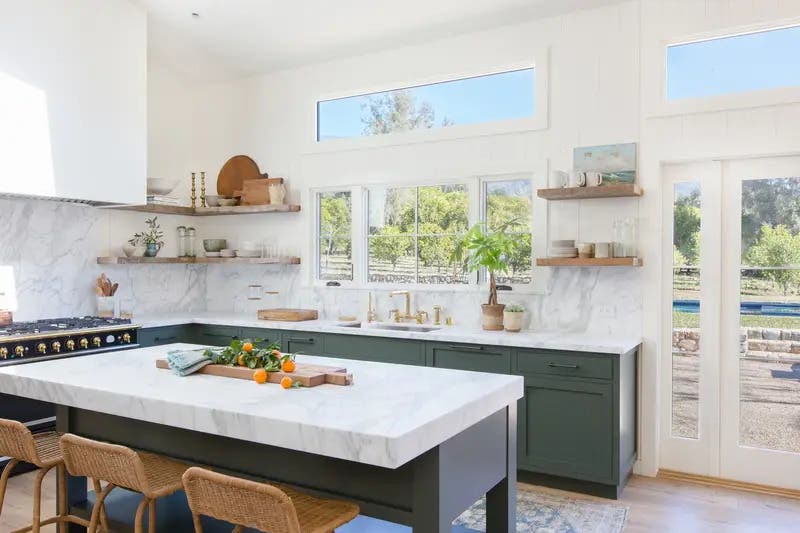
What Tile Is Best for Countertops?
A counter takes far more abuse than a wall. In Homes & Gardens, the creative director of tile maker Fired Earth warns that many kitchen wall tiles have delicate glazes that heat and scratching will damage on a work surface. Here is how the common choices compare.
- Porcelain tile is the safest pick. It isn't porous, so it doesn't need sealing, which is why the same Homes & Gardens source suggests it over stone if you don't want to reseal.
- Glazed ceramic tile is the classic and the cheapest. Check that the tile is rated for more than walls. Our porcelain vs. ceramic tile guide explains the wear rating on the box.
- Stone tile (granite, slate, travertine) gives a natural look, but Bob Vila notes stone is porous and should be sealed once or twice a year.
- Glass tile is the most fragile and the most likely to chip, which is why Bob Vila says it is used more on backsplashes than on counters.
Three more choices matter as much as the tile itself:
- Tile size. Bigger tile means fewer joints, and joints are where the cleaning problems are.
- Grout. Bob Vila says to use sanded grout in joints 1/8 inch or wider and unsanded grout in narrower ones, and to seal grout at least once a year. Epoxy grout costs more but resists stains far better than cement grout. Our guide to sanded vs. unsanded grout covers when epoxy is worth it.
- The edge. The front edge needs its own trim tile. Bob Vila points to rounded-edge tile for a smooth, contoured edge. See countertop edge profiles for what the edge shapes are called.
Thinking about subway tile? Our subway tile patterns guide covers the layouts, the sizes, and whether subway tile belongs on a countertop.
How a Tile Countertop Sits on Your Cabinets
A slab counter arrives as one finished piece. A tile counter is built in layers on top of the base cabinets, so the cabinets matter more than you might think. Family Handyman's step-by-step tile countertop project builds it like this:
- A plywood base is cut to overhang the cabinets by about 1-1/2 inches and screwed to the cabinets every 8 inches.
- Cement backer board is set in thinset mortar on the plywood and screwed down every 8 inches. Strips of backer board cover the front edge.
- The tile is laid out dry, starting from an inside corner if there is one, then set in thinset.
- Grout, caulk and sealer finish the job.
Don't skip the backer board. Bob Vila warns against tiling straight onto plywood: grout takes in moisture, the plywood swells, and tiles can lift and pop.
Here is what that means for the cabinets underneath:
- Level and fastened first. Tile is close to perfectly square, so Family Handyman's tile setter says any gap or unevenness in the base shows in the finished counter. Get the base cabinets level and screwed together before the plywood goes on. Our cabinet installation guide covers that.
- Watch the top drawers. A front edge tile hangs down past the plywood. Family Handyman adds a second, 1/4-inch layer of plywood when the edge tile would otherwise get in the way of the drawer fronts. Check this on any cabinet where the top drawer sits close to the top of the box.
- Add up the height. Lily Ann base cabinets are 34-1/2 inches tall (checked on a live Colorado White Shaker base cabinet listing on October 7, 2026). Plywood, backer board, mortar and tile all stack on top of that. Add your layers and compare the total with the usual 36 inches in our kitchen counter height guide.
- Plan the sink early. The sink opening is cut into the plywood and backer board before any tile goes down, and the way it's built depends on whether the sink drops in or mounts under the counter.
Where Tile Countertops Work Best
You don't have to tile the whole kitchen. The design sources above point the same way: use tile where it's seen more than it's scrubbed.
- A kitchen island. One tiled island with plain counters around it is the look House & Garden's designer recommends.
- A coffee bar or butler's pantry. Small, light use, and a good place for bold tile.
- A bathroom vanity top. Less food, less heat, fewer stains. Our guide to bathroom vanity top materials lists tile as a DIY-friendly choice for odd shapes, with grout as the weak point. See our bathroom vanities for the cabinet underneath.
- A laundry or mudroom counter.
The hardest place for tile is the main run around the sink and range, where the counter gets wet, greasy and wiped all day. That is where most kitchens choose a slab.
How to Care for a Tile Countertop
Bob Vila's maintenance advice is short:
- Wipe the counter with a damp sponge after cooking, and use an all-purpose kitchen spray for grease.
- Skip acid cleaners such as vinegar. They can damage stone tile and dull the finish on ceramic, porcelain and glass.
- Scrub food out of grout lines with a small brush.
- Seal the grout at least once a year, and seal stone tile once or twice a year.
- Wipe up spills right away, because grout and stone soak up liquid.
If the grout has already gone dark, our guide to cleaning mold from grout covers what's safe to use.
Like the Look, Not the Grout? Two Other Options
- Put the tile on the wall. Run a tile backsplash down to a solid countertop. You get the color and pattern at eye level and no grout on the work surface. Our backsplash guide helps you match tile to your counters and cabinets.
- Use a budget slab. Our kitchen countertop ideas page covers 15 countertop ideas, including lower-cost materials.
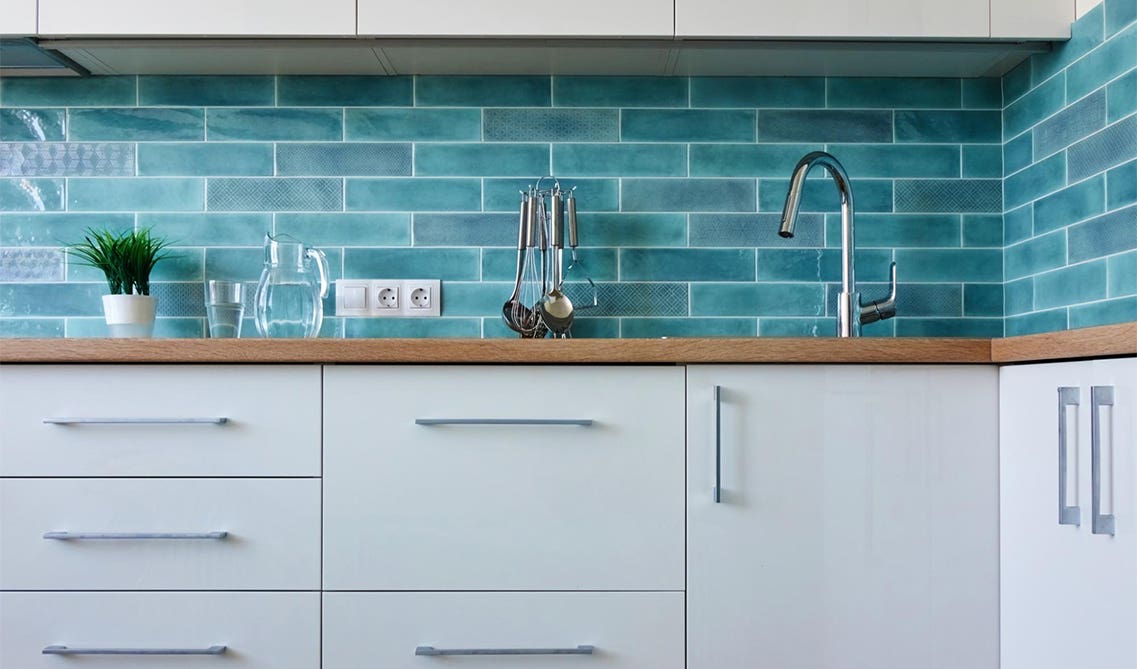
The Takeaway
Tile countertops are back in design magazines, mostly as handmade tile on a single feature surface. They cost far less than granite, take heat and can be a DIY job. The price is grout: it stains, it needs sealing every year, and it makes the surface harder to wipe. Use porcelain tile, large pieces and tight, sealed joints, and consider tiling the island or a vanity top instead of the whole kitchen.
Whatever goes on top, it sits on the cabinets. Get a free 3D kitchen design to plan the base cabinets, island and sink before you choose the counter, or order free cabinet samples to hold against your tile. Our shaker cabinets suit both a tiled island and a plain slab.
Frequently Asked Questions
They are a good idea if you want a low-cost, heat-resistant counter you can install yourself and you don't mind looking after grout. Bob Vila lists the pros as cost, heat resistance, DIY-friendly installation and endless design choices. The cons are grout that stains if it isn't sealed, tile that can chip, and a surface with joints that is harder to wipe. For a busy main counter, most people are happier with a slab.
Yes, in design magazines and custom kitchens. Homes & Gardens ran a feature in December 2022 saying the tile countertop trend is back, and House & Garden said in November 2023 that tiled counters are quietly returning in kitchens and bathrooms. The new look is handmade or matte tile, often on one feature surface such as an island. We found no survey showing how common they are, so treat it as a design trend, not a market shift.
Yes. Bob Vila puts professionally installed ceramic tile at $18 to $35 per square foot and granite slab at $75 to $200. Homewyse's September 2026 estimate for a basic ceramic tile counter starts at $19.10 to $32.35 per square foot, and HomeGuide lists granite slab at $80 to $150 installed. Granite tile is a middle option at $6 to $15 per square foot for the tile alone, per HomeGuide. These are national guide figures, not quotes.
Porcelain tile is the safest choice because it isn't porous and doesn't need sealing. Glazed ceramic is cheaper and works if the tile is rated for more than wall use. Stone tile needs sealing once or twice a year, and glass tile chips most easily. Whatever you pick, larger tiles with tight joints mean less grout to keep clean.
Porcelain is the best tile for a countertop. It isn't porous, so it resists stains without sealing, and Homes & Gardens' tile source recommends it over stone for anyone who doesn't want to reseal. The grout between the tiles is still the weak point and still needs sealing. Porcelain also comes as large slabs with very few seams, which is a different product from tile and is installed by a fabricator.
Build a plywood base on the cabinets, cover it with cement backer board set in thinset mortar, then tile on top. Family Handyman's project screws the plywood to the cabinets every 8 inches, lays out the tile dry before setting it, and finishes with grout, caulk and sealer. It rates the job intermediate and 2 to 3 days. Never tile straight onto plywood; Bob Vila warns the wood will swell and pop the tiles.
It depends on where. Tile works well on surfaces that are seen more than they are scrubbed: an island, a coffee bar, a bathroom vanity top or a laundry counter. It is harder to live with on the main run around the sink and range, where the counter gets wet and greasy all day and grout takes the stains. A designer in House & Garden suggests tiling one feature surface and keeping the rest simple.
Grout. Spills such as coffee and wine stain grout that isn't sealed, so Bob Vila says to seal it at least once a year. The joints also make the surface harder to wipe clean than one smooth slab. Tile can chip if something heavy is dropped on it, and stone tile needs its own sealing once or twice a year.
You can, but most kitchens keep subway tile on the backsplash. Subway tile is small, so a counter made of it has a lot of grout lines on the work surface. If you love the look, use it on a light-use surface such as a coffee bar or vanity top. Our subway tile guide covers the patterns and sizes.















