


A Spanish-style kitchen uses warm, earthy materials: dark or warm wood cabinets, hand-painted tile, terracotta-colored floors, wrought iron and arched shapes, with the range hood as the focal point. Most American versions borrow from Spanish Revival houses. For cabinets, that usually means a stained or glazed raised-panel door in a deep brown or cherry tone, or lighter natural wood for a modern take.
- Six elements define the look: warm wood, a statement hood, hand-painted tile, terracotta floors, iron and bronze, and beams or arches. Three or four done well are enough.
- Know which Spanish you want. Spanish Revival is dark and ornate; Spanish Modern keeps the warmth but uses lighter wood and one patterned spot.
- Spanish vs. Mediterranean: Mediterranean mixes many coastal countries and leans blue and green; Spanish is defined by specific pieces like the arched hood, painted tile and iron.
- Glazed raised-panel doors do the old-world work. The glaze settles into the door's grooves, so the profile shows up without hand-carved doors.
- Houzz's practical warning: real Saltillo tile is porous and breaks easily; Saltillo-look porcelain gives the same color with less upkeep.
- Lily Ann fit: Charleston Saddle and Charleston Cherry (glazed raised panel) for the Revival look, Craftsman Natural Shaker for Spanish Modern, and arch range hoods with fan and liner. Stock checked September 21, 2026.
What Makes a Kitchen Spanish Style?
A Spanish-style kitchen is built from warm, earthy materials: dark or warm wood cabinets, hand-painted tile, terracotta-colored floors, wrought iron and arched shapes. The range hood is usually the focal point. Most American Spanish kitchens borrow from Spanish Revival houses, the stucco-and-clay-tile style that spread through California, Florida and Texas in the early 1900s.
Houzz's list of Spanish Revival kitchen elements names nine of them. You don't need all nine. Three or four, done well, are enough to make a kitchen read as Spanish. Here is how each one maps to a cabinet decision.
| Element | What it looks like | What it means for your cabinets |
|---|---|---|
| Warm wood | Dark, walnut-like or cherry tones, often with decorative trim | Pick a stained, glazed door, or at least a wood-tone island |
| A statement hood | A flared or arched hood, sometimes set in a plaster alcove | Plan the hood first; size the wall cabinets around it |
| Hand-painted tile | Colorful, patterned tile behind the stove or sink | Keep the cabinets quiet so the tile can be the pattern |
| Terracotta floors | Saltillo tile, or a tile that looks like it | Warm floors pair best with wood cabinets or cream paint |
| Iron and bronze | Iron lanterns, oil-rubbed bronze faucets and pulls | Choose dark, aged-looking hardware |
| Beams and arches | Exposed wood ceiling beams, arched doorways and alcoves | Architecture, not cabinets, but match the beam tone to the wood you pick |
Spanish Revival, Spanish Colonial or Spanish Modern?
"Spanish style" covers three looks that people often mix up. Knowing which one you want makes every later choice easier.
- Spanish Colonial means buildings from the period when Spain ruled large parts of the Americas. Most homeowners are not living in one.
- Spanish Revival (full name: Spanish Colonial Revival) is the later style that copied it. It got national attention at the 1915 Panama-California Exposition in San Diego and became popular mainly in Florida, Texas and California. Stucco walls and terracotta roof tiles are its signature. This is the look most "Spanish kitchen" photos show: dark wood, painted tile, iron and arches.
- Spanish Modern keeps the warmth but lightens everything. One San Diego-area designer's Spanish Modern remodel swapped dark distressed floors for light oak, used a honed quartz counter and kept patterned tile to a single spot behind the cooktop.
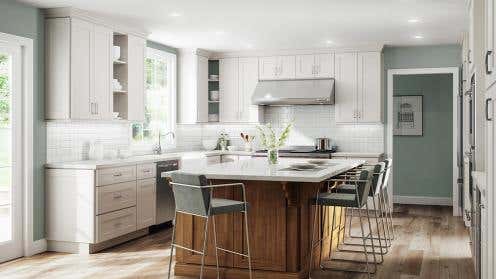
For cabinets, that works out simply. Spanish Revival leans on dark stained or glazed doors. Spanish Modern works with lighter natural wood, cream or white doors, and one dark accent such as the island or the hood.
Spanish vs. Mediterranean vs. Tuscan Kitchens
These three styles share warm colors and natural materials, so they overlap. The names even overlap: Spanish Colonial Revival is sometimes labeled Mediterranean Revival.
Our guide to Tuscan vs. Mediterranean kitchen design explains that a Mediterranean kitchen pulls from many countries around the sea, including Spain, France and Morocco. Its colors come from the sea and sky, with blues and greens next to terracotta. Tuscan style is narrower: warm oranges, browns, reds and terracotta, with rustic wood.
A Spanish kitchen is the most architectural of the three. It is defined less by a color palette and more by specific pieces: the arched hood, the painted tile, the wrought iron and the dark wood. If your kitchen has blue-and-white tile and white walls, it leans Mediterranean. If it has a big arched hood, iron lanterns and dark wood doors, it reads Spanish.
Choosing Spanish-Style Kitchen Cabinets

Start with the wood tone
Houzz notes that most antique Spanish furniture was walnut, often trimmed with rope or beaded detail. That is why deep brown cabinets are the classic choice. Caesarstone's own design tips for modern Spanish kitchens say the same thing: dark brown cabinets, paired with a bright white counter.
Lily Ann doesn't sell walnut cabinets. Its closest matches are stained and glazed lines:
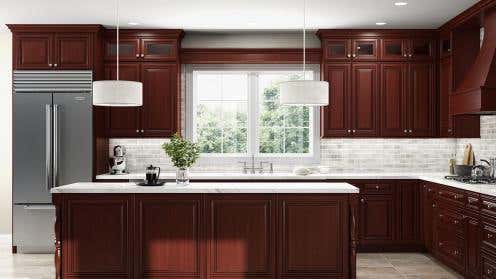
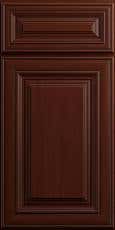
- Charleston Saddle has a hand-applied chocolate stain and chocolate glaze. Its spec sheet lists a solid wood, full-overlay, raised-panel door with glazing. This is the closest Lily Ann line to the dark walnut look.
- Charleston Cherry is a cherry-colored stain finished with a chocolate glaze, on the same raised-panel door. The spec sheet lists the wood species as birch, so it's a cherry color, not cherry wood. Our guide to cherry wood cabinets covers how cherry tones age and pair.
Check stock before you plan around these two. On September 21, 2026, both line pages showed a mix of in-stock and out-of-stock sizes. Open the line page and confirm every size on your list.
Why a glazed raised-panel door suits this style
A raised-panel door has a center panel that sits higher than the frame around it. That extra depth reads as traditional and formal. A glaze is a darker coat brushed over the stain. It collects in the edges and grooves of the door, so the carved profile shows up more. Together they give you the "old-world" look without buying hand-carved doors. See all of Lily Ann's raised-panel cabinets to compare door profiles.
Lighter options for Spanish Modern

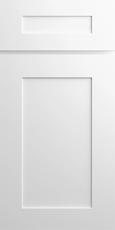
If dark cabinets feel too heavy, go lighter and let tile, iron and wood beams carry the style. Craftsman Natural Shaker gives you a natural wood tone on a simple Shaker door. A white or cream raised-panel door, such as Key Largo White or Charleston Linen, reads like whitewashed plaster, especially with a dark wood island.

Trim that adds the old-world detail
Small trim pieces make stock cabinets look more like furniture. Corbels are decorative brackets that sit under a counter overhang or a hood. Crown molding caps the tops of the wall cabinets. For the Charleston Cherry finish, the Charleston Cherry corbel and crown molding both showed in stock on September 21, 2026.
Make the Range Hood the Focal Point

In a Spanish kitchen, the stove is the heart of the room. Houzz points to two classic hood shapes: a flared hood, since curves run through Spanish design, and an arched cooking alcove where space allows.
A plaster alcove is a job for a builder or plasterer, not a cabinet order. A wood hood is easier. Lily Ann's arch range hoods come in several finishes, and each listing includes a fan and liner. For a darker Spanish look, the Mocha Shaker Arch Hood brings a brown tone. For a lighter Spanish Modern kitchen, the Craftsman Natural Shaker Arch Hood matches natural wood. Both 30-inch hoods showed in stock on September 21, 2026.
Plan the hood before anything else on that wall. The wall cabinets on either side should end at a clean line so the hood stands alone.
Tile, Floors, Iron and Color

Backsplash
Hand-painted or patterned tile is the easiest way to say "Spanish." It doesn't need to cover every wall. The same Spanish Modern designer's advice was to give pattern room to shine: use it behind the cooktop only, and a simple handmade-look tile everywhere else.
Floors
Terracotta Saltillo tile warms a room and ties to wood beams. Houzz adds a practical warning: true Saltillo tiles are porous and break easily. A Saltillo-look concrete or high-fired porcelain tile gives the same color with less upkeep.
Metals and lighting
Oil-rubbed bronze, a dark brown aged finish, suits faucets and cabinet hardware. Wrought iron works for lanterns, pendants and even glass-cabinet inserts. Keep all the metals in the dark family so nothing looks too shiny or new.
Color palette
Kingston Brass's Spanish kitchen guide lists terracotta, yellow and red as the base colors, with wood, iron and clay as the base materials. Cream or white walls keep those warm tones from closing in. Add blue or green through tile rather than cabinets, so the color is easy to change later.
How to Keep a Spanish Kitchen From Feeling Heavy
Dark wood, bold tile and iron can make a room feel small. Four habits keep it balanced:
- Pair dark cabinets with light counters. A white or pale counter gives the eye a break.
- Use pattern in one spot. One painted-tile wall looks planned. Pattern on every surface looks busy.
- In a small kitchen, go light and add one dark piece. Cream or natural cabinets with a dark island or hood keeps the style without the weight.
- Mix stained and painted pieces. A painted perimeter with a stained island, or the reverse, adds depth and splits the upkeep.
Planning Your Spanish-Style Kitchen
Pick your version first (Revival, Modern or somewhere in between), then the hood, then the cabinets. Before you order, get free cabinet door samples and look at them next to your tile and floor in your own light. Stain and glaze colors shift a lot between morning and evening. If you like the Spanish look but want more of a cabin feel, our rustic kitchen ideas use many of the same materials.








Comments