

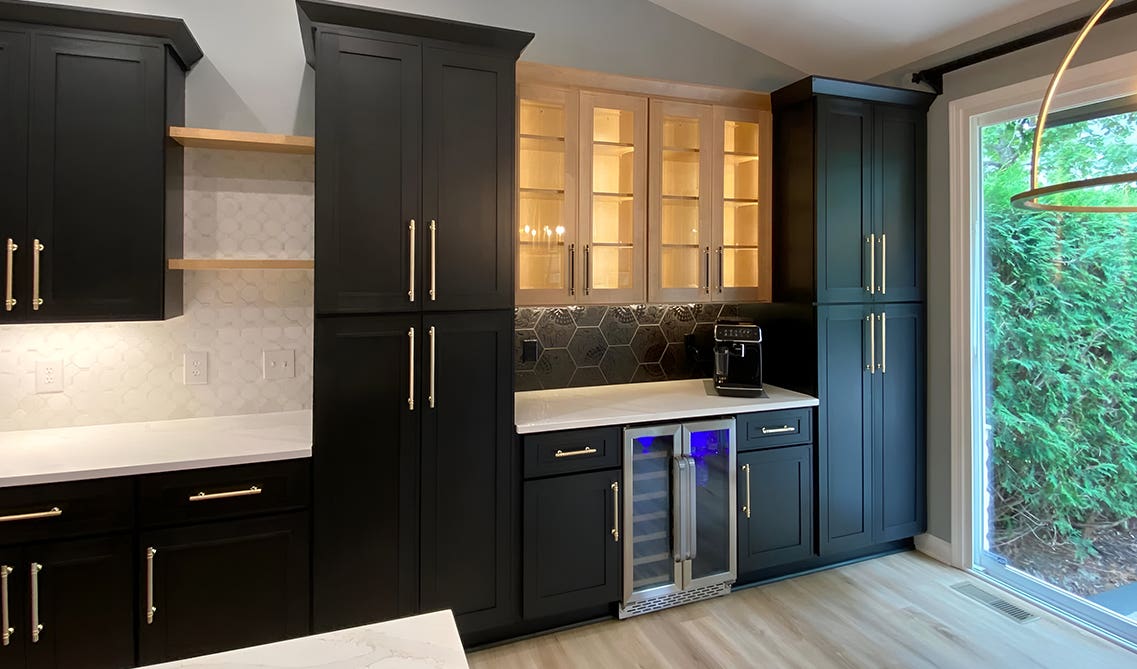
RTA cabinets can be as well built as assembled ones, because “ready to assemble” describes how a cabinet ships, not what it is made of. Reviews praise the price, plywood boxes and soft-close hardware. The complaints are mostly about freight damage, missing parts and assembly time. Quality comes down to six spec lines: box, joinery, drawers, finish, hardware and warranty.
- RTA is a shipping method, not a quality grade. The same materials can arrive flat-packed or assembled. The spec sheet decides quality, not the box it comes in.
- What reviews praise: price for the construction, plywood where buyers expected particleboard, soft-close hinges and dovetailed drawers, and helpful design and service teams.
- What reviews complain about: nicks from shipping, missing or replacement parts that hold up the job for weeks, assembly time, and stock sizes that need filler strips.
- Most reviews are written in the first few weeks. They measure delivery and service well, and ten-year durability hardly at all.
- Six things to check before you buy: box material, joinery, drawer box, door and finish, hinges and glides, and the written warranty.
- RTA vs IKEA: both are flat-pack. The argument buyers actually have is particleboard vs plywood boxes, and how each one copes with water at the sink base.
- Lily Ann publishes its spec: 1/2" birch plywood box, 5/8" dovetailed solid wood drawers, soft-close adjustable hinges, full-extension undermount glides, sliding dovetail assembly and a Lifetime Limited Warranty.
RTA cabinets have a reputation problem that their reviews do not really support. Read enough of them and a clear pattern shows up: buyers are mostly happy with the cabinets and mostly unhappy with the delivery. This guide sums up what reviews praise and what they complain about, explains what a review can and cannot tell you, and gives you a six-point checklist for judging quality yourself. Our own spec is the worked example, so you can hold us to it.
What RTA Cabinet Reviews Actually Praise
The same five compliments come up again and again across Reddit threads, Houzz discussions, woodworking forums and sellers' own review pages. They are about value and hardware much more than looks.
- The price for what you get. This is the most common theme. Several reviewers say the plywood construction they got would have been a paid upgrade at a big-box store.
- Plywood where they expected particleboard. Google's own AI summary of the reviews results leads with it: quality RTA lines use solid wood and plywood instead of cheap board.
- Soft-close hinges and dovetailed drawers as standard. Buyers notice hardware every day, so they mention it more than almost anything else.
- Design help and customer service. Long reviews often single out an online design team that caught things the buyer had forgotten. The same summary notes that most Reddit posters found customer service helpful when they needed replacement parts.
- Speed. In-stock lines ship in days or weeks, not the months a made-to-order cabinet can take.
What RTA Cabinet Reviews Complain About
The complaints are just as consistent, and very few are about a cabinet box failing. They are about the trip from the warehouse to your kitchen, and about the work you take on by assembling it yourself.
- Freight damage. Small nicks and rubs from shipping are the most repeated complaint. One detailed Houzz review, glowing about the cabinets themselves, still says to plan on some touch-ups.
- Missing or replacement parts. One damaged panel can hold up the countertop template and the appliance install. Reviewers who had this happen call the wait the worst part of the whole project.
- Delivery paperwork. One reviewer lost the chance to claim for freight damage because of how they marked the delivery receipt. Photograph every box as it comes off the truck, and follow the seller's damage instructions to the letter.
- Assembly time. One box is quick. A whole kitchen is a weekend or more, and a box assembled out of square shows up later as doors that never line up.
- Stock sizes and plain doors. Standard widths mean filler strips in kitchens with odd angles, and some forum woodworkers find stock door designs a little plain.
- Quality that varies by seller. The AI summary of the quality results names the warning signs directly: thin back panels and weak cam-lock fittings on budget lines.
What Reviews Can't Tell You
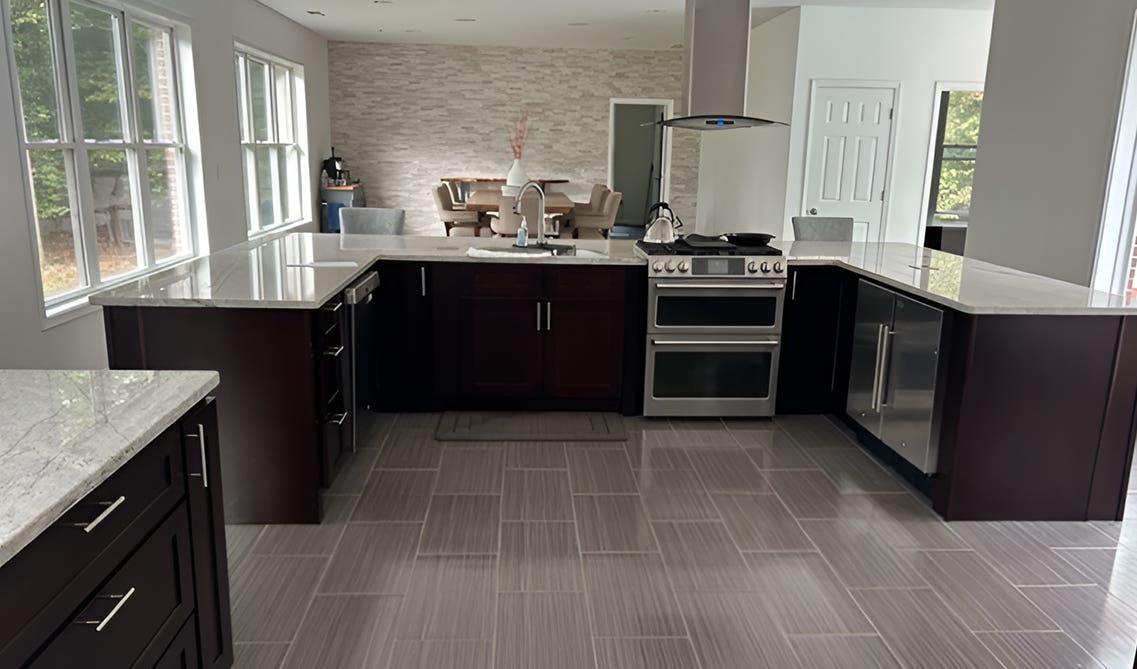
Most cabinet reviews are written in the first few weeks: after delivery, during assembly, or just after the kitchen is finished. That makes them a good record of shipping, service and assembly. It makes them a weak record of what matters over ten years: whether the boxes survive a leak, whether the finish holds up, and whether the hinges still close properly.
Four habits make reviews far more useful:
- Check when it was written. A review from delivery week and a review from five years later are answering different questions. Long-term reviews are rare, so give them more weight.
- Separate the product from the delivery. A crushed carton is a freight problem. A drawer coming apart is a product problem. Only the second one tells you about the cabinet.
- Look for photos of the inside. Drawer corners, box edges and the cabinet interior show construction. A photo of a finished kitchen mostly shows good taste.
- Weigh seller-hosted reviews as one source among several. That goes for our reviews page as much as anyone's. Read independent threads alongside it.
For the ten-year question, the spec sheet is the review you can read before you buy.
Are RTA Cabinets Good Quality? The Six-Point Checklist
“Ready to assemble” tells you how a cabinet ships, not how well it is built. An RTA cabinet and an assembled one can use the same materials. Quality is decided by six parts of the spec, and a seller you can trust publishes all six.
| Part | Stronger | Weaker | Why it matters |
|---|---|---|---|
| Box material | Plywood, with the thickness stated (1/2" or 3/4") | Particleboard, or "wood construction" with no thickness given | Plywood holds screws and usually recovers from a wet edge. Particleboard swells for good. |
| Joinery | Glued wood-to-wood joints, such as dovetail or dado | Cam locks and exposed metal brackets alone | The joint keeps the box square once it is full of dishes |
| Drawer box | Dovetailed solid wood | Stapled or glued board | Drawers do more work than any other part of a kitchen |
| Door and finish | Finished inside and out; engineered panels on painted doors | Raw interior; thin wrap that can peel | A raw interior soaks up steam and grease and cannot be cleaned |
| Hinges and glides | Soft-close adjustable hinges; full-extension undermount glides | Fixed hinges; partial-extension side-mount glides | You use them several times a day for years |
| Warranty | Written, published, with exclusions you can read | A "lifetime" promise with no terms on the page | The exclusions tell you what the seller will actually cover |
One row needs a note. An engineered panel on a painted door is not a shortcut. Solid wood moves with the seasons, and paint over a moving joint eventually cracks. A stable engineered panel under paint is the engineering answer. Our guide to how to tell a good plywood box from a bad one covers the box side in detail, and particle board vs plywood cabinets covers the head-to-head.
The one-question test: ask any seller for the box thickness and how the drawers are joined. A seller who answers straight away with a number and a joint type is confident in the product. A seller who says "all-wood construction" is describing marketing. Hardware is worth its own look too; see why soft-close hinges and drawer slides matter.
Worked Example: Lily Ann's Published Spec, Line by Line
Here is the checklist applied to our own cabinets, using the construction block printed on the Colorado White Shaker collection page (read Sep 11, 2026). We publish it so you can check it, and you should apply the same test to anyone else.
| Checklist line | What our page says |
|---|---|
| Box material | Box Construction: 1/2" Solid Plywood (Birch) |
| Joinery | Assembly Method: Sliding Dovetail. The page describes hidden assembly clips rather than L-brackets or visible metal clips. |
| Drawer box | Drawer Construction: 5/8" Dovetailed Solid Wood |
| Door and finish | Full Overlay, Flat Panel (Full Engineered Door). Cabinet Interior: Natural Wood Veneer, UV Coated. Cabinet Exterior: Matches Door Finish. |
| Hinges and glides | Hinge: Soft Close Adjustable. Drawer Glide: Full Extension, Soft Close Under-Mount. |
| Warranty | Lifetime Limited Warranty |
The same page lists delivery as 1–21 business days. Check the construction block on any collection page in our RTA kitchen cabinets range, or browse by style under shaker cabinets and wood cabinets, before you order.
Reading our warranty honestly. A warranty is only as good as its exclusions, so here are ours in plain words:
- Covered: cabinets, door hinges and drawer glides, against defects in material and workmanship under normal use. It applies to the original buyer, for residential use, in the United States.
- Not covered: labor, removal and re-installation costs, improper installation, accidents, misuse, and normal wear and tear. It cannot be transferred to a new owner.
- Warping: under 1/4" is not treated as a defect, and a warped door should hang for two seasons before a replacement is requested, because doors often flatten out once they settle to the room.
- Painted cabinets: hairline cracks in the paint at joints are described as normal wood movement, not a defect.
That last point is worth knowing before you buy a painted cabinet from anyone. Wood moves, and paint over a joint eventually shows it. A seller who writes that down is being straight with you.
What Our Own Reviews Say
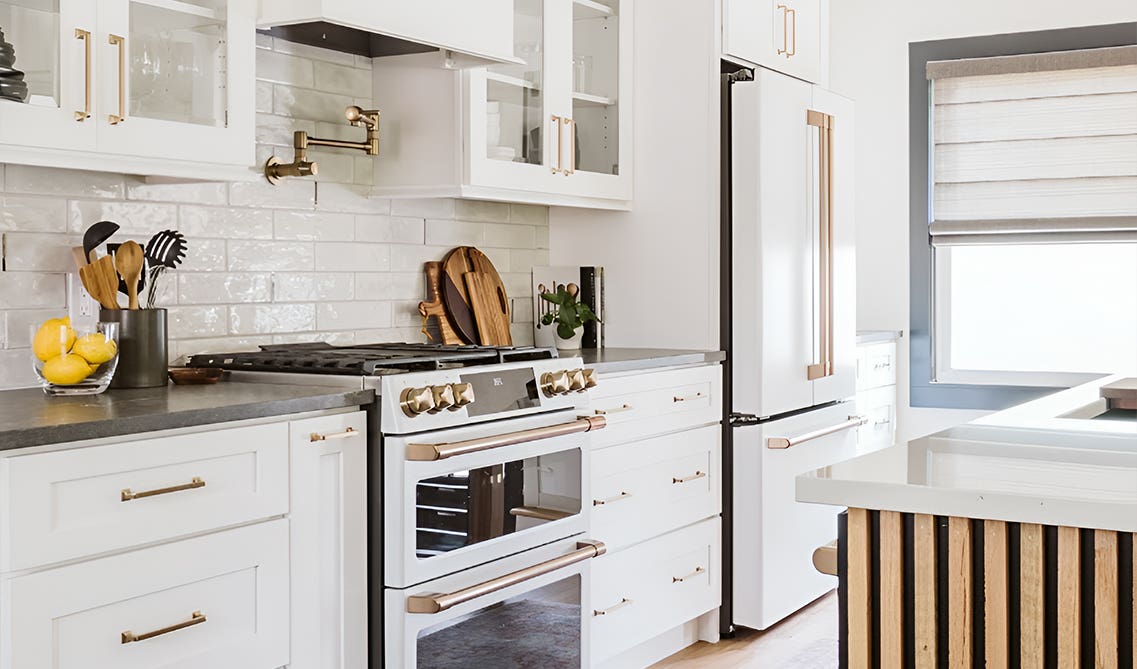
Our customer reviews page shows that 95% of our last 1,000 customers said they would order from Lily Ann again (as displayed on Sep 11, 2026). Read the recent reviews and you will see the same pattern as the wider RTA market. Most of them are about design help and customer service, written in the weeks around delivery.
The same page breaks the ratings down: 78.58% five-star and just over 1% one- or two-star. It is our own page, so weigh it the way you would weigh any seller's page. Read it alongside independent threads, and use the checklist above for the part reviews can't show. The quickest way to judge the construction for yourself is to order a sample door and look at it in your own light.
RTA Cabinets vs IKEA
IKEA kitchen cabinets are ready-to-assemble too, so the real comparison is IKEA's system against other online RTA lines. In the comparison threads, buyers keep coming back to one difference: the box material. Supporters and critics mostly agree on what it means, too. It is fine in dry areas and matters most at the sink base.
Buyers in those threads describe IKEA's cabinet boxes as particleboard and most online RTA lines as plywood. Whichever you are considering, read the current material line on the listing before you buy. It is the one fact that decides the rest of the comparison.
| What to compare | IKEA's system | A typical online RTA line |
|---|---|---|
| Box material | Described by buyers as particleboard; check the listing | Often plywood; check that the thickness is stated |
| Hanging the uppers | A wall-rail system many DIYers find easy to level | Screwed through a back rail into the wall studs |
| Doors | IKEA fronts, plus third-party companies that make doors to fit IKEA boxes | Doors sold as matched collections, such as shaker styles |
| Where you shop | IKEA stores and online | Mostly online; some sellers also have showrooms |
| Water at the sink base | Particleboard swells for good once it soaks up water | Plywood usually recovers if it dries out reasonably soon |
Where IKEA wins. IKEA has real defenders. In one Houzz discussion, a design-build contractor who uses IKEA often called its quality excellent for the price and argued that worries about particleboard are overblown. Buyers also like being able to see it in a store and take it home the same day, and the rail system makes leveling the uppers easier.
Where a plywood RTA line wins. Screw holding, a wet edge that usually recovers, and door collections designed as a set. If your kitchen has a dishwasher next to the sink, which is where most slow leaks start, the box material is the difference you will actually live with.
Neither is automatically the better buy. Compare the two spec lists side by side, not the brand names.
The Pros and Cons of RTA Cabinets at a Glance
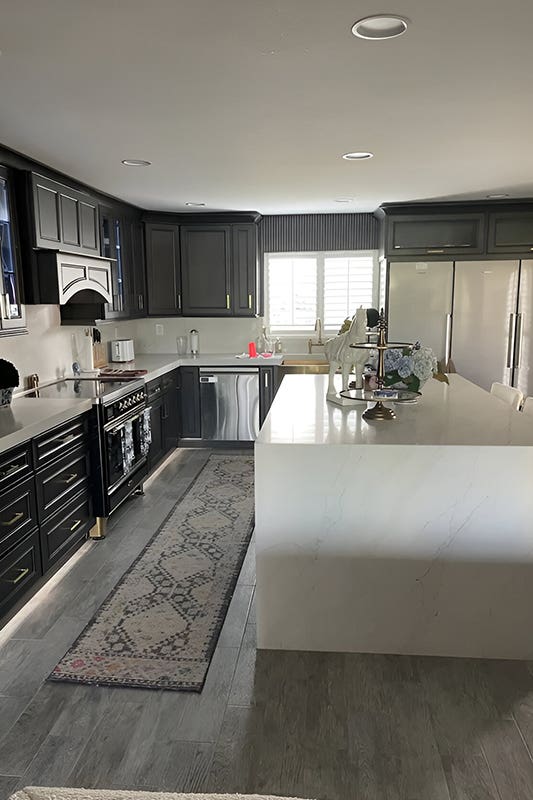
The biggest advantage of RTA cabinets is paying less for the same construction, because the factory does not assemble them and flat boxes take up less room on a truck. The biggest disadvantage is that you take on the assembly, and with it the risk of freight damage and waiting on parts.
| Pros | Cons |
|---|---|
| Lower price for the same materials, because there is no factory assembly and less freight volume | Assembly takes time, and a box built out of square stays out of square |
| In-stock lines ship faster than made-to-order cabinets | Freight damage and replacement parts can hold up a project for weeks |
| Plywood boxes, dovetailed drawers and soft-close hardware are available | Stock sizes only, so odd layouts need filler strips |
| You can build them yourself or pay someone to | Paying for assembly eats into the savings |
| Flat boxes are easy to store during a staged remodel | Quality varies widely from one seller to the next |
If you are weighing flat-pack against factory-built, RTA vs assembled cabinets goes through that decision. If you are ready to order online, what to know before you order RTA cabinets online covers measuring and delivery. And if you want to see what the assembly actually involves, read how to assemble Lily Ann's RTA cabinetry.
The Short Version
RTA cabinets are as good as their spec, and no better. Reviews are a reliable guide to delivery, service and assembly, and a poor guide to how a kitchen will hold up in ten years. For that, read six lines on the spec sheet: box material, joinery, drawer box, finish, hardware and warranty. Ask for numbers, not adjectives.
On delivery day, photograph everything and report damage exactly the way the seller asks. Most of the bad RTA stories you will read start there, not with the cabinets.










Comments