


An organic modern kitchen combines the clean lines of modern design with warm, natural materials: wood cabinets or creamy matte paint, natural stone counters, slim brass or black hardware, and textures like linen, rattan and plants. It looks simple and uncluttered but feels warm, not cold. "Organic modern" and "modern organic" are two names for the same style.
- Definition: modern shapes plus warm natural materials (wood, stone, linen, plants). Restraint, but never cold.
- Same style, two names: Google shows the identical AI Overview for "organic modern" and "modern organic."
- Cabinet doors: flat panel or slim Shaker. Keep hardware slim.
- Cabinet colors: warm white, natural wood, warm brown, muted green, with soft black as an accent. Skip high gloss.
- Counters and sinks: quartzite, soapstone or marble; fireclay, concrete or copper sinks.
- 2026 fit: warm neutrals, greens and visible wood grain lead this year's cabinet trends.
- Lily Ann lines that fit: Off-White Slim Shaker, Mocha Slim Shaker, Craftsman Natural Shaker and Craftsman Lily Green Shaker.
What Is an Organic Modern Kitchen?
An organic modern kitchen pairs the clean lines and simple layout of modern design with warm, natural materials: real wood, natural stone, earthy colors and hand-made textures. The goal is a kitchen that looks uncluttered but never cold.
Google's AI Overview for this search describes it as blending "clean, minimalist architecture with warm, raw, and earth-wrought materials." Native Trails, a sink maker whose article ranks near the top, puts the balance well: it's "a style built on restraint, but never minimalism." The texture does the decorating, not the ornament.
George Cabinetry's guide adds that it is not rustic or farmhouse. The shapes stay modern. Only the materials get warmer.
Organic Modern vs. Modern Organic: Is There a Difference?
No. "Organic modern" and "modern organic" are two names for the same style. When we searched both phrases on the same day, Google returned the same AI Overview, word for word, and most of the same top pages. Use whichever name your designer or Pinterest board uses.
How Organic Modern Compares to Similar Styles
Organic modern borrows from several styles, which is why it gets confused with them. Here's how the sources describe the differences:
| Style | How it differs from organic modern |
|---|---|
| Modern / contemporary | Can feel cold and sterile; organic modern adds warmth through wood, stone and earthy tones (George Cabinetry) |
| Minimalist | Strips things back; organic modern keeps the restraint but lets texture carry the look (Native Trails) |
| Farmhouse | Leans nostalgic; organic modern keeps shapes streamlined (Native Trails) |
| Scandinavian and Japandi | Close cousins; George Cabinetry and Decor Cabinets both say organic modern blends easily with them |
If you're torn between them, our guides to Scandinavian kitchens and minimalist kitchen ideas show where each style lands.
The Core Elements of an Organic Modern Kitchen

Google's AI Overview and Native Trails list almost the same building blocks:
- Cabinets: flat-panel or slim Shaker doors in pale oak, warm walnut or a matte creamy paint.
- Countertops: natural stone like quartzite, soapstone or marble.
- Sinks: "elemental" materials such as concrete, fireclay or hammered copper.
- Hardware and lighting: slim pulls and fixtures in aged brass, matte black or bronze.
- Texture: rattan or wood stools, linen, and real plants or herbs.
- Light: big windows and natural light. MasterBrand's design team calls bringing the outdoors in (biophilic design) a focal point of the related "raw organic" trend.
Cabinets are the biggest surface in the room, so they set the tone for everything else. The next three sections cover them in detail.
Cabinet Door Styles for an Organic Modern Kitchen
Keep the door simple. Decor Cabinets, a cabinet maker, says organic modern doors are "smooth, slab-style cabinet fronts or subtle shaker doors." Google's AI Overview names the same two: flat panel or slim Shaker.
A slim Shaker door has the same frame-and-panel look as a classic Shaker, with a narrower frame. It keeps a little detail without looking traditional. Lily Ann makes two lines with this door:
- Off-White Slim Shaker: Lily Ann describes it as a "newly designed slim-frame Shaker door" for homeowners who want "a minimalist aesthetic."
- Mocha Slim Shaker: the same slimmer profile in Lily Ann's mocha stain, which the product page says shows "deep, rich tones that highlight natural wood grain."
A standard Shaker door still works if you keep everything around it simple, as the photo above shows.
The Best Cabinet Colors for an Organic Modern Kitchen

Colors in this style are muted and earthy. Decor Cabinets lists warm whites, soft black, clay or mushroom, light oak, pale green and matte charcoal, and says you'll "rarely see anything high-gloss or saturated." Here's how those map to Lily Ann lines:
| Organic modern color | Lily Ann line to look at | What Lily Ann says about it |
|---|---|---|
| Warm white / creamy | Off-White Slim Shaker, Craftsman Off-White Shaker | "light, neutral tone ... soft warmth" (Off-White Slim) |
| Natural wood | Craftsman Natural Shaker | "rich, earthy tones" with the grain showing |
| Warm brown (walnut-like) | Mocha Shaker, Mocha Slim Shaker, Craftsman Mocha Shaker | "deep, warm finish" (Mocha Shaker) |
| Pale / muted green | Craftsman Lily Green Shaker | "pairs beautifully with natural wood accents" |
| Soft black (as an accent) | Craftsman Black Shaker | "deep, rich black hue" |
About pale white oak. Pale oak is the wood most sources name first for this style. Craftsman Natural Shaker is Lily Ann's natural-wood finish, but in Lily Ann's own photos it reads as a medium, warm wood rather than a pale, blonde oak. If a very light wood is the look you want, order a door sample before you decide. Our white oak cabinets guide covers that look in depth.
Finish matters as much as color. Lily Ann's 2026 kitchen cabinet trends guide notes that matte finishes and stained finishes that show real wood grain are both popular right now, which is exactly the organic modern direction.
Mixing Painted and Wood Cabinets

You don't have to pick one. Decor Cabinets says "many organic modern kitchens use painted uppers and wood lowers," and Google's AI Overview lists both pale paint and warm wood as organic modern cabinet options. A two-tone plan also stops an all-wood kitchen from feeling heavy or an all-white one from feeling plain.
Three combinations that fit the style:
- Creamy perimeter, wood island: Off-White Slim Shaker with a Mocha Slim Shaker island (the off-white photo above shows a dark wood island with light cabinets).
- Wood perimeter, light island: Mocha Slim Shaker with a white island, as in the photo just above.
- Wood uppers, soft black lowers: Lily Ann's Craftsman Mocha Shaker photo below pairs wood-tone uppers with black lowers and island.
More ideas are in our two-tone kitchen cabinets guide.
Countertops and Sinks
Natural stone is the usual choice. Google's AI Overview names quartzite, soapstone and marble, and Native Trails adds the same three. Stone with soft movement suits the style better than a busy pattern because the wood grain is already doing some of the work. Our kitchen countertop materials guide compares the options.
For the sink, both sources name concrete, fireclay and copper. Native Trails calls these "elemental sinks" that act as "sculptural anchors." A white fireclay farmhouse sink is the easiest to find and fits most organic modern kitchens. See our types of kitchen sinks guide for the trade-offs.
Hardware, Lighting and Range Hoods

Hardware stays slim and quiet. Decor Cabinets suggests "slim pulls, edge pulls, or even no hardware at all," and Google's AI Overview lists aged brass, matte black and patinated bronze. Native Trails says to use lighting in aged brass, glass or matte black to "echo the mix of polish and patina." You'll find slim bar pulls in these finishes in Lily Ann's knobs and pulls section, and our guide to mixing hardware finishes explains how to combine two metals.
Native Trails also calls for "low-profile hoods." A wood hood cover that matches or contrasts the cabinets keeps the hood from looking like an appliance. Lily Ann's arch range hoods section includes wood hood covers, which the page says "add shape, warmth, and character."
Open Shelving, Texture and Plants
Organic modern kitchens often swap a few upper cabinets for open wood shelves, which break up a run of cabinets and give you a spot for pottery, wood boards and plants. The Craftsman Natural photo at the top shows how that looks. Lily Ann sells floating shelves for this, and our guide on open shelving vs. upper cabinets covers the pros and cons before you give up storage.
Then add texture: rattan or wood stools, a linen runner, a wood cutting board left out, and a real plant or herb pot, all named in Google's AI Overview. These small pieces are what turn a plain modern kitchen into an organic modern one. To start from the cleaner, simpler version of the style, see these modern kitchen ideas.
Is Organic Modern Still a Trend in 2026?
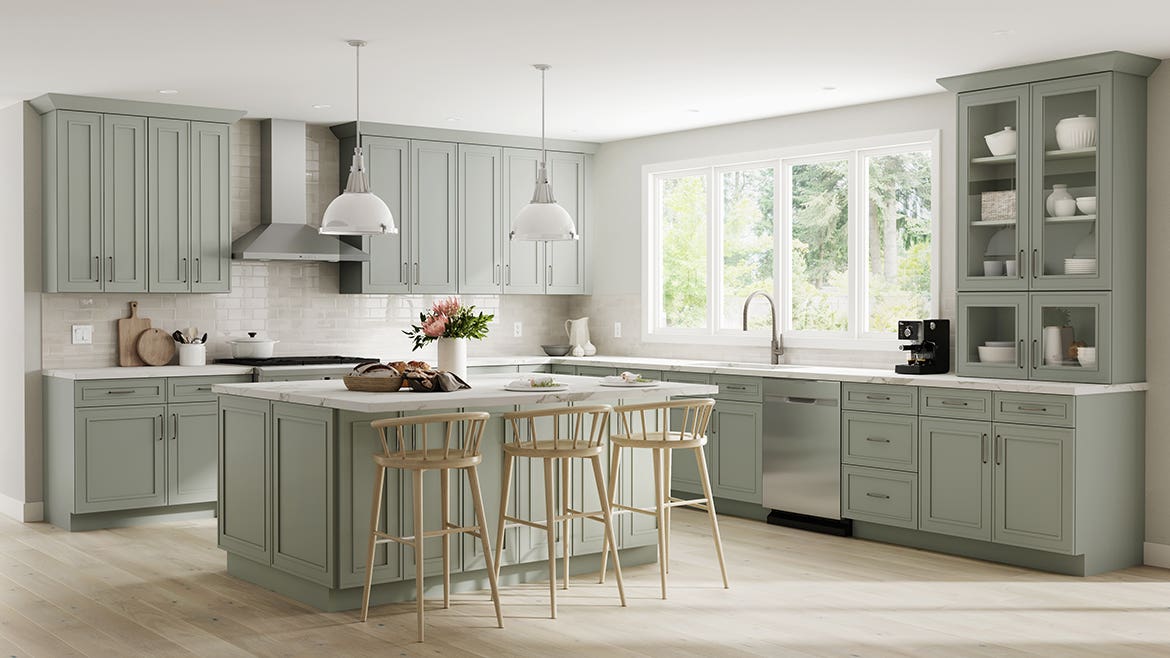
Yes, and the direction of 2026 color trends supports it. Lily Ann's 2026 cabinet trends guide describes this year's colors as "all about warmth, moodiness, and bringing the outdoors inside," with greens, warmer neutrals and natural wood tones leading.
A 2026 Martha Stewart roundup of outdated paint colors points the same way. One designer says cool, blue-based grays are aging poorly "with the return of organic design and warm minimalism," and another says warmer whites are replacing stark white partly because they "blend seamlessly with the organic materials" now popular. Cool gray and stark white are the two colors organic modern avoids anyway.
Because the style is built on materials (wood, stone, natural light) rather than one trendy color, it's also less likely to date quickly than a single color-of-the-year choice.
How to Get the Organic Modern Look on a Budget
George Cabinetry and Decor Cabinets both say organic modern doesn't have to be expensive; it depends on your materials. Decor Cabinets points out that simple slab doors are often easier to make, which can keep costs down. A few practical ways to get there:
- Start with the cabinets. They cover the most surface. Ready-to-assemble lines let you choose a warm finish without custom pricing.
- Put the splurge on one natural surface. A stone island top or a wood hood cover can carry the look.
- Swap hardware and lighting. Slim brass or black pulls and one or two textured pendants change the whole feel.
- Add texture last. Stools, linen, wood boards and plants cost the least and make the biggest visual difference.
Not sure which finish to choose? Lily Ann sells door samples for its current lines on its cabinet samples page, so you can see the wood tone and paint color in your own light first.
















Comments