


Stand on the side the door swings away from you and face it. If the hinges are on your left, it's a left-hand door; if they're on your right, it's a right-hand door. For an exterior door, also say whether it swings in or out, such as "left-hand inswing." Commercial sellers may use "reverse" (LHR or RHR) for a door that swings toward you from the outside.
- The rule: stand on the side the door swings away from you. Hinges on your left = left-hand door; on your right = right-hand door.
- Same answer, other methods: from the pull side, the knob is on your left for a left-hand door; with your back to the hinges, the knob is on your left.
- Exterior doors: give the swing too, e.g. "left-hand inswing." Most home entry doors swing in (Fine Homebuilding).
- "Reverse" (LHR/RHR): commercial terms, judged from the key side, for a door that swings toward you.
- Locks and levers: round knobs and most passage and privacy levers are reversible; curved handlesets and dummy levers are handed.
- Lily Ann Cabinets prehung entry doors come left or right hand, inswing; tell our showroom which you need, since the product page has no handing option (September 30, 2026).
Order a prehung door with the hinges on the wrong side and it won't work in your opening, and you usually can't fix it. That's why door sellers ask one question before anything else: is it a left-hand or a right-hand door? The trouble is that people describe it from different sides of the door, and the words don't always mean the same thing.
This guide shows the simple way to tell, what inswing, outswing and "reverse" mean, why lock and lever handing is a separate question, and what to tell us when you order one of our prehung entry doors. Every rule below names its source, and none of them is a made-up standard.
What Is Door Handing?
Door handing is the side a door's hinges are on and the direction it swings. A left-hand door has its hinges on your left when you stand on the side the door swings away from; a right-hand door has them on your right. Handing matters most when you order a prehung door or a handed lock or lever, because those are made for one side only.
Family Handyman puts it plainly: with a slab door you drill the hinges and lock yourself, so you choose the swing. With a door that already has its hinge cuts and knob hole, handing is crucial, because you can't convert it.
How to Tell a Left-Hand Door from a Right-Hand Door
The easiest method is to stand on the push side, the side the door swings away from you.
- Find the push side. Stand where you would push the door open. On a front door that swings in, that's outside.
- Face the door and look at the hinges.
- Hinges on your left: it's a left-hand door. Hinges on your right: it's a right-hand door.
That's the rule lock maker Schlage gives for lever handing (stand outside, where the door opens away from you, and note which side the hinges are on), and it matches the commercial method described by Allegion's Lori Greene on iDigHardware, where you stand on the outside, or key side, of the door.
Three Ways to Check (They Give the Same Answer)
You'll see three different "how to tell" methods online. They sound different, but for an ordinary door they agree. Here they are side by side, for the same left-hand door:
| Method | Where you stand | It's a left-hand door if | Who uses it |
|---|---|---|---|
| Push side | Facing the door, on the side it swings away from you | The hinges are on your left | Schlage; iDigHardware (Allegion) |
| Pull side | Facing the door, on the side it swings toward you | The knob is on your left (so the hinges are on your right) | Door maker Brosco; Fine Homebuilding |
| Back to the hinges | In the open doorway, your back against the hinge side of the frame | The knob is on your left | Family Handyman; Natural Handyman; Masonite |
Why they agree (worked out from the sources' own definitions): when you walk around to the pull side of the same door, your left and right swap. Hinges on your left from the push side are on your right from the pull side, which puts the knob on your left. And with your back to the hinges, the knob ends up on your left, the same side the hinges were on from the push side.
The one thing that trips people up is mixing methods: judging the hinges from the pull side, for example, gives you the opposite answer. Pick one method, and when you order, say which side you were standing on.

Inswing vs. Outswing
Inswing doors open into the room or into the house. Outswing doors open out, away from the room or outside. Most interior doors look the same on both sides, but exterior doors have a definite inside and outside, so for an exterior door you need two things when you order: the handing and the swing. Natural Handyman's advice is to write both down, for example "left-hand inswing."
Fine Homebuilding says the vast majority of residential exterior doors are inswings, but that outswing doors are better at sealing out drafts and water. Which one you need depends on your opening, so replace like with like unless you're reframing.
What "Reverse" Means (LHR and RHR)
In commercial door hardware, handing always starts from the secure side, the outside or key side of the door. iDigHardware describes four hands:
- LH (left hand): hinges on the left, door swings away from you.
- RH (right hand): hinges on the right, door swings away from you.
- LHR (left hand reverse): hinges on the left, door swings toward you.
- RHR (right hand reverse): hinges on the right, door swings toward you.
So a "reverse" door is simply one that swings out toward the person standing on the key side. For an inswing door, the commercial and home methods give the same answer. They split on outswing doors, because home door makers name those from the inside, the side you push from.
Worked example (our reading of both sources): an outswing front door with the hinges on your left as you push it open from inside is a left-hand outswing door by the Brosco and Natural Handyman method. Stand outside on the key side, and the same door swings toward you with the hinges on your right, so in commercial terms it's a right-hand reverse (RHR). Same door, two names. If a listing says "RHR," it's using the commercial method.
Why Handing Matters When You Order a Prehung Door
A prehung door comes already hung in its frame, with the hinges set and the lock holes drilled on one side. That's what makes it easy to install and why the handing has to be right before it ships. Family Handyman's view on converting one afterward: you'd have to move the hinges and the knob and patch the old cuts. That's possible on a painted wood or composite door, but not practical. For how prehung and slab doors compare, see our prehung vs. slab door guide.
Lily Ann's prehung entry doors. Our 36" x 80" fiberglass entry doors, such as the Hollister, list "Left or Right Hand Available/Inswing." On September 30, 2026, the five in-stock styles all said so, but the product page has no handing option to pick when you add the door to your cart. Entry doors are local orders only, so the handing is settled with our showroom. Before you order:
- Stand outside your front door (the push side, since it's an inswing door).
- Note whether the hinges are on your left or your right.
- Tell us "left-hand inswing" or "right-hand inswing," and say you checked from outside. Reach us through our contact page or at the nearest showroom (Adrian, MI or Clearwater, FL).
For the door and rough opening sizes, see our standard exterior door size guide. Browse all styles on the entry doors page.

Handing for Locks and Levers
Hardware has its own handing, and Schlage points out that it's worked out a little differently from handing a door for carpentry. For a lever, handing is the direction the end of the lever points. Stand outside with the door opening away from you: if the hinges are on the left, you need a left-hand lever. Get it wrong and the lever points the wrong way, toward the frame.
- Round knobs work either way. Natural Handyman notes that most round-handled locksets are reversible.
- Passage and privacy levers usually flip. Schlage's interior passage and privacy levers come with a tool to reverse the lever.
- Curved handlesets and dummy (non-turning) levers are handed. You order a left or a right. A pair of French doors with dummy levers needs one of each, per Schlage.
What Lily Ann sells (checked September 30, 2026; all local orders only):
- An entry door lockset (grip handle outside, lever inside) sold as separate Left Hand and Right Hand versions, both in stock.
- A passage door lever and a privacy door lever, both in stock. Their listings give the lever placement as "Left/Right," meaning one lever for either hand.
- Left- and right-hand dummy levers, both out of stock on September 30, 2026.
Our lock listings don't spell out which side "left hand" is judged from. If you're unsure, use the door method above (push side, hinges left = left hand) and confirm with us before you order.

Lily Ann Cabinets: Left Hand Entry Door Lockset
Cabinets Have Handing Too
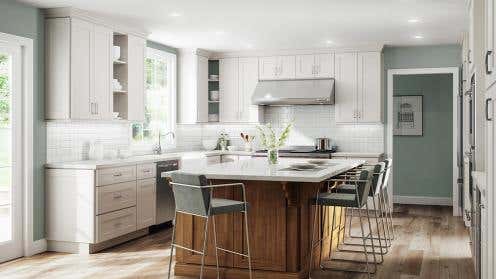
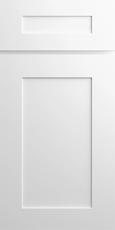
Handing isn't only for room doors. Some cabinets are made in left and right versions for the same reason: the part you reach into has to be on the open side. Our blind corner base cabinets are one example; the 36" Colorado White Shaker blind corner base comes as separate Left and Right listings (both in stock September 30, 2026). As with doors, confirm how the maker names left and right before you order. And when a room door opens next to cabinets, check that its swing clears cabinet doors and handles.

Lily Ann Cabinets: Left Hand Dummy Door Lever
Other Handing Systems
Handing isn't standardized worldwide. Family Handyman, citing iDigHardware, notes that the back-to-the-hinges method matches the German DIN method, while the ISO method used in the UK and elsewhere numbers doors instead: a "5" door closes clockwise and a "6" door closes counterclockwise. If you're ordering from a maker outside the U.S., check which system its chart uses.
Can You Change a Door's Handing?
- A slab door: yes, before it's hung. You choose the hinge side when you cut the hinges and drill for the lock.
- A prehung door: in theory, by moving the hinges and knob and patching the old cuts. Family Handyman calls this possible on painted wood or composite, but not practical. Order the right hand instead.
- Levers: reversible passage and privacy levers can be flipped. Handed dummy levers and curved handlesets usually mean buying the other hand.
The Takeaway
Stand on the side the door swings away from you. Hinges on your left means a left-hand door; hinges on your right means a right-hand door. For an exterior door, add inswing or outswing. If a seller uses "reverse" (LHR or RHR), they're judging from the outside, and a reverse door swings toward you. Because a prehung door can't practically be switched later, check twice, say which side you stood on, and confirm before you order.
Frequently Asked Questions
Door handing is which side a door's hinges are on and which way the door swings. It's usually given as left-hand or right-hand, plus inswing or outswing for exterior doors. It matters when you order a prehung door or a handed lock or lever, because those are made for one side. A slab door can be hung either way.
Stand on the side the door swings away from you and face it. If the hinges are on your left, it's a left-hand door; on your right, it's a right-hand door. Another check that gives the same answer: open the door, stand with your back against the hinge side of the frame, and see which hand is nearer the knob. Left hand nearer means a left-hand door.
The only difference is the hinge side. Standing on the side the door swings away from you, an LH (left-hand) door has its hinges on the left and an RH (right-hand) door has them on the right. Everything else, such as size and style, can be the same. Hinge cuts, lock holes and some hardware are made for one hand, so they aren't interchangeable.
A right-hand door has its hinges on the right when you stand on the side it swings away from you. From the other side, where you pull it toward you, the knob is on your right. In commercial hardware, 'right hand' also means the door swings away from you when you stand on the outside or key side.
Both have their hinges on the right when you stand on the outside, or key side. A right-hand (RH) door swings away from you; a right-hand reverse (RHR) door swings toward you, so it opens outward. The 'reverse' names come from commercial hardware, which always judges handing from the key side. Home door makers often call the same outswing door by the hinge side seen from inside instead, so an RHR door can be sold as a 'left-hand outswing.'
Not practically, once it's a prehung door. You'd have to move the hinges and the knob to the other side and patch the old hinge cuts and knob hole. Family Handyman says that's possible on a painted wood or composite door, but not practical. A slab door is different: you choose the hinge side when you hang it.
Rehanding means changing which side a door is hinged on, or which way a piece of hardware faces. For a door, that means moving the hinges and lock to the other edge and filling the old cuts, which is rarely worth it on a prehung door. For levers, it can be as simple as flipping a reversible passage or privacy lever with the tool that comes with it.
It means the product works for either hand. Round knobs and most passage and privacy levers are reversible; straight levers are too. iDigHardware adds that a door prepared for a standard cylindrical lockset can be the same for a left-hand door and a right-hand-reverse door, because the lock holes are the same. Curved handlesets and dummy levers usually aren't reversible.
Hinge it so the door swings out of the way. Family Handyman's rule of thumb: when a doorway sits next to a wall, you usually want the door to swing away from that wall. Also check what the door will hit when it opens, how people move through the room, and whether the door is easier to reach from one side. If you're replacing a door, match the existing hinge side unless you're rebuilding the frame.








Comments