


The five kitchen zones are Consumables (food storage — pantry, fridge), Non-Consumables (everyday dishes, glasses and flatware), Preparation (counter space, cutting boards, knives), Cooking (cooktop, oven, pots and pans) and Cleaning (sink, dishwasher, trash). Each zone groups the tools and storage for one task, so everything you need for that job is within a step or two of where you do it.
- Five zones, one job each: Consumables (food storage), Non-Consumables (everyday dishes/flatware), Preparation, Cooking, Cleaning.
- Zones aren't the work triangle. The 1940s work triangle (stove-sink-fridge) is about distance between three points; zoning groups everything by task and works in any layout, including one-wall and island kitchens.
- Fabuwood's own 5-zone method agrees on the order: put Prep next to the stove, keep Consumables next to Prep, and put Non-Consumables near the dishwasher for easy unloading.
- Drawer inserts are how you execute a zone, not decorate it. A cutlery insert only works as "Zone 2" if it's actually installed in the drawer nearest the dishwasher.
- Real Lily Ann products, one per zone below, checked in stock on September 19, 2026.
- Zones ≠ layouts. Galley, L-shape, U-shape, peninsula and island are kitchen shapes; you zone within whichever shape you have.
- Every size and stock status below links to a live listing in Lily Ann's drawer inserts and organizers section.
The Five Kitchen Zones at a Glance
A kitchen zone is an area dedicated to one task, stocked with only what that task needs. Five zones cover a typical kitchen: Consumables, Non-Consumables, Preparation, Cooking and Cleaning. Google's AI Overview, Houzz and a cabinet peer's own guide all give the same five, in the same order.
| Zone | What it's for | Typically holds | A Lily Ann organizer that fits it |
|---|---|---|---|
| 1. Consumables | Food storage | Pantry goods, dry goods, sometimes the fridge | Wood Pantry Pull-Out |
| 2. Non-Consumables | Everyday dish storage | Plates, bowls, glasses, flatware | Cutlery & plate drawer inserts |
| 3. Preparation | Getting food ready to cook | Cutting boards, knives, mixing bowls | Knife & cutting board drawer |
| 4. Cooking | Making the meal | Cooktop, oven, pots, pans, spices | Spice drawer insert, pot & pan roll-out |
| 5. Cleaning | Cleanup and waste | Sink, dishwasher, trash, recycling | Sink-front tip-out tray, trash pull-out |
The rest of this page walks through each zone with real product sizes, and ends with how to plan zones in your own kitchen.
Kitchen Zones vs. the Kitchen Work Triangle
The kitchen work triangle is an older idea: the stove, sink and refrigerator sit at three points of an imaginary triangle, close enough together to limit steps between them. It works well for a single cook in a smaller kitchen, but it was designed decades before islands, open-concept layouts and multiple cooks became common.
Zoning builds on the same goal — fewer wasted steps — but groups every task in the kitchen, not just three. It works in a one-wall kitchen, a galley, or a big island layout, because you're zoning by task, not by a fixed triangle shape.
Zone 1: Consumables (Food Storage)
The consumables zone holds the food itself: pantry staples, canned and dry goods, and often the refrigerator. Keeping it in one area means you're not hunting through three different cabinets to check what's in the house before a grocery run.
A Wood Pantry Pull-Out (14 in. wide, 22-1/2 in. deep, adjusts 43-1/4 to 51-13/16 in. tall) turns a tall pantry cabinet into shelves that slide out to you instead of a cabinet you dig through. For a corner consumables zone, a Super Pull-Out Lazy Susan Carousel uses two rotating pull-out drawers to reach items that would otherwise sit in a blind corner.
Zone 2: Non-Consumables (Everyday Dish Storage)

Non-consumables are the everyday items you eat and drink with, not food itself: plates, bowls, glasses and flatware. Because these get loaded and unloaded from the dishwasher constantly, this zone works best positioned close to Zone 5's cleaning area, not across the kitchen from it.
A 20" Cutlery Drawer Insert sorts forks, knives and spoons into fixed compartments so unloading the dishwasher is a straight drop-in, not a sort. A Plate Drawer Insert (fits DB30-3 or DB30-2) holds 6 small plates up to 1 in. thick and 8-1/4 in. wide, plus 6 large plates, standing on edge instead of stacked — which also means you're not lifting a whole stack to get the bottom plate.
Zone 3: Preparation

The preparation zone is the counter space and tools you use before anything hits heat: cutting boards, knives, mixing bowls, measuring cups. Fabuwood's own 5-zone guide puts this step right after Consumables for a reason — you're usually pulling food out of storage and prepping it in the same few minutes, so the two zones should sit next to each other.
Lily Ann's Combination Knife Holder/Cutting Board Drawer (fits B18 or DB18-3) keeps the cutting board and knife slots in the same pull-out, so both come out together and slide back in when you're done — no cutting board leaning against the backsplash.
Zone 4: Cooking

The cooking zone centers on the cooktop and oven, with the pots, pans and seasonings you reach for while something is actively cooking. This is the one zone where reach time matters most — a dropped spoon or a missed spice while a pan is on the heat is a real problem, not just an inconvenience.
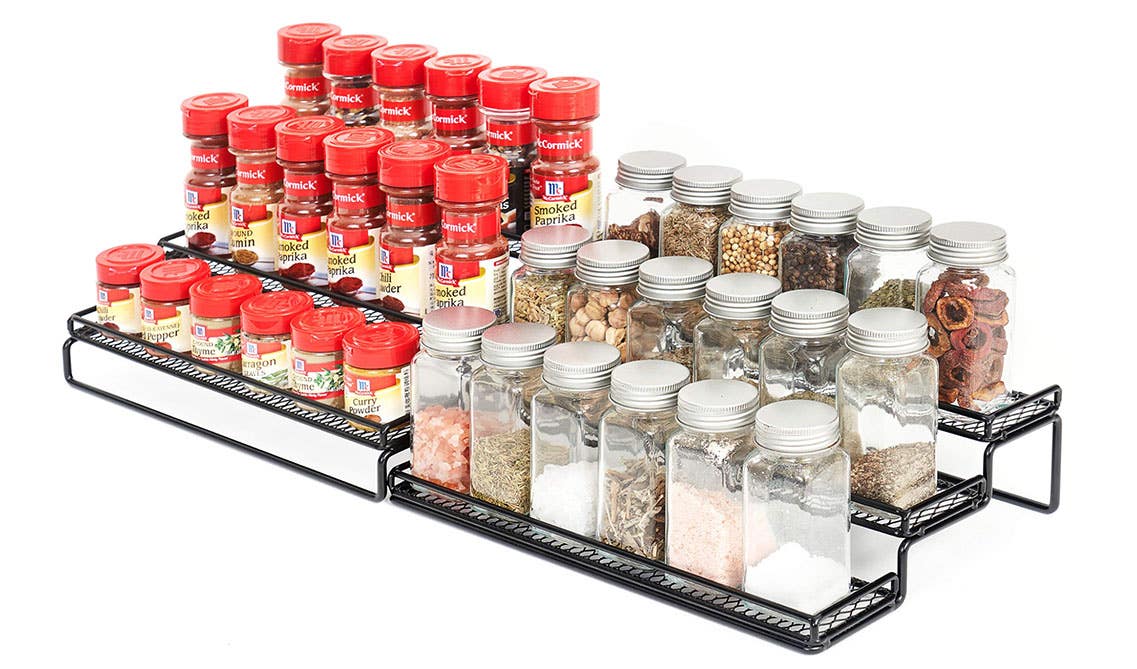
A Spice Drawer Insert (fits B21, DB21-3, B24 or DB24-3; 22 in. wide, 19-3/4 in. deep, wood) lays jars flat in a drawer next to the range instead of a door-mounted rack you reach across the stove for. A 30" Pot and Pans Roll-Out Shelf pulls the whole shelf out from the base cabinet under the cooktop, so pots stack without you kneeling to dig through a fixed shelf.
Zone 5: Cleaning

The cleaning zone covers the sink, dishwasher, trash and recycling — everything for pre-rinse, wash and cleanup. Grouping these together, per the same sourced PAA answer below, keeps rinsing, loading and clearing away in one small area instead of trash on one side of the kitchen and the dishwasher on the other.
A Sink-Front Tip-Out Tray (11 in. wide, 3.7 in. tall) turns the dead space between the sink and the cabinet face into storage for sponges and brushes; double-bowl sinks need two. A 15" Base Cabinet Single Bin Trash Pull-Out (11.6 in. wide, 21 in. deep, 12 in. tall, soft-close undermount glides) keeps the bin out of sight and out of the way until it's needed.
How to Plan Zones in Your Own Kitchen
A cabinet peer's own 5-zone guide lays out the planning order in five steps. Paraphrased here, not copied:
- Decide which zones you actually need. A small kitchen might combine Prep and Cooking into one drawer run; a big one might split Cooking into a baking sub-zone.
- Store items close to their zone, not by category alone — a spice a recipe calls for while something's on the stove belongs in the Cooking zone, not filed alphabetically in a pantry rack.
- Put Preparation next to the stove. Cutting boards and knives should be a reach away from where the prepped food goes next.
- Put Consumables next to Preparation. You're usually pulling food out of storage right before you prep it.
- Put Non-Consumables near the dishwasher. Plates, glasses and flatware get loaded and unloaded from the same spot every day.
None of this requires a remodel. Swapping a flat drawer bottom for a cutlery insert, or adding a pull-out under the sink, zones an existing kitchen without moving a single cabinet.
Shop Cabinet Organizers and Drawer Inserts by Zone
Every organizer on this page, and dozens more — spice pull-outs, tray dividers, foil and wrap organizers, additional lazy Susan styles — are in Lily Ann's cabinet and drawer inserts section, sized to fit Lily Ann cabinet bases. Check the listing for your exact cabinet width before ordering.
















Comments