


Most kitchen islands are built from base cabinets, so they are 24 inches deep with one row of cabinets or 48 inches deep with two rows back to back, and 4 to 8 feet long. Lily Ann's base cabinets are 24 inches deep and 34-1/2 inches high, about 36 inches tall once the countertop is on. Leave 36 to 48 inches of open floor on every side, keep the island to roughly 10% of the kitchen's floor area, and don't go smaller than about 40 by 40 inches.
- Depth comes from the cabinets: 24 inches with one row of base cabinets, 48 inches back to back, about 25 to 26 inches once the countertop is on.
- Length is cabinet widths added up: two 36-inch bases make 6 feet; 36 + 24 + 36 inches makes 8 feet.
- Clearance: leave 36 to 48 inches of open floor on every side, more across from appliance doors and behind stools.
- Room size: island size plus 72 inches each way, so a 48 x 24-inch island needs about 10 x 8 feet of open floor.
- Smallest island: about 40 by 40 inches; shallow base cabinets (9 to 21 inches deep) make slimmer ones.
- Rule of thumb: keep the island to no more than about 10% of the kitchen's floor area.
- Lily Ann parts: 24-inch-deep base cabinets from 9 to 42 inches wide, plus 96-inch shiplap, plywood and bead board panels to finish the back of an island.
Kitchen islands are a popular design trend that can provide storage, food preparation space, and a seating area. If you're considering a kitchen island, follow these tips to help you decide whether you have enough space to make an island work for you.
This guide gives real kitchen island dimensions, built from the base cabinets an island is made of. It covers how deep and how long an island can be, the space to leave around it, and how big the room needs to be.
Kitchen Island Dimensions at a Glance
Most kitchen islands are built from 24-inch-deep base cabinets, so the cabinet part is 24 inches deep with one row or 48 inches deep with two rows back to back, and usually 4 to 8 feet long. Leave 36 to 48 inches of open floor on every side of it.
| Island | Built from Lily Ann base cabinets | Cabinet footprint | Open floor needed (36 in. on every side) |
|---|---|---|---|
| Small, one-sided | Two 24 in. drawer bases in one row | 48 x 24 in. (122 x 61 cm) | 120 x 96 in. (10 x 8 ft) |
| Medium, one-sided | Two 36 in. base cabinets in one row | 72 x 24 in. (183 x 61 cm) | 144 x 96 in. (12 x 8 ft) |
| Medium, two-sided | Two rows of two 36 in. bases, back to back | 72 x 48 in. (183 x 122 cm) | 144 x 120 in. (12 x 10 ft) |
| Large, two-sided | Two rows of 36 + 24 + 36 in. bases, back to back | 96 x 48 in. (244 x 122 cm) | 168 x 120 in. (14 x 10 ft) |
The countertop adds a little: our kitchen cabinet dimensions guide puts a 24-inch-deep base cabinet at about 25 to 26 inches deep once the countertop is on. Seating adds more, because the top has to reach past the cabinets for knee room.
How Big Should a Kitchen Island Be?
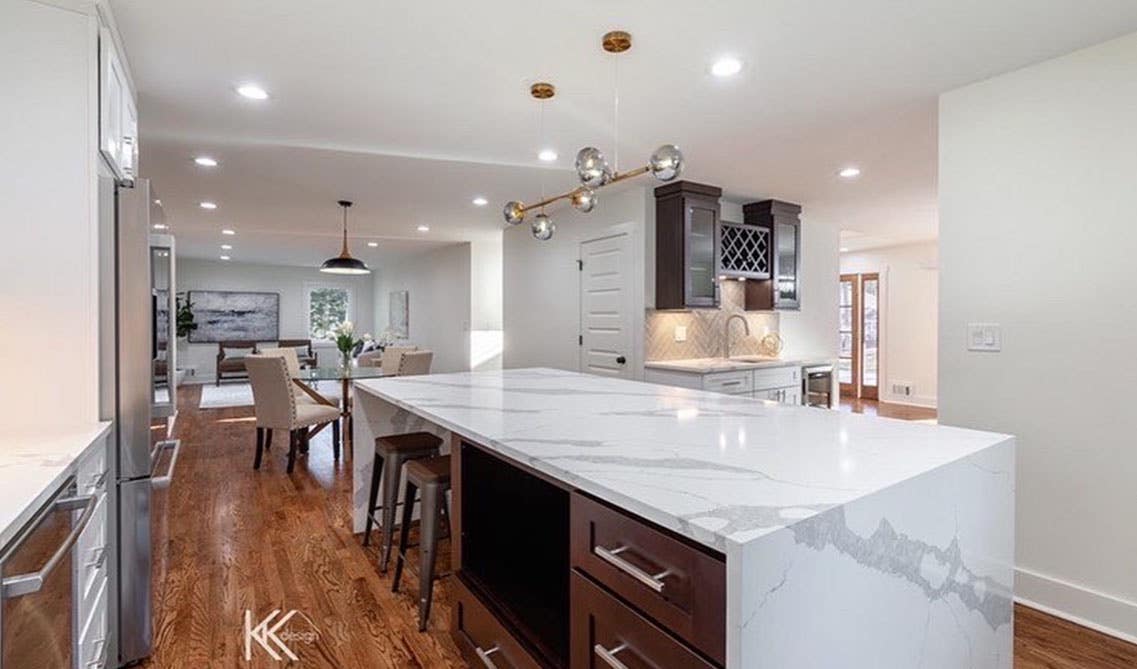
The amount of space needed for a kitchen island will depend on several factors such as the dimensions of the island, the layout of the kitchen, and the function of the island. Lily Ann Cabinets offers a variety of products to help customize and best fit your kitchen.
When it comes to designing your kitchen island, it should take up no more than 10% of the area of your kitchen. This would allow for enough workspace and seating for a couple of bar stools. In terms of the actual size of the island, it should be proportionate to the overall size of your kitchen. For small kitchens, a compact island of around 36 inches (91 cm) in length may be sufficient, while larger kitchens may be able to accommodate an island of 6 feet (1.8 m) or more.
The 10% rule is quick to check. Multiply the kitchen's length by its width in feet, then take a tenth of the answer:
- 10 x 12 ft kitchen (120 sq ft): an island of about 12 sq ft, such as 72 x 24 inches (6 x 2 ft).
- 14 x 16 ft kitchen (224 sq ft): up to about 22 sq ft, such as 96 x 24 inches (16 sq ft). A 72 x 48-inch island (24 sq ft) is just over.
- 16 x 20 ft kitchen (320 sq ft): enough for a 96 x 48-inch island (8 x 4 ft, 32 sq ft).
Treat the 10% rule as a quick check, not a building code. The space around the island, covered below, is what decides whether it really fits.
Island Depth: Start With the Base Cabinets
An island's depth, front to back, is often called its width. It comes from the base cabinets inside it. Lily Ann's standard base cabinets are 24 inches deep and 34-1/2 inches high: the Colorado White Shaker 12-inch base cabinet and the Craftsman Black Shaker 42-inch base cabinet both list those two numbers. Here is how that turns into island depth:
- One row, 24 inches deep (61 cm): drawers and doors face the kitchen, and the back gets a finished panel. This is the slimmest island you can build from full-depth cabinets.
- Back to back, 48 inches deep (122 cm): two rows of 24-inch cabinets facing opposite ways, so both sides of the island get storage.
- Full depth plus shallow, 36 inches deep (91 cm): a 24-inch row on the kitchen side with a 12-inch-deep row behind it. The Colorado White Shaker base cabinets list depths of 9, 12, 15, 18 and 21 inches as well as 24.
- Full depth plus 18 inches, 42 inches deep (107 cm): some lines list 18-inch-deep bases, such as the Craftsman Off-White Shaker base cabinet that is 36 inches wide and 18 inches deep. Build both rows from one line so the doors match.
Seating changes the depth, because the countertop has to hang past the cabinets. That overhang has its own rules, so we cover it in our guide to kitchen islands with seating instead of repeating it here.
Slim Islands for Small Kitchens
If a 24-inch-deep island crowds the walkway, a row of shallow base cabinets on its own can still add storage and a work surface. Lily Ann's island planning infographic says a kitchen island can be as small as 40 by 40 inches and still offer storage and room for small meal preps. When even that won't fit, the same infographic suggests a moving cart island, and our small kitchen island ideas show rolling and slim options.
Island Length: Add Up the Cabinet Widths
An island's length is the widths of its cabinets added together. Lily Ann base cabinet listings we checked on September 15, 2026 include widths of 9, 12, 15, 24, 27, 36 and 42 inches, all 24 inches deep. A few ways to line them up:
| Cabinets in the row | Island length | Good for |
|---|---|---|
| 24 in. 3-drawer base + 24 in. 3-drawer base | 48 in. (4 ft, 122 cm) | A small prep island with deep drawers |
| 27 in. base + 36 in. base | 63 in. (5 ft 3 in., 160 cm) | A mid-size kitchen |
| 36 in. base cabinet + 36 in. base cabinet | 72 in. (6 ft, 183 cm) | Storage plus a full work surface |
| 42 in. base + 42 in. base | 84 in. (7 ft, 213 cm) | A long prep run |
| 36 in. sink base + 24 in. drawer base + 36 in. base | 96 in. (8 ft, 244 cm) | A sink island in a larger kitchen |
| Any row above + a 12 in. end shelf cabinet on each end | Add 24 in. (61 cm) | Open shelves for cookbooks on the ends |
Mixing widths is normal. Put drawer bases where you prep, a sink base only where the plumbing can reach, and wide door cabinets where you store large pots.
How Much Space Do You Need Around a Kitchen Island?
Lily Ann's island planning infographic gives the general guideline: 36 to 48 inches of space around all sides of the island, so there is room for foot traffic and for opening cabinet doors and drawers.
In terms of clearance space around the island, you should aim for a minimum of 3 feet of space on all sides. This will provide enough space for people to comfortably move around the island and still be able to access all the drawers, cabinets, and appliances they need without feeling cramped. If you plan to include seating around your island, you will need an additional 12-18 inches of clearance for each stool to ensure they are spaced appropriately. Thinking about two islands instead of one? See how to plan a double island kitchen. For seat spacing and overhang, see our island seating guide.
Lean toward the 48-inch end of the range where the aisle has to do more than one job:
- Across from appliances: an open dishwasher, oven or refrigerator door takes up aisle space. Measure how far each door swings and make sure you can still walk past it.
- Behind stools: people sitting at the island push their stools back into the walkway.
- Busy kitchens: as our article on what to consider when installing a kitchen island puts it, a kitchen that is often full of activity will appreciate the extra breathing room.
Confirm the exact aisle widths for your kitchen with your designer and your local building code. The NKBA Kitchen Planning Guidelines are the industry reference. Before you order, tape the island's outline on the floor and walk around it, with the dishwasher and oven doors open.
How Big Does a Kitchen Need to Be for an Island?
Add the clearance to the island on both sides. With 36 inches on every side, the open floor you need is the island size plus 72 inches each way. Measure that open floor from the edge of the surrounding countertops, not from the walls.
| Island size | Open floor with 36 in. clearance | Open floor with 48 in. clearance |
|---|---|---|
| 40 x 40 in. (smallest) | 112 x 112 in. (9 ft 4 in. square) | 136 x 136 in. (11 ft 4 in. square) |
| 48 x 24 in. | 120 x 96 in. (10 x 8 ft) | 144 x 120 in. (12 x 10 ft) |
| 72 x 24 in. | 144 x 96 in. (12 x 8 ft) | 168 x 120 in. (14 x 10 ft) |
| 72 x 48 in. | 144 x 120 in. (12 x 10 ft) | 168 x 144 in. (14 x 12 ft) |
| 96 x 48 in. | 168 x 120 in. (14 x 10 ft) | 192 x 144 in. (16 x 12 ft) |
A 10x10 kitchen can be more difficult to find a layout plan that easily includes an island. As long as there is enough space on each side, an island is able to fit. The numbers show why it is hard: in a 10 x 10-foot room with 25-inch-deep counters on two facing walls, about 70 inches of floor are left between them, and a 24-inch-deep island with 36 inches on each side needs 96. For layouts that do work in that size, see planning a 10x10 kitchen.
Islands With a Sink, Cooktop or Seating
It's also important to consider the placement of appliances and fixtures such as sinks, ovens, and cooktops when designing your kitchen island. If you are still deciding which one belongs in the island, see whether a sink or a cooktop suits your island. You'll want to make sure that there's enough space around the island to accommodate these features.
- Sink island: a sink sits in a sink base cabinet. The Colorado White Shaker sink base is 36 inches wide and 24 inches deep, so plan the rest of the island's length around that 36 inches. Our island installation article notes that a cleanup island with a sink, dishwasher and room for dishes to dry takes up significantly more room than a cooking island.
- Cooktop island: a cooking island usually needs just the cooktop and a landing space beside it, plus a way to vent. See our island range hood ideas.
- Seating: every seat needs its own stretch of countertop, and the overhang sets the depth. Our kitchen island with seating guide has seat widths, overhang and stool heights.
- Height: the infographic lists island heights of 30, 36 or 42 inches, depending on what the island is mainly used for. With the countertop on, the island's cabinet side stands about 35 to 36 inches tall.
Finishing the Back and Ends of the Island
An island is seen from every side, so the back and the ends of the cabinets need a finished face. That changes the parts list, not the size. The Colorado White Shaker panels, fillers and trim page, for example, lists:
- Shiplap panel, 96 inches wide x 42 inches high. The listing says it is used to cover the back of an island or peninsula.
- Plywood and bead board panels, also 96 x 42 inches.
- Base skin panel, 24 inches wide x 34-1/2 inches high, the same size as the side of a base cabinet.
- Base end panel, 34 inches wide x 34-1/2 inches high x 3 inches deep.
- Base end shelf cabinet, 12 inches wide x 24 inches deep, for open shelves on the end of a run.
A 96-inch back panel covers an 8-foot island in one piece. For a shorter island, cut it to the island's length.
Storage
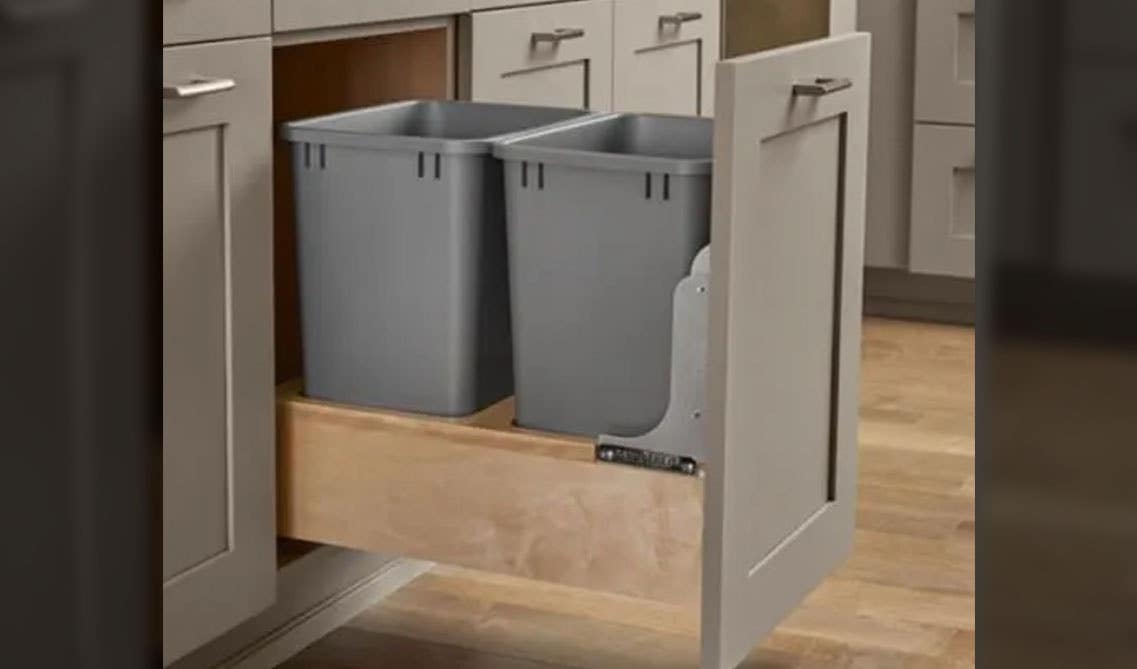
If you prefer to keep a more neat kitchen, it would be a good idea to consider an island with more cabinets and drawers to keep utensils, pots, and pans, and even your trash barrel hidden away. Providing extra storage within your island assists in keeping a tidy kitchen and creates the best possible experience when cooking meals with family.
At Lily Ann Cabinets, we offer dozens of products to execute this look. When you are looking to keep your silverware organized in the drawer, then a cutlery drawer insert is your answer! We also have lazy susans, pots and pans roll out shelves, base door organizers, pull out organizers with soft close glides, undermount waste containers in singles and doubles, and more, all offered in different dimensions to best suit your cabinets. Organizers are sized to a cabinet width, so pick the island's cabinets first.
Designing Your Island
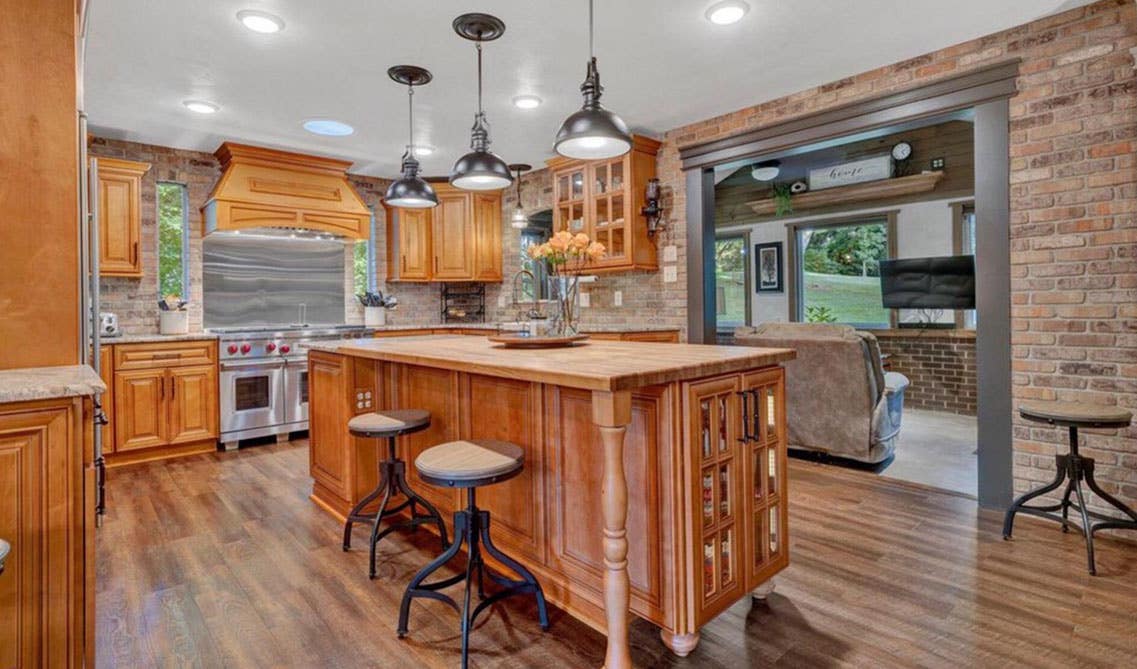
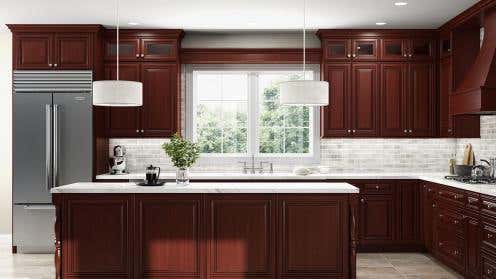
Lily Ann Cabinets: Charleston Toffee
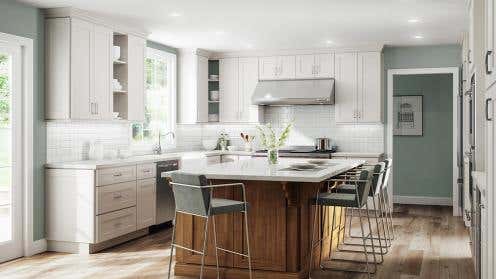
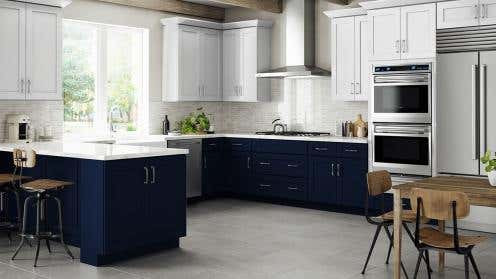
Designing and installing your dream kitchen can be overwhelming but Lily Ann Cabinets makes the process easy. We offer cabinets in many colors and tones to match any kitchen. If you prefer a clean look, we recommend white cabinets like our Colorado White Shaker cabinets. We also offer tan toned cabinets such as our Linen Cabinets, dark browns, light browns such as our Toffee Cabinets, Navy Blue Shaker Cabinets, natural looking wood cabinets, and more. A two-tone island, in a different color from the rest of the kitchen, is an easy way to make it the centerpiece. We have dozens of decorative hardware selections to tie your island look together.
Benefits of an Island
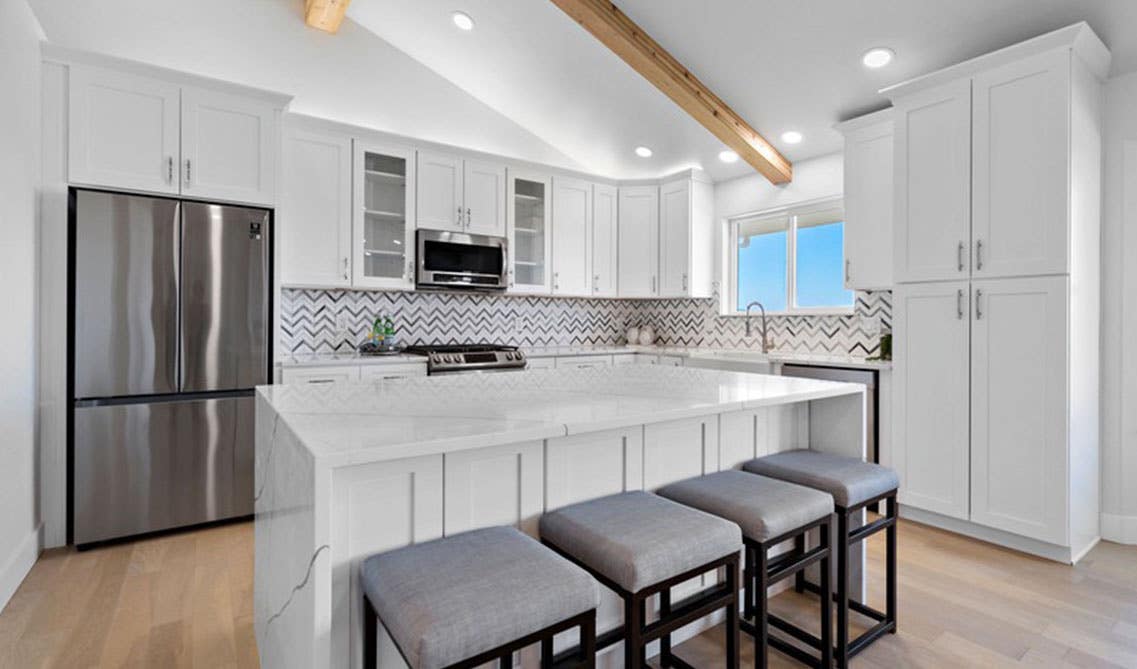
Lily Ann Cabinets: Colorado White Shaker Cabinets
- Aesthetics: a well-designed kitchen island can add a lot of style and visual interest to your kitchen. You can choose from a wide range of materials, colors, and finishes to complement your existing decor.
- Versatility: you can install a sink, dishwasher or cooktop in your island, or add a built-in wine rack or mini fridge.
- Functionality: a larger island can seat bar stools for breakfast or quick meals, give guests a place to sit while you cook, and double as a prep area.
In Conclusion
Ultimately, the size of your kitchen island will depend on your personal preferences and the layout of your kitchen and design. Start from the cabinets, add the clearance on every side, and check the result against your floor plan. It's always a good idea to consult with a professional designer or contractor to help you determine the best size and placement for your island based on your specific needs and space constraints. Our free 3D kitchen design tool lets you try island sizes in your own layout before you buy.
Related articles:
- What Type of Kitchen Island Fits Your Home?
- 10 Incredible Small Kitchen Island Ideas You'll Want to Copy Immediately
- 15 Incredible Kitchen Islands That Defy Design Standards
- 3 Things You Must Consider When Installing a Kitchen Island










Comments