


The main types of kitchen countertops are quartz, granite, marble, quartzite, soapstone, laminate, butcher block, solid surface, concrete, tile, stainless steel and ultracompact surfaces. Consumer Reports tested 14 countertop materials in its lab, and quartz and granite earned the top scores against spills, hot pots and knives. Quartz needs no sealing, while granite and marble need sealing from time to time. Laminate and tile are the low-cost choices.
- 12 types compared: quartz, granite, marble, quartzite, soapstone, laminate, butcher block, solid surface, concrete, tile, stainless steel and ultracompact.
- Toughest in lab tests: quartz and granite both got top scores for spills, hot pots and knives in Consumer Reports’ tests of 14 materials (guide updated May 22, 2025).
- Least upkeep: quartz does not have to be sealed. Granite and marble need sealing from time to time, and butcher block needs regular mineral oil or beeswax.
- Low-cost types: Consumer Reports calls laminate and ceramic tile inexpensive. Laminate can’t be repaired once scratched, and tile grout stains.
- Quartz is not quartzite: quartz is made in a factory from stone chips and resin. Quartzite is a natural rock, and it is often mislabeled.
- Most chosen: engineered quartz (42%) and granite (24%) led the 2022 U.S. Houzz Kitchen Trends Study, as reported by TileLetter.
- Lily Ann Cabinets can plan the cabinets under any of these tops: start with a free 3D kitchen design.
Lily Ann Cabinets: York Chocolate
Selecting the best countertop material for your kitchen is a pivotal decision that combines aesthetic preferences, functional needs, and budget considerations. With a plethora of options available on the market, ranging from timeless classics to innovative newcomers, navigating the choices can feel overwhelming.
Fear not! This comprehensive guide is here to demystify the world of countertop materials, empowering you to make an informed decision that enhances both the beauty and functionality of your kitchen space.
Below you’ll find a table that compares 12 types of countertops, then a short section on each one, then the factors to weigh before you choose. Where we have a deeper guide on one material, we link to it. For quartz, that is our guide to quartz countertop colors and the cabinet finishes each one suits.
Types of Countertops at a Glance
The main types of kitchen countertops are quartz, granite, marble, quartzite, soapstone, laminate, butcher block, solid surface, concrete, tile, stainless steel and ultracompact surfaces. They differ most in three things: how well they stand up to stains, heat and knives, how much care they need, and how they can be repaired.
The strengths and weak points in this table come from Consumer Reports’ countertop buying guide (updated May 22, 2025), which stained, sliced, scratched, scorched and nicked 14 countertop materials in its lab. Quartzite was not in that test, so its row comes from the Natural Stone Institute.
| Countertop type | What it is | Strong points | Weak points | Upkeep |
|---|---|---|---|---|
| Quartz (engineered stone) | Stone chips, resins and pigments made into slabs | Top test scores for spills, hot pots and knives; waterproof | Edges and corners can chip; some patterns look uniform | No sealing |
| Granite | Natural stone; every slab is different | Top test scores for spills, hot pots and knives | Edges and corners can chip | Seal from time to time |
| Marble | Natural stone with veining | Small nicks and scratches can be polished out | Chips and scratches easily; some cleaners leave permanent marks | Seal from time to time |
| Quartzite | Natural stone made almost entirely of the mineral quartz | Harder than glass and a knife blade; will not etch from lemon juice or vinegar | Often mislabeled; some slabs soak up more liquid than others | More porous slabs benefit from sealing |
| Soapstone | Natural stone | Withstands heat very well; small scratches can be repaired | Easily sliced, scratched and nicked; so-so with stains | Finish with mineral oil from time to time |
| Laminate | Layers of paper or fabric with resin over composition wood | Inexpensive; resists stains, impact and heat; easy to clean | Easily scratched and nicked and can’t be repaired; water can get into seams | Keep water out of seams |
| Butcher block | Wood, often maple | Useful for chopping and slicing; fairly easy to install and repair | Damaged by heat, cuts and moisture | Treat often with mineral oil or beeswax |
| Solid surface | Polyester or acrylic resins with mineral fillers | Seamless counter and sink; scratches and small nicks can be buffed out; waterproof | Scratches and cuts easily | Buff out scratches as needed |
| Concrete | Usually custom-formed by a local fabricator | Can be tinted and textured | Chips and scratches easily; can develop hairline cracks | Needs a sealer; each sealer type has a trade-off |
| Tile (ceramic and porcelain) | Tiles set with grout | Inexpensive; excellent heat resistance; one tile can be replaced | Grout is likely to stain even when sealed; edges and corners can chip | Seal and clean the grout |
| Stainless steel | Metal that can be welded and buffed to remove seams | Resists heat and stains | Dents and scratches easily; shows fingerprints | Avoid drain cleaners and hard water deposit removers |
| Ultracompact | A newer category; a mix of quartz, porcelain and glass, says the maker of the brand tested | Resisted heat, stains, chopping and cutting | Edges chipped and samples cracked in impact tests | Not covered in the test notes |
Sources: Consumer Reports, “Countertop Buying Guide”, by Tanya A. Christian, lab testing by Paolo Fu, updated May 22, 2025; Natural Stone Institute, “The Definitive Guide to Quartzite”, by Karin Kirk, January 24, 2017. Both read October 11, 2026. This table has no prices on purpose: installed prices change by slab, layout and region, so ask a local fabricator for a quote.
Popular Countertop Materials and Their Distinctions
1. Granite

Lily Ann Cabinets: Charleston Linen
Pros: Renowned for its durability, heat resistance, and natural beauty, granite adds a touch of luxury to any kitchen.
Cons: Requires periodic sealing to prevent stains and may be prone to chipping or cracking under heavy impact.
Granite is a natural stone, so each slab is unique. In Consumer Reports’ lab, granite survived spills, hot pots and knives with top scores, the same as quartz. Its two weak points are the ones above: edges and corners can chip and need a pro to repair, and the stone needs sealing from time to time. Our guide on how to seal and clean granite countertops shows a simple water test for when it is due.
Checkout: 12 Stunning Granite Kitchen Countertop Ideas for a unique look
2. Quartz
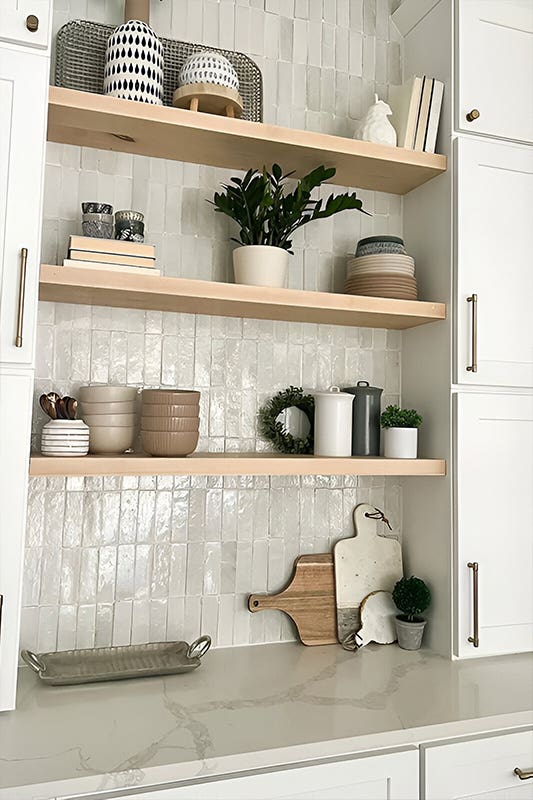
Lily Ann Cabinets: Colorado White Shaker
Pros: Engineered quartz offers unparalleled durability, resistance to scratches and stains, and a wide range of colors and patterns.
Cons: Can be more expensive than natural stone options and may discolor over time when exposed to direct sunlight. If you choose quartz, read what quartz manufacturers say about cleaning it before you buy any cleaner.
Quartz is also called engineered stone. It is a blend of stone chips, resins and pigments. Consumer Reports found it does not have to be sealed for stain protection and is waterproof, so it works with an undermounted sink. The same guide notes that some patterns look unnaturally uniform, and that chipped edges and corners need a pro. Rounded edges help.
Quartz has also been the most-chosen material in remodels. In the 2022 U.S. Houzz Kitchen Trends Study, 91% of renovating homeowners upgraded their countertops, and engineered quartz and granite were the most popular materials at 42% and 24%, as reported by TileLetter (January 17, 2022).
Checkout: Quartz vs. Granite Countertops: Which Is Better?
3. Marble
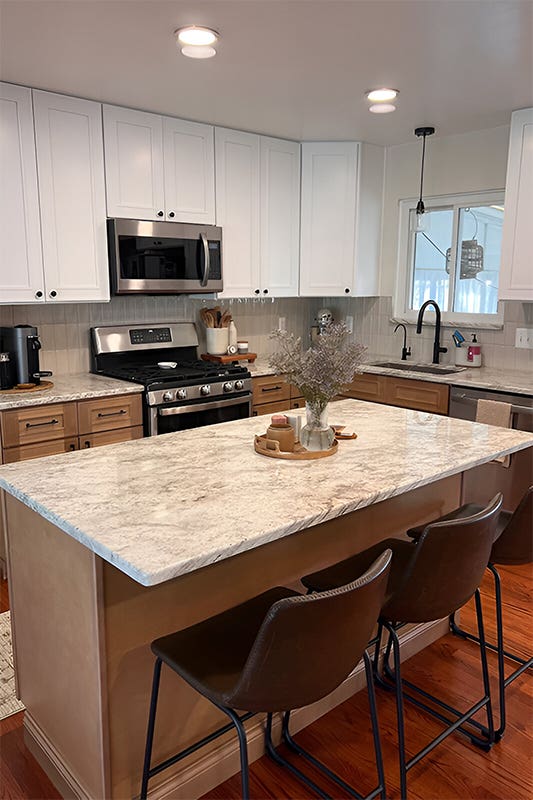
Lily Ann Cabinets: Craftsman Natural Shaker and Craftsman White Shaker
Pros: Prized for its timeless elegance and unique veining patterns, marble lends a sophisticated allure to kitchen countertops. The same stone works on the wall, too; see these marble backsplash ideas.
Cons: Susceptible to etching and staining from acidic substances, requiring regular sealing and delicate care.
Consumer Reports found that marble chips and scratches easily, but that small nicks and scratches can be polished out. In its tests, most stains wiped off sealed marble with water, yet hard water deposit removers left a permanent mark even on sealed stone. To see how marble compares with the two most common stone choices, read marble vs. granite vs. quartz countertops.
4. Laminate
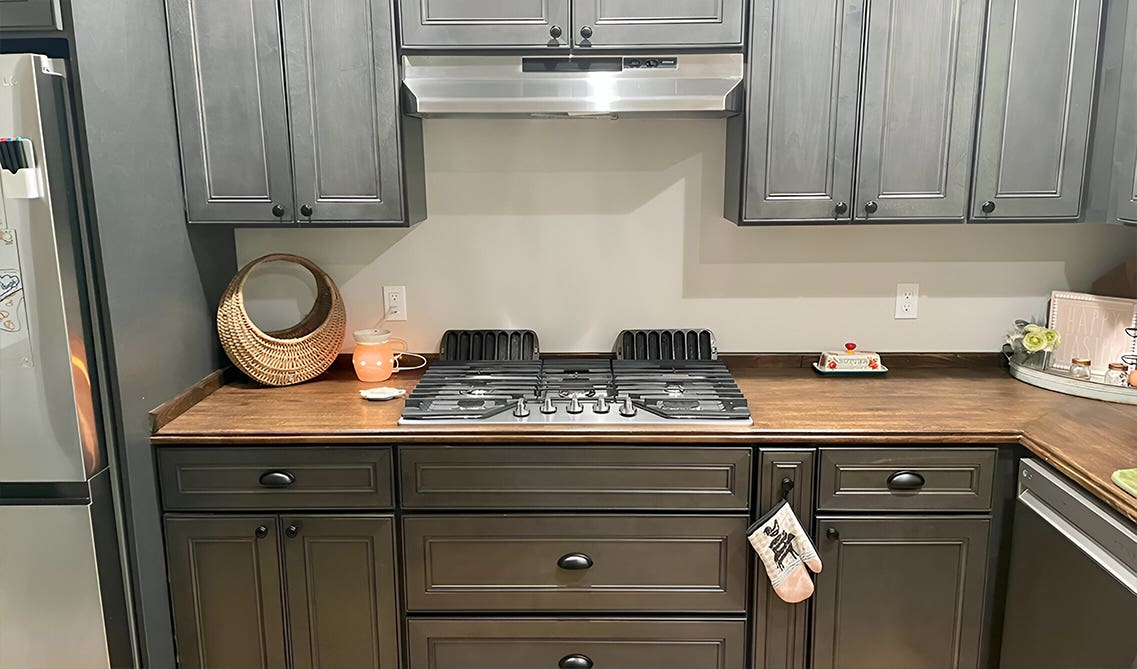
Lily Ann Cabinets: York Driftwood Grey
Pros: Budget-friendly and available in an array of colors and designs, laminate countertops offer versatility and easy maintenance.
Cons: Prone to scratches, burns, and water damage, laminate may require replacement sooner than other materials. If the laminate is still solid and only looks dated, see what an epoxy countertop coating costs and how long it lasts before you replace it.
Laminate is made of layers of paper or fabric with resin over composition wood. Consumer Reports calls it a good choice for a tight budget and found it resists stains, impact and heat. The catch is that it is easily scratched and nicked and can’t be repaired, and water can seep through seams and weaken it. Textured finishes hide marks better than flat ones. Thinking of paint instead of a new top? See painting laminate countertops: does it last?
5. Quartzite
Quartzite is a natural stone. Do not confuse it with quartz, which is made in a factory. The Natural Stone Institute describes quartzite as a metamorphic rock made almost entirely of the mineral quartz. It starts as sand, becomes sandstone, and is then changed by heat and pressure underground.
According to the Institute, quartzite is harder than glass and harder than a knife blade, and it will not etch from acids like lemon juice or vinegar. How much liquid it soaks up depends on the slab, so more porous slabs benefit from sealing. One warning: quartzite is commonly mislabeled, and some stone sold under that name is really marble or dolomitic marble. Our quartzite vs. quartz guide shows two simple tests you can do on a sample.
6. Soapstone
Soapstone is a natural stone that is less common than granite. Consumer Reports says it withstands heat very well and that small scratches can be repaired. It is also easily sliced, scratched and nicked, its stain resistance is so-so, and it needs a mineral oil finish from time to time. The guide suggests it for a low-traffic kitchen. More in our soapstone countertops guide.
7. Butcher Block
Butcher block is a wood countertop. Maple is common, and you will also see other woods, including teak. Consumer Reports found it useful for chopping and slicing and fairly easy to install and repair. It is also high maintenance: heat, cuts, scrapes and impacts all damage it, and it has to be treated regularly with mineral oil or beeswax.
Wood also moves with humidity. The same guide calls butcher block a poor choice over a dishwasher or around a sink. Many people use it on an island only. See butcher block countertops: pros, cons, care and cost.
8. Solid Surface
Solid surface is made of polyester or acrylic resins mixed with mineral fillers. It can be used for the counter, the sink and the backsplash, so there are no visible seams. Consumer Reports found it resists heat and impacts, and that scratches and small nicks can be buffed out. Its weak point is that it scratches and cuts easily. Our solid surface countertops guide compares it with quartz.
9. Concrete
Concrete counters are usually custom-formed by a local fabricator, so the look is one of a kind and quality can vary. Concrete can be tinted and textured. Consumer Reports found it chips and scratches easily and can develop hairline cracks. Sealers are a trade-off: topical sealers protect against stains but not heat, and penetrating sealers handle heat but not stains. See concrete countertops for more.
10. Tile and Porcelain
Ceramic tile comes in many colors and patterns. Consumer Reports calls it inexpensive and fairly easy to install, with excellent heat resistance, which makes it a good choice around a stove. A damaged tile can be replaced on its own if you keep a few spares. The weak point is the grout, which is likely to stain even when sealed. Tile edges and corners can also chip.
We cover both forms in more detail: tile countertops and porcelain countertops.
11. Stainless Steel
Stainless steel gives a kitchen the look of a restaurant kitchen and matches stainless appliances. It can be welded, ground and buffed to remove seams. Consumer Reports found it resists heat and stains. It also dents and scratches easily and shows fingerprints, and drain cleaners and hard water deposit removers can discolor it.
12. Other Types: Ultracompact, Recycled Glass, Limestone and Bamboo
- Ultracompact. Consumer Reports calls this a new countertop category and tested the Dekton brand. It resisted heat, stains, chopping and cutting. In impact tests, pieces of the edges chipped off and 2-centimeter samples cracked in two.
- Recycled glass. Resists heat, cuts and scratches. Chips and stains can be a problem.
- Limestone. Resists heat well, but it is soft and porous. In the same tests, even a high-quality sealer did not protect it from stains.
- Bamboo. Consumer Reports found it easily stained, scorched, sliced and nicked, and rates it best for show.
For photos of these materials in real kitchens, see our kitchen countertop ideas. We also have an older, shorter guide that covers six of these materials: the best kitchen counter materials.
Factors to Consider
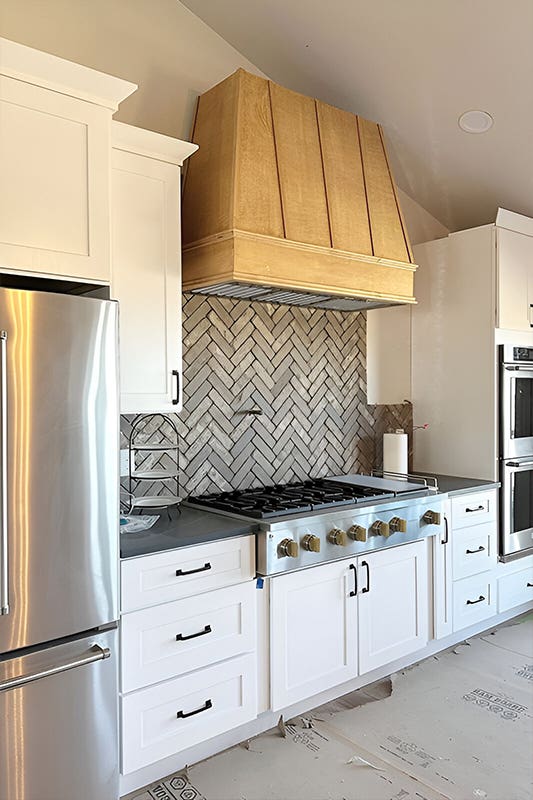
Lily Ann Cabinets: White Shaker Elite
Before diving into specific countertop materials, it's essential to understand the key factors that influence your decision:
1. Durability: Your countertop serves as the centerpiece of your culinary space, and it must withstand daily kitchen activities such as chopping, slicing, and hot pans. A durable countertop will remain functional and visually appealing for years to come. It will also maintain the integrity of your kitchen workspace.
2. Maintenance: Maintenance considerations play a crucial role in the longevity and appearance of your countertop. Before making a decision, it's important to evaluate the level of upkeep required to keep your countertop looking pristine. This includes routine cleaning to remove spills and stains, as well as periodic sealing to protect the surface from moisture and potential damage. Additionally, certain materials may necessitate more extensive maintenance, such as repairs for scratches or chips.
3. Aesthetics: Your countertop plays a significant role in defining the overall look and feel of the space, serving as a focal point that ties together the design elements. Whether you prefer a sleek and modern aesthetic or a cozy and rustic vibe, choosing a material that complements your kitchen's style and color scheme is essential. Choose the backsplash at the same time; our guide to matching a backsplash to your countertop and cabinets shows how.
From the natural beauty of granite to the contemporary elegance of quartz, each material offers unique visual characteristics that can enhance the ambiance of your kitchen
4. Budget: Budget considerations are an important factor in the countertop selection process, influencing both the initial investment and long-term expenses. Before embarking on your search, it's crucial to determine how much you're willing to spend on your countertops, taking into account both upfront costs and ongoing maintenance expenses.
While certain materials may have a higher initial price tag, they may offer greater durability and longevity, potentially saving you money in the long run on repairs and replacements. Conversely, more budget-friendly options may require less of an initial investment but may incur higher maintenance costs over time.
5. Customization and Design Flexibility: One of the advantages of certain countertop materials, such as concrete and stainless steel, is their ability to be customized to suit your unique design preferences. Concrete countertops can be molded into various shapes and sizes, allowing for creative and personalized designs.
Similarly, stainless steel countertops offer a sleek, industrial aesthetic that complements modern kitchen designs. With these customizable options, you can tailor your countertop to perfectly fit your kitchen layout and style, adding a touch of personality to the space.
6. Heat and Scratch Resistance: When considering countertop materials, it's important to evaluate their resistance to heat and scratches, especially if you frequently use hot pots and pans or sharp knives in the kitchen. By prioritizing heat and scratch resistance, you can ensure that your countertop maintains its beauty and functionality for years to come.
7. Long-Term Value and Return on Investment: While the upfront cost of certain countertop materials may seem daunting, it's essential to consider the long-term value and return on investment they provide. Potential buyers are often willing to pay a premium for homes with luxurious, durable countertops, making them a worthwhile investment in the resale market. By choosing a countertop material that offers lasting beauty and durability, you can enjoy the benefits of your investment for years to come.
Before You Buy: 5 Checks
These five checks come from Consumer Reports’ buying guide. They apply to every material above.
- Get big samples. Small samples make it hard to picture a whole kitchen. Take large samples home, and for stone, go to the stoneyard. Color and veining vary even within a slab, so reserve the one you love.
- Decide on the sink first. A top-mounted sink works with any material. An undermounted sink works best with waterproof materials such as concrete, solid surface, stainless steel, stone or quartz.
- Ask about the warranty. Do this for whatever material you are considering.
- Let the fabricator measure. Have the fabricator take the final measurements, so accuracy is their job. The estimate and contract should name the thickness, the finish, the edge, the backsplash, fees for sink, faucet and cooktop cutouts, and removal of the old counters.
- Look for ways to save. Mix materials: use the more expensive one on the island and a cheaper one on the perimeter. Remnants can work for small areas. Fancy edges such as bevels and bullnoses may add cost. Our countertop edge profiles guide shows the common ones.
In Conclusion…
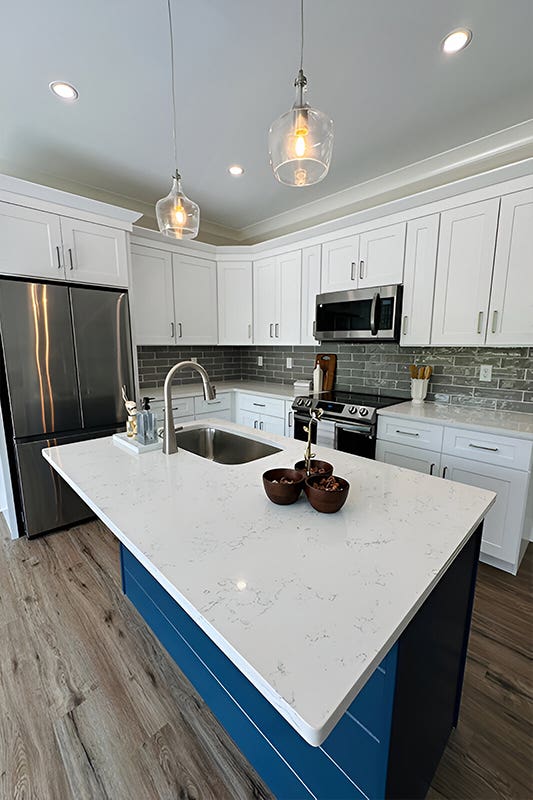
Lily Ann Cabinets: Colorado White Shaker
In conclusion, choosing the right countertop material for your kitchen involves careful consideration of many elements including, durability, maintenance, aesthetics, and budget. By weighing these factors and exploring the characteristics of different materials, you can make an informed decision that enhances both the beauty and functionality of your kitchen space.
Start your kitchen journey today with Lily Ann Cabinets! Head to our website to order FREE SAMPLES, get a FREE 3D DESIGN, or meet with our professional designs and get real time answers to your questions with LILY ANN LIVE.
Checkout: Lily Ann Cabinets FREE 3D Design Tool
Frequently Asked Questions
Selecting the right countertop material is crucial because it not only impacts the overall aesthetics of your kitchen but also influences its functionality and durability. Your countertop serves as the workplace of the kitchen, enduring daily wear and tear, so choosing a material that meets your needs and preferences ensures long-term satisfaction with your kitchen space.
Countertop materials span a wide range of price points, from budget-friendly options like laminate to luxurious choices such as granite and quartzite. If you're leaning toward quartzite, our guide to what color cabinets go with Taj Mahal quartzite shows which cabinet colors suit its warm veining. Factors that affect cost include material rarity, quality, thickness, and installation requirements.
While investing in a high-quality countertop may incur a higher upfront cost, it can offer greater durability and longevity, potentially saving you money in the long run!
Popular countertop materials include granite, quartz, marble, and laminate, each with its own set of advantages and drawbacks. Ultimately, the choice depends on your priorities in terms of aesthetics, durability, and budget.
Quartz is made in a factory and quartzite is cut from the ground. A quartz countertop is engineered stone: a blend of stone chips, resins and pigments, according to Consumer Reports, and it does not need sealing. Quartzite is a natural rock made almost entirely of the mineral quartz, according to the Natural Stone Institute, and more porous slabs benefit from sealing. Our quartzite vs. quartz guide compares the two in full.
Quartz is the easiest pick for stains: it had top scores in Consumer Reports’ tests and does not have to be sealed. Laminate and stainless steel also resist stains, and granite does well as long as it is sealed from time to time. The weak ones in the same tests were limestone, where even a high-quality sealer did not stop stains, bamboo, and tile grout, which is likely to stain even when sealed.
They can be, if you keep the wood clean and maintained. Research on wooden cutting boards, summarized by NC State University, found that fine-grained hardwoods like maple pull fluid down into the grain, where trapped bacteria die off as the board dries after cleaning. That research was on cutting boards, not whole countertops. Consumer Reports adds that butcher block has to be treated regularly with mineral oil or beeswax, and that it is a poor choice around a sink.
Laminate and ceramic tile are the low-cost types. Consumer Reports calls laminate inexpensive and a good choice for a tight budget, and calls tile inexpensive and fairly easy to install. Prices depend on your layout and region, so get a local quote. If your laminate is sound but dated, compare painting it with replacing it.
It depends on how hard you use the kitchen. Quartz and granite both earned top scores in Consumer Reports’ tests for spills, hot pots and knives, so they suit heavy use. Laminate costs less and resists stains, impact and heat, but it scratches and can’t be repaired. Consumer Reports also suggests mixing materials: the more expensive one on the island and a cheaper one on the perimeter.
Quartz that looks like natural stone is the big shift. Consumer Reports notes that granite long reigned as the top choice, but quartz now copies marble, granite and concrete with an increasingly realistic look and is easier to maintain. The newest material type in its tests is ultracompact, sold under names such as Dekton, which the guide calls a new countertop category.
Most people have no reason to avoid quartz, but it has limits. Consumer Reports notes that some patterns look unnaturally uniform, and that edges and corners can chip and need a pro to repair. If you want a slab that is one of a kind, a natural stone such as granite or quartzite fits better. See quartz vs. granite countertops for that choice.










Comments