


- Inset doors sit inside the frame flush; overlay doors sit on top — partial overlay leaves the frame visible between doors, full overlay covers nearly all of it.
- Inset typically costs 25–35% more than a comparable overlay build — the premium comes from tighter tolerances and skilled joinery, not fancier materials.
- Full overlay is the RTA/value-line standard. Every Lily Ann Cabinets line is full overlay: 1/2" solid plywood boxes, 5/8" dovetailed drawers, soft-close concealed hinges and glides.
- Storage: overlay doors sitting on top of the frame maximize usable interior cabinet space; inset doors sit inside the frame, which shaves a small amount of interior depth.
- Hardware: full overlay doors need pulls or knobs to open because there's minimal gap between doors — inset and partial overlay can often be opened by hand, and inset can also use exposed decorative hinges as a design element.
- Inset is traditionally a framed-cabinet-only style (it needs a face frame to sit into); full overlay works on both framed and frameless (European-style) construction.
- Lily Ann's in-stock RTA cabinets ship on a real 21-business-day lead time; custom/inset cabinetry industry-wide typically runs 8–14 weeks.
Inset cabinets sit flush inside the face frame for a furniture-grade look, while overlay cabinets sit on top of the frame — full overlay being the cleaner, more affordable, industry-standard choice for RTA and stock cabinetry. The right answer depends on budget, kitchen style, and how much you value that furniture-built look versus maximum interior storage and a faster lead time.
This guide breaks down exactly how the two styles differ, what inset really costs versus overlay, the hinge and hardware trade-offs nobody explains clearly, how much interior storage you actually give up, and why Lily Ann Cabinets — like most RTA and stock manufacturers — builds full overlay rather than inset.
What's the Difference Between Inset and Overlay Cabinets?
Inset doors and drawer fronts are mounted inside the cabinet's face frame so they sit flush with it when closed; overlay doors and drawer fronts are mounted on top of the frame instead, covering some or most of it.
That single difference in door position drives almost every other trade-off between the two styles — cost, precision, storage, hardware, and even which cabinet box construction (framed or frameless) each one works with. See Lily Ann's full glossary of cabinet terms for more construction vocabulary as you read.
Inset Cabinets: Pros, Cons, and What They Actually Cost
Inset cabinets cost roughly 25–35% more than a comparable overlay build, driven by tighter manufacturing tolerances and more skilled joinery — not by higher-grade materials.
Because an inset door has to sit flush inside the frame on every side, the gap around each door has to be consistent and small — a fraction of an inch, not the more forgiving margin overlay construction allows. That precision is what pushes the price up, and it's also what gives inset its reputation as a "furniture-grade" or high-end custom look.
- Pros: flush, built-in appearance; a traditional, furniture-like aesthetic many buyers associate with higher-end kitchens; hinge choice can be part of the design (see below).
- Cons: 25–35% cost premium; slightly less interior storage per cabinet (the door sits inside the box footprint); requires a face frame, so it isn't available on true frameless construction; longer lead times industry-wide (8–14 weeks is a commonly cited custom-cabinet range from multiple manufacturers, versus the ~21 business days quoted for in-stock RTA orders).
Inset hinges: exposed or concealed
Inset doors can use either exposed, decorative hinges — visible even when the door is closed, often chosen as a design element on traditional or vintage-style kitchens — or concealed (European/cup) hinges, which hide inside the cabinet and give a cleaner look with easier adjustment. Full overlay construction, by contrast, uses concealed hinges almost exclusively, since there's no visible frame edge for an exposed hinge to sit on.
Overlay Cabinets: Partial vs. Full Overlay Explained
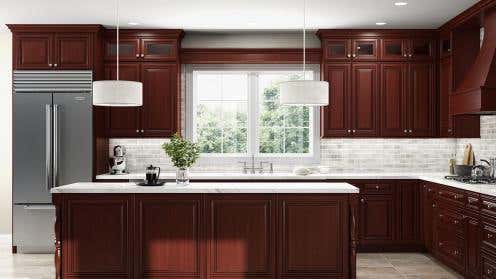
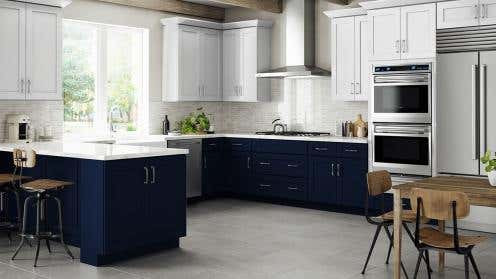
Partial overlay leaves roughly two inches of face frame visible between doors and drawers; full overlay covers nearly all of the frame for a cleaner, more contemporary look — and is the standard on most stock and RTA cabinetry today, including every Lily Ann Cabinets line.
Partial overlay — sometimes called half-inch overlay, since the door extends about half an inch beyond the frame on each side — is the more traditional overlay style. Because it leaves enough exposed frame edge, doors and drawers can often be opened by hand without pulls or knobs.
Full overlay covers all or nearly all of the front edge of the cabinet, leaving minimal gaps between adjacent doors and drawers. That's what gives full overlay its clean, modern look — but it also means doors and drawers need hardware to open, since there usually isn't enough exposed edge to grip by hand.
Inset vs. Overlay Cabinets: Full Comparison Table
The two styles trade off on cost, precision, storage, hardware, and lead time — no single comparison covers all five in one place anywhere else on the current SERP for this term, which is the gap this table is built to close.
| Feature | Inset | Full Overlay |
|---|---|---|
| Door position | Flush inside the face frame | Sits on top, covering nearly all the frame |
| Visible face frame | Full frame visible around every door | Minimal to none |
| Typical cost vs. the other style | 25–35% more than a comparable overlay build | Baseline — the more affordable, industry-standard build |
| Manufacturing precision | Tight tolerances, skilled joinery required | More forgiving tolerances |
| Hinge options | Exposed/decorative or concealed | Concealed (European/cup) almost exclusively |
| Opens without hardware? | Often yes, by hand | No — needs pulls or knobs |
| Interior cabinet storage | Slightly reduced — door sits inside the box | Maximized — door sits on top of the box |
| Construction requirement | Traditionally requires a face frame (framed cabinets) | Works on both framed and frameless construction |
| Typical lead time | Industry-wide custom/inset range: ~8–14 weeks (multiple manufacturers) | Lily Ann in-stock RTA: up to 21 business days, plus freight transit |
| Best for | Furniture-grade, traditional or high-end kitchens | Modern kitchens, RTA and value-conscious buyers, most stock and semi-custom lines |
Cost-premium and lead-time figures for inset are industry-wide, independently sourced (see brief §11) — not a Lily Ann-specific quote, since Lily Ann doesn't sell inset cabinetry. Lily Ann's own 21-business-day figure is pulled directly from its shipping page as of Sep 2026 and may change; verify current lead time before relying on it.
Framed vs. Frameless: Which Door Styles Work With Which Construction?
Inset is traditionally a face-frame-only style, while full overlay is the door style that works on both framed and frameless (European-style) cabinet boxes — which is a separate decision from inset vs. overlay itself.
It's easy to conflate "inset vs. overlay" (a question about door position) with "framed vs. frameless" (a question about the cabinet box). They're related but not the same choice: a framed cabinet can be built with standard overlay, full overlay, or inset doors, while a frameless cabinet is almost always full overlay, since there's no face frame for an inset door to sit into. For the full breakdown of box construction, see framed vs. frameless cabinets: understanding the differences.
Why Lily Ann Cabinets Builds Full Overlay

Every current Lily Ann Cabinets line is built full overlay, not inset — a deliberate fit for RTA cabinetry, where full overlay's more forgiving tolerances keep home-assembly realistic and pricing accessible.
Lily Ann's RTA (ready-to-assemble) cabinets share the same core full-overlay construction across every finish: 1/2" solid plywood (birch) box construction, full overlay flat-panel doors, 5/8" dovetailed solid-wood drawers, full-extension soft-close under-mount glides, and soft-close adjustable concealed hinges. That's the same construction category — full overlay, concealed hinges, forgiving tolerances — that makes RTA cabinetry practical to ship flat and assemble at home in the first place. Inset's tight, custom tolerances are part of why it isn't offered as an RTA product anywhere in the industry, not just at Lily Ann.
How to Choose Between Inset and Overlay for Your Kitchen
Choose inset if a furniture-grade, flush look matters more to you than budget and lead time; choose full overlay if you want a clean modern look, more usable interior storage, and a faster, more affordable path to a finished kitchen.
- Pick inset if: you want the flush, built-in furniture look; you're building a traditional or high-end kitchen where the extra 25–35% fits the budget; you're comfortable with a multi-week custom lead time.
- Pick full overlay if: you want a clean, contemporary look without paying a custom premium; you want to maximize interior cabinet storage; you're working with an RTA or stock cabinet timeline instead of a custom one; you want the option of frameless (or framed) construction, not just framed.
For a deeper look at door style (shaker, slab, raised panel, and more) once you've settled on inset vs. overlay, see which cabinet door style is right for your kitchen.
Frequently Asked Questions
Shop Full Overlay Cabinet Lines


See Full Overlay Cabinets in Your Own Kitchen
Get a free 3D design or order free door samples to see the full overlay finish and hardware fit in person.
Start My Free Design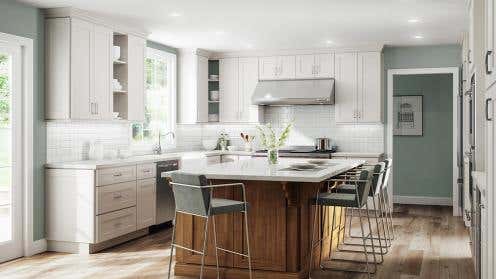








Comments