


First, test it: leave a small puddle of water on the counter for about 15 minutes. If the stone turns darker, it needs sealing. Clean the counter and let it dry completely, then apply a penetrating granite sealer until the surface is wet, let it soak in for the time on the label, wipe off all the excess and keep the counter dry for about 24 hours. The Natural Stone Institute says most granite doesn't strictly need sealing, but a sealer adds stain protection.
- Test first: leave a 3-inch puddle of water on the counter for about 15 minutes. If the stone darkens, seal it. If not, leave it alone.
- Not every granite needs it: the Natural Stone Institute says most granite countertops don't strictly need sealing; dense stones may need one coat, porous ones four to six.
- How to seal: clean, let it dry fully, wipe on a penetrating sealer until wet, let it soak in per the label, wipe off every bit of excess, keep it dry about 24 hours.
- How often: sources range from every 6 to 12 months to 10 years or more. Test every few months near the sink and cooktop instead of using a calendar.
- Daily cleaning: warm water with mild soap or a stone cleaner, a soft cloth, then dry. To disinfect, 50/50 rubbing alcohol and water.
- Avoid: vinegar, lemon, bleach, harsh sprays and scrubbing pads. They wear down the seal even when the granite looks fine.
- Lily Ann Cabinets makes the cabinets that sit under your granite. Wipe sealer and cleaner drips off the doors right away, especially on the sink base.
Granite is one of the easiest countertops to live with. But "easy" isn't "zero care." A worn-out seal lets oil and wine soak in, and the wrong spray cleaner can wear that seal down faster than you'd think.
This guide shows you how to tell if your granite needs sealing (it takes 15 minutes and a glass of water), how to seal it step by step, how often to do it, and how to clean granite every day without stripping the seal. Every care rule below comes from a named source: the Natural Stone Institute, Consumer Reports, a sealer maker's published instructions, or a home-care publisher. Where those sources disagree, we say so.
Do Granite Countertops Need to Be Sealed?
Not always. The Natural Stone Institute says most granite countertops don't strictly need sealing, but many benefit from it because a sealer cuts down how much moisture can get into the stone. Some granites are dense and barely absorb anything, while others soak up water fast. A simple water test tells you which kind you have.
The Natural Stone Institute (NSI), the stone industry's trade group, put it plainly in its statement on sealing natural stone countertops: "Most granite countertops do not need to be sealed." It adds that a homeowner who cleans the counter after each meal will rarely have staining problems, and that sealing gives "further reduction of moisture migration into an already moisture resistant surface."
Two more things change the answer for your kitchen:
- Every granite is different. Stone-care experts interviewed by NSI say a dense black granite such as Absolute Black may not need sealing at all, or only one coat. A more porous one such as Juparana Columbo may need four to six coats to seal properly.
- Many slabs are resin-treated at the factory. NSI notes that many granites get a resin treatment that fills tiny fissures before polishing. Sealing a resin-treated top "may increase the resistance" of the stone, but it starts out fairly stain-resistant already.
So the honest answer is: don't seal on a schedule because someone told you to. Test it, and seal when the test says so.

Lily Ann Cabinets: Charleston Linen
The Water Test: How to Tell If Your Granite Needs Sealing
Pour a small puddle of water on the countertop, wait about 15 minutes, then wipe it up. If the granite under the puddle has turned darker, water is soaking in and it's time to seal. If the stone looks the same and the water sat on top, your seal is still working.
Here's the version Stone Care International, a sealer maker, publishes as its "Water Seal Test":
- Pour a puddle about 3 inches across in several spots on the counter.
- Test the busy zones, especially next to the sink and the cooktop, where water and oil land most often.
- Wait about 15 minutes.
- Wipe it up and look. A dark mark or ring means water is getting in. Don't panic; it dries out. It just means the seal needs to be renewed.
Two variations are worth knowing. A stone-care expert quoted by NSI uses hot water and lets it sit 10 to 20 minutes, because hot water gets into the stone more easily. Bob Vila suggests putting a few drops of cooking oil a few inches from the water, since oil stains are the hardest to get out. If either one darkens the stone after 15 minutes, reseal.
| What you see after 15 minutes | What it means | What to do |
|---|---|---|
| Water still beaded or sitting on top, stone unchanged | The seal is working (or the stone is very dense) | Nothing. Test again in a few months |
| A faint dark ring that fades as it dries | Water is starting to get in | Plan to reseal soon, starting with that area |
| A dark patch, fast | The stone is absorbing freely | Seal now, and expect it to need more than one coat |
How to Seal Granite Countertops, Step by Step
Sealing granite is a do-it-yourself job for most people. The steps below follow Stone Care International's published instructions, Consumer Reports and Bob Vila. One rule beats all of them: the label on your sealer wins. Consumer Reports says methods vary between products, so read it first.
What you need: a granite sealer, two or three clean microfiber cloths, rubber gloves, and a stone-safe cleaner or mild soap and water.
- Clear the counter. Move small appliances, jars and decorations.
- Clean it well. Wash the whole top, rinse it and wipe it dry. Don't use vinegar, lemon or bleach for this.
- Let it dry completely. Stone Care International says granite typically takes about 12 hours to dry before sealing. Bob Vila waits 24 hours after cleaning. Damp stone won't take the sealer.
- Open a window. Bob Vila recommends good airflow and gloves while you work.
- Test a hidden spot. Try the sealer on a small area, such as the corner under a toaster, to make sure it doesn't change the look of your stone.
- Apply the sealer. Spray or wipe it on until the surface is wet. Stone Care International says to add a second heavy coat 3 to 5 minutes later, before the first one dries.
- Give it time to soak in. Consumer Reports says sealers usually sit 5 to 15 minutes. Stone Care International's product sits 30 minutes after the last coat. Follow your product.
- Wipe off every bit of excess. Buff the top dry with a clean cloth. Sealer left on the surface can dry into a hazy film.
- Keep it dry while it cures. Stone Care International says to keep the surface dry for 24 hours. Bob Vila notes that cure times range from 2 to 48 hours depending on the product.
- Re-test. Do the water test again in the busy zones. If the stone still darkens, apply another coat.
Don't skip the edges. Stone Care International says countertop edges need at least two applications, and to seal under the lip of an undermount sink, where water sits the most.

Get your FREE 3D kitchen design today!
Start NowProtect your cabinets while you seal
Sealer and stone cleaners are made for stone, not for painted or stained cabinet doors. Stone Care International says to wipe sealer off fixtures right away if it lands where it shouldn't. The same goes for the cabinet faces right under the counter edge. Keep a dry cloth in your other hand as you work along the front edge, and wipe any drips off the doors and drawer fronts before they dry. If a cleaner does mark a door, see our guide to cleaning wood cabinets.
What Kind of Granite Sealer Should You Use?
Use a penetrating (also called impregnating) sealer made for granite. It soaks just below the surface instead of sitting on top, so it won't change the shine or peel. Stone Care International notes coating-type sealers exist too, but penetrating sealers tend to last longer.
- Look for "oleophobic." NSI says a quality sealer should resist both water and oil-based stains.
- Check the active ingredient. Bob Vila says sealers with fluorocarbon aliphatic resin typically protect for 5 to 10 years, while siloxane- or silicone-type sealers give about 6 months to 3 years.
- Make sure it's food-safe for kitchens. Better Homes & Gardens notes that sealers used on food-prep surfaces must be non-toxic and safe for use with food.
- Don't confuse sealer with caulk. Silicone caulk is for the seams and the joint where the counter meets the backsplash. It doesn't seal the face of the stone.
How Often Should You Reseal Granite?
Whenever the water test fails. That might be every year or every several years, depending on the stone, the sealer and how hard you use the kitchen. The sources below give very different numbers, which is why a 15-minute test beats a calendar reminder.
| Source | What it says about resealing |
|---|---|
| Natural Stone Institute statement | A quality sealer should have a life expectancy of 10 to 15 years |
| Stone-care expert quoted by NSI | A good sealer can last up to 10 years if you clean with the right products |
| Stone restorer quoted by NSI | Expect a professional reseal every 3 to 5 years; busy, sunny areas may need it yearly |
| Bob Vila | 5 to 10 years with fluorocarbon aliphatic resin sealers; 6 months to 3 years with others |
| Stone Care International (sealer maker) | Reseal every 6 to 12 months; test often, with once a year as a rule of thumb |
The pattern behind those numbers: better sealers last longer, the sink and cooktop zones wear out first, and harsh cleaners shorten the life of any seal. So test the busy zones every few months, and reseal only the areas that fail if the rest still beads water.
How to Clean Granite Countertops Every Day
Wipe granite with warm water and a soft cloth or non-scratch sponge, using a cleaner made for natural stone or a few drops of mild dish soap. Then dry it with a microfiber cloth so it doesn't streak. Skip vinegar, lemon, bleach and scrubbing pads.
- Clear crumbs with a dry cloth so you don't grind grit into the polish.
- Wash. Use a pH-neutral stone cleaner, or warm water with a little mild dish soap, on a soft cloth.
- Rinse. Go over it with a cloth dampened in plain water, so no soap is left behind.
- Dry. Buff with a microfiber cloth. Consumer Reports says this avoids streaking.
Soap or stone cleaner? The experts split here. Consumer Reports' daily routine is warm water and mild dishwashing liquid. A stone-care expert interviewed by NSI says he doesn't recommend dish detergent, because soap can leave a film that dulls or streaks the stone over time, and suggests a daily cleaner made for stone instead. Either way, rinse well. If your granite starts to look cloudy, switch to a stone cleaner.
Wipe around the faucet daily. A stone-care expert quoted by NSI warns that water left around the faucet and fixtures will start to calcify and turn white over time, so a quick wipe there each day saves a bigger job later.
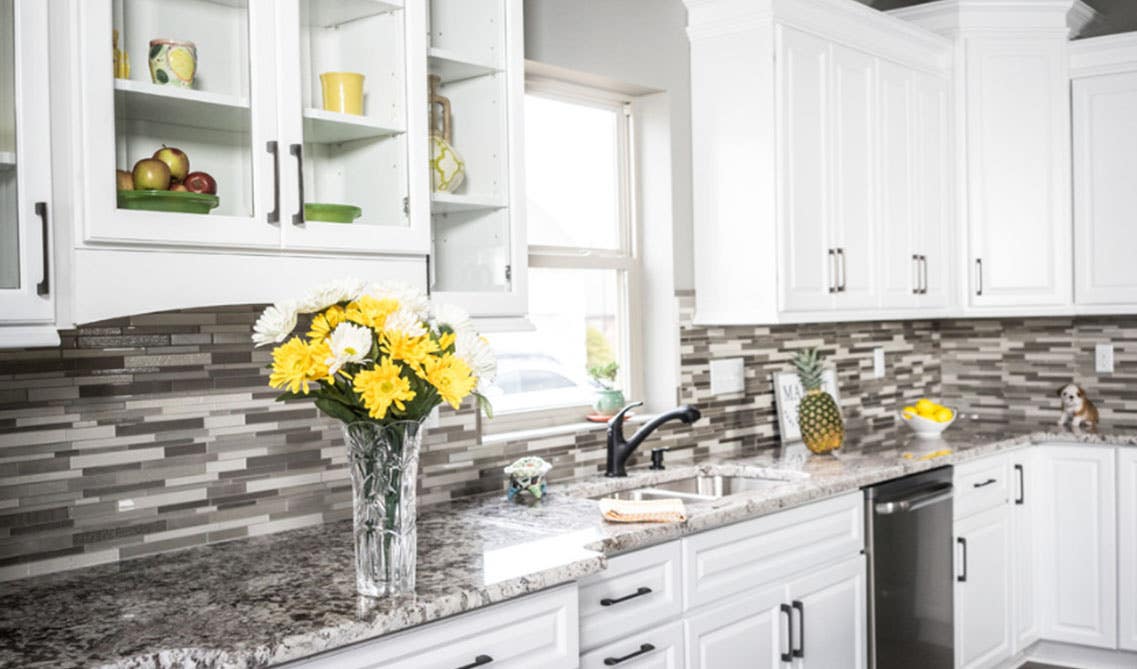
How to disinfect granite
Consumer Reports gives this method: mix rubbing alcohol and water 50/50 in a spray bottle, spray the counter, let it sit 3 to 5 minutes, then wipe with a wet cloth and dry it with a microfiber cloth. That's the step to add after handling raw meat, not something you need every day.
Cleaners to Avoid on Granite
Granite itself is tough. NSI's experts note it isn't sensitive to most household acids. The problem is the sealer. In NSI's guide to common stone-cleaning mistakes, one expert explains that some chemicals may not visibly hurt granite but can break down the sealer, so you have to reseal more often.
| Avoid | Why | Source |
|---|---|---|
| Vinegar, lemon juice and citrus cleaners | Acidic; wears down the seal and can dull the stone | Consumer Reports, NSI experts, Bob Vila |
| Bleach and bleach wipes or sprays | Harsh on stone and on the sealer | NSI experts, Bob Vila |
| Harsh all-purpose and commercial cleansers | Can break down the sealer | Bob Vila |
| Scouring powder, steel wool, scrubbing pads | Act like an abrasive and dull the polish | NSI experts |
| Anything not labeled safe for natural stone | Stone cleaners should be pH neutral (around 7) | NSI experts |
One product where the sources disagree is baking soda. Bob Vila lists it among things not to use when cleaning before you seal. Better Homes & Gardens uses baking soda as the base for a stain-removing paste. Keep it for spot treatments, not daily cleaning.
How to Remove Stains From Granite
Blot spills right away; wiping spreads them. Then wash the spot with water and a little mild soap and rinse several times. If a mark is still there, it has soaked in, and you need a poultice to pull it back out.
- Oil stains (cooking oil, butter, lotion): Better Homes & Gardens, citing Molly Maid, suggests a paste of baking soda and water.
- Water-based stains (coffee, wine, juice): the same paste made with hydrogen peroxide instead of water.
- How to use it: spread the paste on the stain, work it gently with a soft cloth, rinse with water, and repeat until the stain lifts. Then do the water test on that spot. A stain that got in means the seal there has worn out.
- Dull spots (etches): Consumer Reports says light etch marks can be buffed out with granite polishing powder and a damp cloth. Reseal the spot afterward if the rest of the counter is sealed.
- Chips, cracks and deep scratches: Consumer Reports says these need a stone repair kit or a professional.
NSI also publishes a guide to identifying and removing specific stone stains, which Better Homes & Gardens points readers to for stubborn cases.
The Sink Base Is Where Granite Care Matters Most
Most granite problems start around the sink. It's where water sits longest, where the seal wears out first and where people use the strongest sprays. It's also directly over a wood cabinet.
- Test there first. The water test next to the sink will fail before the rest of the counter does.
- Seal under the sink lip. Stone Care International calls this out for undermount sinks.
- Dry the front edge. Water that runs off the counter edge drips onto the sink base doors. Wipe the edge and the doors when you dry the counter.
- Store cleaners in a tray. NSI's experts suggest keeping bottles like dish soap in a dish on the counter, so drips don't sit on the stone.
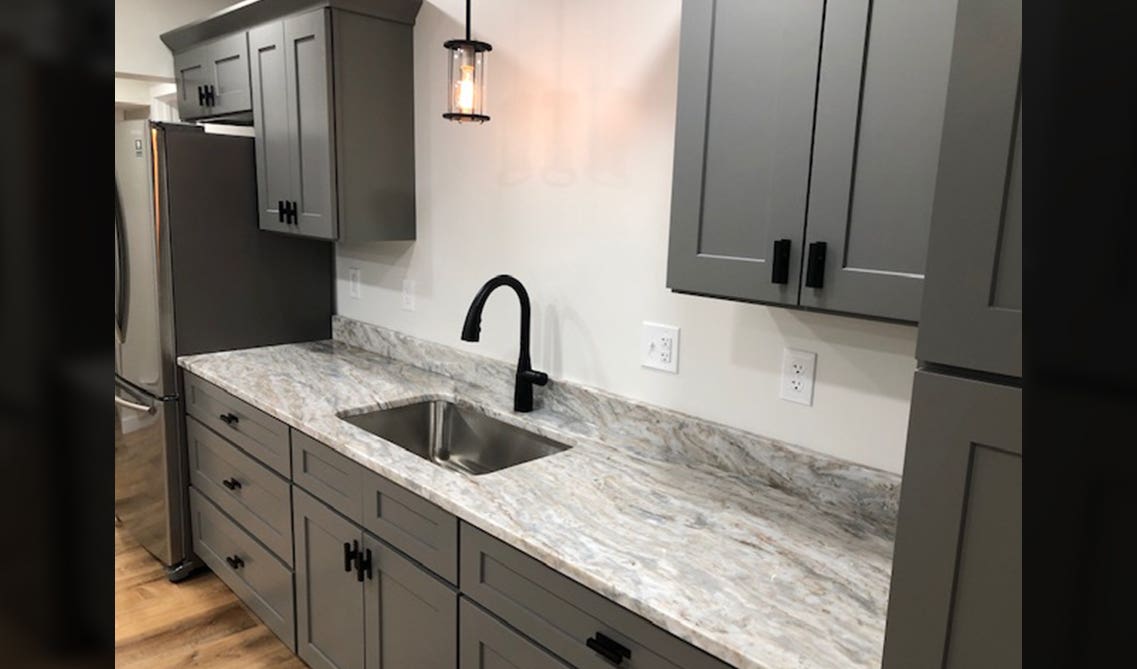
Picking granite and cabinets together? See granite countertop colors for pairings, and white cabinets with black countertops if you're leaning toward black granite. Light stone with white cabinets or grey cabinets is a common, easy pairing, as in the Grey Shaker Elite kitchen style.
Granite vs. Quartz: How the Care Differs
The biggest difference is sealing. Granite is natural stone, so it can absorb liquid and may need sealing. Quartz is engineered and non-porous, and Consumer Reports says it doesn't need to be sealed. Daily cleaning is similar for both: mild soap or a gentle cleaner, a soft cloth, and no harsh scrubbers. See our guide on how to clean quartz countertops for the quartz version, or quartz vs. granite countertops if you haven't chosen yet. Our guide to kitchen countertop materials covers the rest.
The Takeaway
Granite is easy to care for once you know two things: how to test it and what not to clean it with. Do the 15-minute water test near the sink and cooktop every few months. Seal with a penetrating, food-safe sealer when the stone darkens, following the label. Clean with warm water and a mild soap or stone cleaner, dry it, and keep vinegar, bleach and scrubbers away from it. Do that, and the seal lasts longer and the stone keeps its shine.
Planning the cabinets that go under it? Get a free 3D kitchen design and see your cabinet color next to the granite you have in mind.
Frequently Asked Questions
Not always, but many benefit from it. The Natural Stone Institute says most granite countertops don't need to be sealed, and that a homeowner who cleans up after each meal will rarely have staining problems. Sealing adds extra protection by reducing how much moisture gets into the stone. Do the water test: if a puddle darkens the stone within about 15 minutes, seal it.
Yes. Sealing granite is a common do-it-yourself job: clean the counter, let it dry fully, apply a penetrating granite sealer until the surface is wet, let it soak in for the time on the label, then wipe off all the excess. Experts quoted by the Natural Stone Institute say a professional will usually do the best job, so call one for a large, very porous or damaged top.
A penetrating (impregnating) sealer made for granite, which soaks just below the surface. The Natural Stone Institute says a quality sealer should resist both water and oil-based stains. Bob Vila says sealers with fluorocarbon aliphatic resin typically last 5 to 10 years, versus about 6 months to 3 years for others. In a kitchen, pick one labeled food-safe.
Often nothing, if your granite is dense or resin-treated and still passes the water test. If it doesn't pass, liquids like oil, wine and coffee can soak in and leave dark stains that take a poultice to remove. That's why sources say to test rather than reseal on a fixed schedule: some granites need it yearly and some go many years between coats.
Anywhere from about 6 months to 10 years or more, depending on the sealer and how the counter is used. The Natural Stone Institute says a quality sealer should have a life expectancy of 10 to 15 years. Bob Vila gives 5 to 10 years for fluorocarbon aliphatic resin sealers. Stone Care International, a sealer maker, says to reseal every 6 to 12 months. Harsh cleaners shorten the life of any seal.
It's best not to make them your everyday cleaner. Stone-care experts quoted by the Natural Stone Institute call bleach harsh on stone, and explain that strong chemicals can break down the sealer even when they don't visibly hurt the granite, so you end up resealing more often. To disinfect, Consumer Reports suggests a 50/50 mix of rubbing alcohol and water instead.
A few drops of mild dish soap in warm water is fine, and it's the daily routine Consumer Reports recommends. Rinse with plain water and dry the counter so no film is left behind. One stone-care expert interviewed by the Natural Stone Institute prefers a pH-neutral stone cleaner, because soap can leave a film that dulls or streaks the stone over time.
Avoid vinegar, lemon juice and other citrus or acidic cleaners, bleach, and harsh all-purpose or commercial cleansers. Also skip scouring powder, steel wool and scrubbing pads, which dull the polish. Most of these don't hurt granite right away, but they wear down the sealer. Use a cleaner labeled safe for natural stone, or mild soap and water.
Very little ruins granite outright, but a few things damage its look. Acidic and harsh cleaners wear down the sealer, abrasive pads dull the polish, and oils left sitting on worn-out spots can stain. Hard knocks at the edge or corner can chip it. Wipe spills quickly, use cutting boards and trivets, and test the seal every few months.
Seal when the water test shows the stone absorbing water, not on a fixed date. Test near the sink and cooktop every few months by leaving a small puddle for about 15 minutes. If the stone darkens, reseal. For some granites that's every year; for dense or resin-treated stone, it can be many years.
















Comments