


Find the wall studs, draw a level line, and screw the shelf's hidden bracket into the studs through pilot holes. Check it's level, slide the shelf over the bracket and secure it. Where there's no stud, use toggle anchors and keep the load light. Lily Ann's floating shelves include their mounting hardware and are rated at 15 pounds per running foot.
- What holds it up: a hidden bracket (steel rods or a wood cleat) screwed to the wall; the shelf slides over it.
- Studs first: studs are usually 16 inches apart; a bracket 36 inches or longer always crosses two of them.
- No stud? Use strap or self-drilling toggle anchors (about 80 to 100 lb ratings per Bob Vila), not plastic plugs (about 25 lb).
- Weight: Lily Ann rates its shelves at 15 lb per running foot: about 45 lb for a 36-inch shelf and 60 lb for a 48-inch one.
- Depth: Lily Ann shelves are 9-3/4 inches deep and 2-1/2 inches thick; the size in the name is the width.
- Between cabinets: measure the opening, add blocking if there's no stud, and match the shelf to the cabinet line.
- Lily Ann Cabinets sells floating shelves 24 to 48 inches wide in finishes such as Shaker White Elite and Craftsman Natural Shaker, with mounting hardware included (in stock September 28, 2026).
A floating shelf looks like it's held up by nothing. It isn't. A steel or wood bracket hides inside the shelf, and that bracket is only as strong as what it's screwed into. Get the mounting right and the shelf stays level under a stack of plates. Get it wrong and it sags, tips forward or pulls out of the drywall.
This guide covers what holds a floating shelf up, studs vs. anchors, how much weight a floating shelf can hold, how deep it should be, and how to install one step by step, including between wall cabinets. For styling ideas once it's up, see our guides to styling floating shelves and floating kitchen shelf ideas. Lily Ann's shelf sizes and ratings below were checked on the live site on September 28, 2026.
What Holds a Floating Shelf Up?
A floating shelf is held up by a hidden bracket that's screwed to the wall first. The shelf then slides over the bracket, so no support shows. The bracket should go into wall studs or solid blocking; in drywall with no stud behind it, heavy-duty anchors such as toggle bolts are the fallback for lighter loads.
You'll see two common kinds of hidden bracket:
- Rod brackets: a steel bar that screws to the wall, with steel rods sticking out that slide into holes in the back of the shelf. Floating-shelf makers sell these in several lengths.
- Wood cleats: a strip of wood screwed to the wall, which fits into a hollow in the back of the shelf. Family Handyman's DIY floating shelf project uses a 2x4 cleat fastened with 4-inch lag screws into the studs.
Lily Ann's floating shelves come with their mounting hardware. That's the answer the Lily Ann team gives in the product questions on several listings, and they add that the brackets should be screwed into a stud or blocking.
Studs vs. Anchors: Which Should You Use?
Use wall studs whenever you can. A bracket screwed into studs is far stronger than one held by drywall anchors, and it's what Lily Ann tells buyers to do with its shelves. If there's no stud where the shelf has to go, use heavy-duty toggle anchors rated for the load, and keep what goes on the shelf light.
Bob Vila's floating shelf install guide makes the same call: fasten to a stud if you can, because it supports the shelf's weight best, and you won't need anchors at all. Studs are usually 16 inches apart, center to center, and sometimes 24 inches apart in older homes, according to Bob Vila's stud finder guide. That spacing decides how many studs your bracket can reach. At 16 inches apart, a bracket 36 inches or longer always crosses at least two studs; a 24-inch one may only catch one.
If there's no stud, Bob Vila says hollow-wall anchors are fine for plaster, and drywall needs butterfly or toggle anchors. Here's how the common anchor types compare, from Bob Vila's guide to drywall anchor types:
| Anchor | Load Bob Vila lists | Good for a floating shelf? |
|---|---|---|
| Plastic expansion anchor | About 25 lb | Only a small, light shelf |
| Self-drilling threaded anchor | Some rated up to 75 lb | Light decor |
| Molly bolt | Up to 100 lb | Better, not as good as a stud |
| Strap toggle anchor | 80 lb or more | Yes, where there's no stud |
| Self-drilling toggle anchor | About 100 lb | Yes, where there's no stud |
These are the anchors' own ratings for a straight downward pull. A floating shelf also levers outward on its top screws, and the farther out the load sits, the harder it pulls. Treat the rating as a ceiling, not a target, and always follow the numbers on the anchor package.

How Much Weight Can Floating Shelves Hold?
It depends on the shelf's rating and what the bracket is screwed into. Lily Ann rates its floating shelves to support 15 pounds per running foot, so a 36-inch shelf holds about 45 pounds and a 48-inch shelf about 60 pounds. That assumes the bracket is fastened into studs or blocking. Anchors into drywall alone hold less.
Here's what Lily Ann's rating works out to by width (arithmetic from the listed 15 pounds per running foot):
| Shelf width | Length in feet | Rated load (15 lb per foot) |
|---|---|---|
| 24" | 2 ft | 30 lb |
| 30" | 2.5 ft | About 37 lb |
| 36" | 3 ft | 45 lb |
| 42" | 3.5 ft | About 52 lb |
| 48" | 4 ft | 60 lb |
Other makers use other rules. Shelfology, a floating-shelf maker, rates its heavy-duty brackets at 45 to 50 pounds for every wall stud the bracket is screwed into, and the shelves Family Handyman builds on a 2x4 cleat hold about 50 pounds each. Those numbers belong to those products. For a Lily Ann shelf, plan on the rating on its own listing.
What actually weighs a lot: stacks of dinner plates, cookbooks, and full glass jars. Put the heaviest things near the wall, where they pull least on the bracket, and spread them along the shelf instead of piling them at one end.
How Deep Should a Floating Shelf Be?
Lily Ann lists its floating shelves at 9-3/4 inches deep and 2-1/2 inches thick, in widths of 24, 30, 36, 42 and 48 inches. The number in each product name is the width, not the depth, so a "24-inch floating shelf" is 24 inches wide.
Deeper isn't always better. The deeper the shelf, the farther out the load sits and the harder it levers on the bracket. Measure the largest thing you want to store, such as your widest dinner plate or a cookbook, and choose a depth that holds it without much overhang. Our floating kitchen shelf ideas cover what fits on a kitchen shelf.

Tools and Materials
- Stud finder
- Level (a 24-inch or longer level is easiest)
- Drill with bits for pilot holes
- Tape measure and pencil
- Painter's tape for marking
- The shelf's bracket and screws, plus toggle anchors if you can't hit a stud
How to Install Floating Shelves, Step by Step
- Pick the height. Hold the shelf up or tape its outline on the wall. In a kitchen, think about what's under it: Lily Ann's measuring guide puts 18 to 20 inches between the countertop and the bottom of the wall cabinets, and our guide to upper cabinet height explains why. Lining a shelf up with the bottom of the wall cabinets beside it keeps the wall looking neat.
- Find the studs. Run a stud finder across the area and mark each stud edge with painter's tape. Mark both edges so you can find the center.
- Draw a level line. Draw a pencil line across the wall at the height where the bracket goes, using the level.
- Hold the bracket to the line. Check it with the level again, then mark the screw holes, lining up as many as you can with the stud centers.
- Drill pilot holes. Drill into the studs at each mark. Where a hole doesn't land on a stud, drill for a toggle anchor instead and install the anchor following its package directions.
- Screw the bracket to the wall. Drive the screws snug, then check level one more time. A bracket that's slightly off will show clearly once the shelf is on.
- Slide the shelf on. Push it fully over the bracket, tight to the wall, and secure it as the instructions in the box direct.
- Load it slowly. Add a few items, check that the shelf stays level and tight to the wall, then finish loading it. Stay under the rated load.

Installing a Floating Shelf Between Cabinets
Lily Ann lists its floating shelves for use "between cabinets, or free standing." Between two wall cabinets is a popular spot, because the shelf breaks up a long run of doors.
- Measure the opening. Shelves come 24, 30, 36, 42 and 48 inches wide; the Lily Ann team notes in its product questions that 48 inches is the largest it makes. Choose the width that matches your opening.
- Check for studs in the gap. An opening between cabinets is often narrow, so a stud may not fall inside it. If you're remodeling and the drywall is open, add wood blocking between the studs where the shelf will go. The Lily Ann team recommends a stud or blocking behind the brackets.
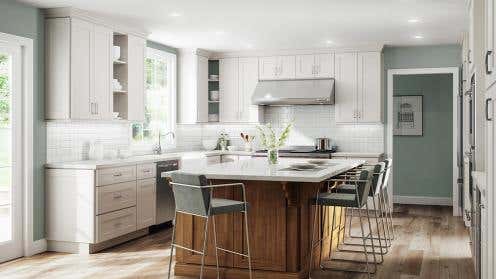
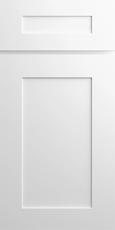
- Match the finish. Order the shelf in the same line as your cabinets. For example, pair the Shaker White Elite floating shelf with White Shaker Elite cabinets, or use the unfinished floating shelf if you plan to paint or stain it yourself.
- Line it up. Set the bottom of the shelf level with the bottom of the cabinets on either side, or center it in the opening.

Installing on Different Walls
- Drywall with studs: screw straight into the studs. This is the strongest, simplest install.
- Drywall with no stud: use strap or self-drilling toggle anchors, and keep the load light.
- Plaster: Bob Vila says regular hollow-wall anchors work for plaster. Old plaster can crack, so drill slowly.
- Brick, block or concrete: Bob Vila notes that expansion anchors can go into cinder block, brick and concrete, but rates plastic expansion anchors at only about 25 pounds. Use masonry anchors rated for the load.
Common Floating Shelf Install Mistakes
- Trusting drywall alone. Plastic anchors in bare drywall are the fastest way to a sagging shelf.
- Skipping the level check after screwing in the bracket. Screws can pull a bracket slightly out of level as they tighten.
- Going over the rating. A 36-inch Lily Ann shelf is rated at about 45 pounds. A full stack of dinner plates can get there fast.
- Loading the front edge. Heavy items at the front lever hardest on the bracket. Keep them near the wall.
- Buying by the wrong number. The size in the name is the width. Lily Ann shelves are 9-3/4 inches deep in every width listed.
Lily Ann Floating Shelves
Lily Ann's floating shelves come in finishes that match its cabinet lines, so a shelf and the cabinets around it look like one kitchen. The listings describe them as solid birch and birch plywood construction, 9-3/4 inches deep and 2-1/2 inches thick, rated at 15 pounds per running foot. These showed In Stock on September 28, 2026:
| Finish | Widths in stock |
|---|---|
| Shaker White Elite | 24, 30, 36, 42, 48" |
| Craftsman Natural Shaker | 24, 30, 36, 42, 48" |
| Craftsman Black Shaker | 24, 30, 36, 48" |
| Craftsman Lily Green Shaker | 24, 30, 36, 48" |
| York Driftwood Grey | 24, 30, 42, 48" |
| Charleston Linen | 24, 30, 36, 48" |
| Unfinished | 24, 30, 36, 42" (48" was out of stock) |
Stock changes, so check each page before you order. Sizes are from the product listings; the Charleston Linen listings don't show a size list, so confirm its depth before ordering.
The Takeaway
To install a floating shelf, screw its hidden bracket into wall studs or blocking, keep it level, slide the shelf on, and stay under its weight rating. Use toggle anchors only where there's no stud, and keep the load light there. Lily Ann's floating shelves are 9-3/4 inches deep, come 24 to 48 inches wide, include their mounting hardware and are rated at 15 pounds per running foot.
Once it's up, see our ideas for styling floating shelves in every room.
Frequently Asked Questions
The best way is to screw the shelf's hidden bracket straight into wall studs, then slide the shelf over it. Studs hold far more than drywall, so you don't need anchors. If a stud isn't where the shelf needs to go, add blocking during a remodel, or use heavy-duty toggle anchors and keep the load light.
Yes, but only with the right anchors and a light load. Bob Vila says drywall needs butterfly or toggle anchors, not plain plastic plugs, which he rates at about 25 pounds. A floating shelf also levers outward on its screws, so a bracket screwed into studs is always the stronger choice.
A hidden bracket holds a floating shelf in place. The bracket, usually a steel bar with rods or a wood cleat, is screwed to the wall first, and the shelf slides over it so nothing shows underneath. The bracket is only as strong as what it's fastened to, which is why studs matter.
Use strap toggle or self-drilling toggle anchors, which Bob Vila rates at 80 to about 100 pounds each, rather than plastic plugs. Mark a level line, hold the bracket to it, drill for the anchors, set them following the package directions, and screw the bracket on. Keep the shelf's load light, because the shelf pulls outward on the anchors.
Yes. Every floating shelf has a limit set by the shelf, its bracket and what the bracket is fastened to. Lily Ann rates its floating shelves at 15 pounds per running foot, so a 36-inch shelf holds about 45 pounds. Check the rating on the listing for any shelf you buy and stay under it.
You can put moderately heavy things on them if the bracket is in studs and you stay under the rating. Keep the heaviest items, like stacks of plates or cookbooks, close to the wall and spread along the shelf. Avoid putting heavy things on a shelf held only by drywall anchors.
Yes. At Lily Ann's rating of 15 pounds per running foot, the 42-inch shelf works out to about 52 pounds and the 48-inch shelf to about 60 pounds. Shelfology rates its heavy-duty brackets at 45 to 50 pounds per stud they're screwed into. Family Handyman's DIY cleat shelves hold about 50 pounds each.
A shelf that holds 100 pounds needs a heavy-duty bracket screwed into several studs, or into solid blocking along its length. Shelfology, a shelf maker, says a 3-foot shelf on two studs can hold about 100 pounds with its heavy-duty bracket. That's well above Lily Ann's rating, which tops out at about 60 pounds for its 48-inch shelf.
A floating shelf screwed into studs is very sturdy for everyday dishes, books and decor. The weak point is usually the wall, not the shelf: a bracket in bare drywall can loosen or pull out. Install into studs or blocking, keep it level, and stay under the listed weight.
Floating shelves hold less than a cabinet, show dust, and hold less weight than a shelf on visible brackets. They also take more care to install, because the hidden bracket has to be level and fastened into studs. For the kitchen trade-offs, see our guide to floating kitchen shelf ideas.









Comments