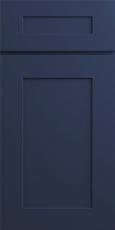
Are Glazed Kitchen Cabinets Dated? What Actually Went Out of Style

Are Glazed Kitchen Cabinets Dated? What Actually Went Out of Style
Are glazed kitchen cabinets still in style?

What dated was a specific combination, not the technique. Heavy dark glaze rubbed into ornate raised-panel doors — the deliberately antiqued, distressed look of the 2000s — reads as strongly of its period and is what designers mean when they say glazing is over. A light glaze settling into the corners of a clean shaker profile does something quite different: it adds depth and shadow to a plain door without announcing a style era. So the useful question is not whether to glaze, but how heavy the glaze is and what door profile it is sitting in.

  • Heavy antiqued glaze on ornate doors is what dated, and it dated hard — it is one of the clearest period markers of 2000s kitchens.
  • A light glaze in a shaker profile did not date, because it reads as depth rather than as a style statement.
  • Two application methods, very different results. Pinstriping outlines the door's profile; the wiped method glazes the whole surface and wipes it back.
  • The door profile matters more than the glaze colour. Glaze exaggerates whatever shape it settles into — a busy door becomes busier.
  • Lily Ann's glazed lines split cleanly into both groups: York Saddle and York Driftwood Grey are flat panel with glaze; Charleston Cherry, Saddle and Toffee plus Madison Toffee and Chocolate are raised panel with glazing.
  • Factory glazing and DIY glazing are not the same product. A factory glaze sits under a cured topcoat; a DIY glaze usually sits under a brushed one.

What Glazing Is

Glazing is a secondary, usually darker colour applied over a cabinet's base finish and then worked back, so that it stays in the recesses and corners of the door profile and is removed from the flat, raised areas. The effect is shadow: the door's shape becomes more visible because its low points are darker than its high points.

It is a finishing step, not a material. Any door can be glazed, and the same glaze on two different doors produces two completely different results — which is the whole subject of this page.

Two methods are in general use:

  • Pinstriping. The glaze is applied as a line following the profile of the door — the inside edge of a recessed panel, the moulding around a frame. Deliberate, controlled, and it reads as a drawn outline.
  • The wiped method. Glaze goes over the whole surface and is then wiped off. What remains gathers naturally in the grain, the corners and the profile. Softer and less uniform, and the more common approach today.

A third variation — heavy glaze combined with deliberate distressing, sanded edges and rub-through — is the one that carries the strongest date stamp, and it is the subject of the next section.

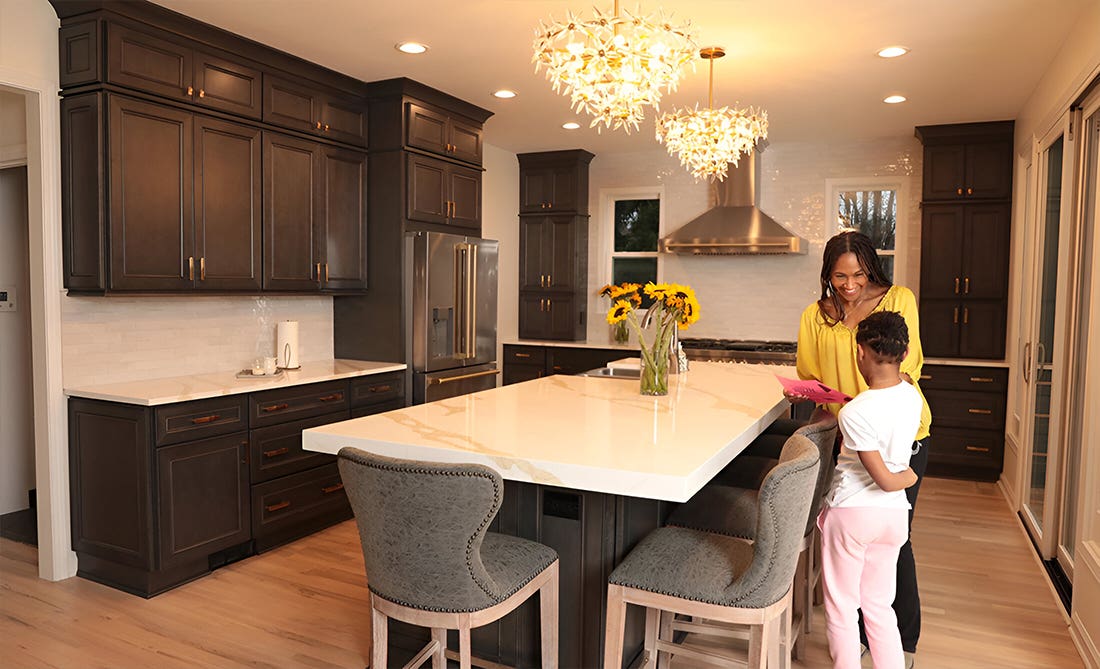
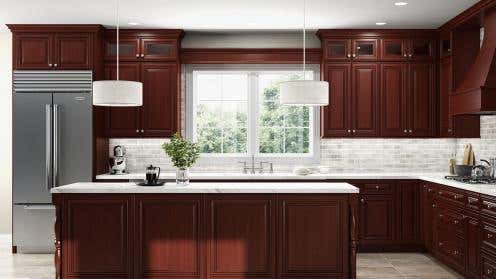
Charleston Cherry cabinetry with glazing worked into the door profile

What Actually Dated

The look that dated is specific and identifiable: a heavy, high-contrast, usually dark glaze rubbed into an ornate raised-panel or cathedral-arch door, often with distressing and rub-through added on top. That combination defined a period of American kitchen design closely enough that it now reads as a date stamp, in the way avocado appliances or oak cathedral doors do.

It is worth separating out why, because the reasons are not arbitrary and they tell you what to avoid rather than just what not to buy:

  • It was ubiquitous. Anything installed in a very large number of kitchens in a short window becomes a marker for that window. This is a volume effect more than an aesthetic one.
  • It simulated age. Manufactured patina reads as a costume once the fashion for it passes, in a way that genuinely worn things do not.
  • It emphasised already-busy doors. Glaze exaggerates profile. On a door that was already highly shaped, the effect compounds.
  • Contrast was high. A dark glaze over a cream or antique-white base creates strong lines on every door in the room, which is a lot of visual activity across a whole kitchen.

Each of those four is a variable rather than an inherent property of glazing. Turn all four down and the result is something else entirely.

What Did Not Date

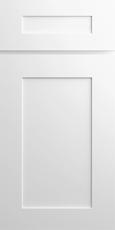
A light glaze in a clean, simple door profile has not dated, because it does not read as a style at all. On a flat-panel shaker door there is only one recess to catch glaze — the step where the frame meets the panel — so the effect is a fine shadow line that gives an otherwise plain door some depth. Most people looking at it would not name it as glazing.

This is the version worth considering, and it does three useful things:

  • It stops a plain painted door looking flat. Particularly in a kitchen with a lot of one colour, where an unbroken run of doors can read as a wall of nothing.
  • It adds warmth without adding colour. A soft glaze warms a cool finish more subtly than changing the finish would.
  • It makes the shaker step legible. The shadow line reads as craft rather than as decoration.

The rule of thumb: if a photograph of the door makes you say "glazed", the glaze is doing too much. If it makes you say "that has more depth than I expected", it is doing the right amount.

How to Tell Which You Are Looking At

The distinction is on the spec sheet, not in the marketing photograph. Cabinet makers publish the door style, and the door style tells you which of the two glazing outcomes you are getting: a flat-panel door with glaze is the subtle version, a raised-panel door with glazing is the traditional one.

Lily Ann's own range splits cleanly across the two, and the published door specs say so:

CollectionPublished door styleWhich version
York SaddleFull overlay, flat panel with glaze (engineered centre panel)Subtle — shadow line in a shaker step
York Driftwood GreyFull overlay, flat panel with glaze (engineered centre panel)Subtle
Charleston CherrySolid wood full overlay, raised panel with glazingTraditional — profile emphasised
Charleston SaddleSolid wood full overlay, raised panel with glazingTraditional
Charleston ToffeeSolid wood full overlay, raised panel with glazingTraditional
Madison ToffeeFull overlay, raised panel with glazing (engineered centre panel)Traditional
Madison ChocolateFull overlay, raised panel with glazing (engineered centre panel)Traditional

Door specifications read from the live collection pages on 10 September 2026.

Neither group is wrong. A raised-panel glazed door in a genuinely traditional house is coherent; the same door in a new-build open-plan kitchen is where the date stamp shows. The mistake is not choosing glaze — it is choosing the traditional version by accident because the showroom sample looked warm.

Glaze Colours, and the One That Causes Trouble

Glaze colours stay within the neutrals — white, cream, grey, brown, black — because the point is shadow rather than colour. The choice that consistently causes regret is high contrast: a very dark glaze on a very light base, which produces a hard line rather than a shadow.

  • Brown or tobacco glaze on a warm base (cream, toffee, saddle). The classic combination, and the one most associated with the dated look when applied heavily.
  • Grey glaze on a white or off-white base. Cooler and considerably more current, because the contrast is lower and the undertone stays neutral.
  • Black glaze. Highest contrast available and the least forgiving. It works on a genuinely simple door and overwhelms an ornate one.
  • White or pewter glaze on a dark base. Reverse glazing — less common, and it lifts a dark door's profile without lightening the overall colour.

Keep the glaze within a step or two of the base tone and it reads as depth. Push it further and it reads as outlining.

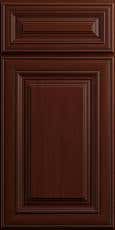
Traditional raised panel cabinetry showing the door profile glaze settles into

Factory Glaze Versus Doing It Yourself

Both exist and they are not the same product. A factory glaze is applied between the base coat and the topcoat, so it sits sealed under a cured protective film. A DIY glaze applied to finished cabinets sits under whatever clear coat you brush over it, which is a softer film applied in less controlled conditions.

The practical differences:

  • Durability. A factory topcoat is UV-cured or catalysed and cross-links chemically. A brushed clear coat air-dries and stays softer for its whole life — and the glaze underneath it is only as protected as that film.
  • Consistency. Glaze depth depends on how long it sits before wiping and how hard you wipe. Across thirty doors finished over several weekends, small differences become visible as a set even when each door looks fine alone.
  • Reversibility. A DIY glaze can be removed relatively early if you dislike it. A factory glaze is part of the finish.
  • Cost. Glazing is a genuine extra step in a factory finishing line, and it is priced as one — which is a large part of why glazed collections sit higher than plain ones.

If you are glazing existing cabinets yourself, the ordinary finishing rules apply: clean thoroughly, key the existing finish, test on a door bottom or the back of a toe kick first, work one door at a time so the glaze does not dry before you wipe, and topcoat properly afterwards. Our guide to painted vs stained wood cabinets covers finish preparation in more depth.

Should You Glaze?

Glaze when the door is simple and the kitchen is a single flat colour that needs relief. Do not glaze when the door is already ornate, when the kitchen already has a lot of pattern or texture elsewhere, or when you want the cabinetry to be quiet.

Reasons to glaze:

  • A large run of one colour that reads flat, especially in a kitchen with limited natural light.
  • A shaker door where you want the step to be legible rather than lost.
  • A traditional house where a raised-panel glazed door is coherent with the rest of the building.

Reasons not to:

  • The door is a cathedral arch, a heavily moulded raised panel, or otherwise already busy.
  • The kitchen has patterned tile, strong stone or a lot of visible grain doing the work already.
  • You want the safest possible resale-neutral kitchen — in which case a plain painted shaker is the lowest-variance choice available.

Worth remembering the proportion: the cabinet colour is one of the slowest-dating elements in a kitchen. Feature tile and fixture finishes date much faster and cost much more to change. If you like a glazed door, that is a smaller risk than it feels like.

Living With Glazed Cabinets

  • Clean with a mild detergent and a soft cloth. Never an abrasive cream — the glaze sits in the recesses and scrubbing lifts it unevenly, which shows immediately.
  • Expect the recesses to hold grime. The same corners that hold glaze hold cooking residue. A soft brush occasionally is easier than trying to scrub it out later.
  • Touch-up is harder than on a plain finish. Matching a glazed edge is a two-step colour match. Ask about touch-up kits at the time of purchase rather than later.
  • Do not mix glazed and unglazed doors from the same line and expect them to read as one kitchen. They will not.

To see the difference between the two groups in person, order a door sample — Lily Ann's are free, and a full-size sample shows the glaze at the scale you will actually see it, which a photograph does not. Browse the collections at RTA kitchen cabinets.

Frequently Asked Questions

1. Are glazed cabinets still in style?
A specific version of them is not. Heavy dark glaze rubbed into ornate raised-panel doors, often with distressing added, is a clear period marker and is what designers mean when they say glazing is over. A light glaze in a clean shaker profile has not dated, because it reads as depth rather than as a style — most people would not name it as glazing at all. The variable is glaze weight and door profile, not the technique.
2. Should I glaze my kitchen cabinets?
Glaze if the door is simple and a large run of one colour is reading flat — that is exactly the problem a light glaze solves. Do not glaze if the door is already ornate, if the kitchen has patterned tile or strong stone doing the visual work, or if you want the cabinetry to stay quiet. Glaze exaggerates whatever profile it settles into, so a busy door becomes busier.
3. What is cabinet glazing?
A secondary, usually darker colour applied over the base finish and worked back, so it stays in the recesses and corners of the door and is removed from the flat areas. The result is shadow: the door's shape becomes more visible because its low points are darker than its high points. It is a finishing step rather than a material, so any door style can be glazed.
4. How is cabinet glaze applied?
Two methods. Pinstriping applies the glaze as a line following the door's profile — the inside edge of a recessed panel, or a moulding — which reads as a deliberate drawn outline. The wiped method applies glaze over the whole surface and then wipes it back, leaving what gathers naturally in the grain and corners. The wiped method is softer, less uniform and more common today.
5. What colours does cabinet glaze come in?
Glazes stay within the neutrals — white, cream, grey, brown and black — because the effect wanted is shadow rather than colour. Brown or tobacco glaze on a warm base is the classic pairing and the one most associated with the dated look. Grey glaze on white or off-white is cooler and reads as more current. The general rule is to keep the glaze within a step or two of the base tone.
6. What is the difference between glazed and distressed cabinets?
Glazing adds a secondary colour into the recesses of the door to create shadow. Distressing physically removes material — sanded edges, dents, rub-through — to simulate wear. They are often applied together, and that combination is precisely the look that dated hardest, because manufactured age reads as a costume once the fashion passes. Glaze without distressing is a much more restrained proposition.
7. Do glazed cabinets cost more?
Yes, because glazing is a real extra step in a factory finishing line — an additional application and wipe-back pass, with its own drying stage, before the topcoat goes on. That is a meaningful part of why glazed collections sit higher than plain ones in a manufacturer's range. It is finish complexity you are paying for rather than a different material.
8. Can you glaze existing kitchen cabinets yourself?
Yes, and it is one of the more achievable cabinet finishing projects, but the result is not the same product as a factory glaze. A factory glaze sits between the base coat and a cured topcoat; a DIY glaze sits under whatever clear coat you brush over it, which stays softer for its whole life. Clean thoroughly, key the existing finish, test on a hidden face, work one door at a time so the glaze does not dry before you wipe, and topcoat properly.
9. How do you clean glazed cabinets?
Mild detergent and a soft cloth only. Never an abrasive cream or a scouring pad — the glaze sits in the recesses, and scrubbing lifts it unevenly, which is immediately visible and cannot be blended back. Expect the same corners that hold glaze to hold cooking residue too, so an occasional soft brush is easier than letting it build up and then needing to scrub.
10. What cabinet colour never goes out of style?
A plain painted shaker door in white, off-white or a soft neutral is the lowest-variance choice available, largely because the shaker profile has survived every cycle of kitchen fashion for a century. Worth keeping in proportion though: cabinet colour is one of the slowest-dating elements in a kitchen. Feature tile and fixture finishes date much faster and cost much more to change.
11. Which Lily Ann collections are glazed?
Seven, and they split into the two groups this article describes. York Saddle and York Driftwood Grey publish "flat panel with glaze" — the subtle, shaker-profile version. Charleston Cherry, Charleston Saddle, Charleston Toffee, Madison Toffee and Madison Chocolate publish "raised panel with glazing" — the traditional version. The door style on the product page is what tells you which you are getting.
12. Will glazed cabinets hurt resale value?
A heavily glazed and distressed traditional kitchen will read as dated to a buyer, in the same way any strongly period finish does. A lightly glazed shaker kitchen will not, because most buyers will not identify it as glazed at all. If resale is the primary concern, a plain painted shaker is the safest choice — but the elements that most affect how dated a kitchen looks are the tile and the fixture finishes, not the cabinet finish.

Recent Blogs

Cabinet Hardware Placement: Where to Put Knobs and Pulls
Stacked Kitchen Cabinets: Should Cabinets Go to the Ceiling?
Built-In Cabinets: How to Build Them From Stock Boxes
Free 3D Kitchen Design
2 Free Samples