


Cabinet trim is named for where it goes: crown molding on top of the cabinets, light rail molding under the wall cabinets, a valance over the sink or window, fillers and scribe molding to close gaps at walls, skin and end panels on exposed sides, corner molding and batten on edges and seams, and toe kick or furniture base molding at the floor. Lily Ann sells each of these in the cabinet finish, most as 96-inch strips.
- Seven places, seven jobs: top (crown), under the uppers (light rail), over the sink (valance), at the walls (fillers, scribe), on exposed sides (skin and end panels), on corners and seams (corner molding, batten), and at the floor (toe kick, furniture base).
- Some trim finishes the install, some is style. Fillers, toe kicks and panels cover gaps and raw sides. Crown, light rail and valances are optional looks.
- Most strips are 96 inches long. Add up the length of each run and divide by 96 to count pieces. Toe kick, scribe, batten, corner, light rail and crown all come that way.
- Light rail hides under-cabinet lights. Check it won't block tall countertop appliances before you order.
- Real sizes, not guesses: fillers 3 or 6 in. wide, toe kick 4-1/2 in. high, valances 36, 48 or 60 in. wide and 9 in. high.
- Match the finish. Buy trim in the same door style as your cabinets so the color and sheen line up.
- Every size links to a live Lily Ann listing, checked on September 15, 2026 in Colorado White Shaker.
Cabinet Trim Types at a Glance
Kitchen cabinet trim is easiest to understand by where each piece goes: on top, under the wall cabinets, over the sink, against the walls, on exposed sides, on corners, or at the floor. Each spot has its own piece, and each piece does one job.
The table shows every type on this page, with a real size from a Lily Ann listing. All examples are in Colorado White Shaker, checked on September 15, 2026. Most other door styles have matching pieces in their own panels, fillers and trim section.
| Trim piece | Where it goes | What it does | Lily Ann example |
|---|---|---|---|
| Crown molding | Top of wall and tall cabinets | Finishes the top edge, can close the gap to the ceiling | Angle Crown Molding, 96 in. long |
| Light rail molding | Bottom of wall cabinets | Hides under-cabinet lights and finishes the bottom edge | Angle Light Rail Molding, 96 in. long |
| Valance | Between wall cabinets, over a sink or window | Bridges the open space with a decorative board | Arched Valance, 48 x 9 in. |
| Filler | Between a cabinet and a wall or appliance | Fills leftover space so doors and drawers can open | Wall Filler, 3 x 42 in. |
| Scribe molding | Where cabinets meet an uneven wall, floor or ceiling | Covers small, uneven gaps | Scribe Molding, 3/4 x 96 x 1/4 in. |
| Skin panel | Exposed cabinet sides | Covers a side with a thin finished sheet | Base Skin Panel, 24 x 34-1/2 in. |
| End panel | Next to a dishwasher or refrigerator | Finishes the end of a run beside an appliance | Refrigerator End Panel, 96 in. high, 30 in. deep |
| Corner molding | Outside and inside corners | Caps raw edges where two surfaces meet | Outside Corner Molding, 1 x 96 x 1 in. |
| Batten molding | Seams between panels | Covers the line where two panels meet | Batten Molding, 3/4 x 96 x 1/4 in. |
| Toe kick | Recess at the bottom of base cabinets | Covers the space under the cabinet box | Toe Kick, 96 x 4-1/2 in. |
| Furniture base molding | Floor level of an island or cabinet run | Gives the base a furniture look | Furniture Base Molding, 96 x 4-1/2 in. |
Trim or Molding: Is There a Difference?
For kitchen cabinets, not really. Cabinet sellers use the two words for the same pieces. One cabinet seller's molding guide puts it simply: kitchen cabinet trim is often called molding, and the word covers crown, light rail, base, toe kick, corner and scribe molding. "Trim" can also mean fillers and skin panels.
You will also see "moulding" with a u. It is the same thing. Lily Ann's own listings use both spellings.
Top of the Cabinets: Crown Molding
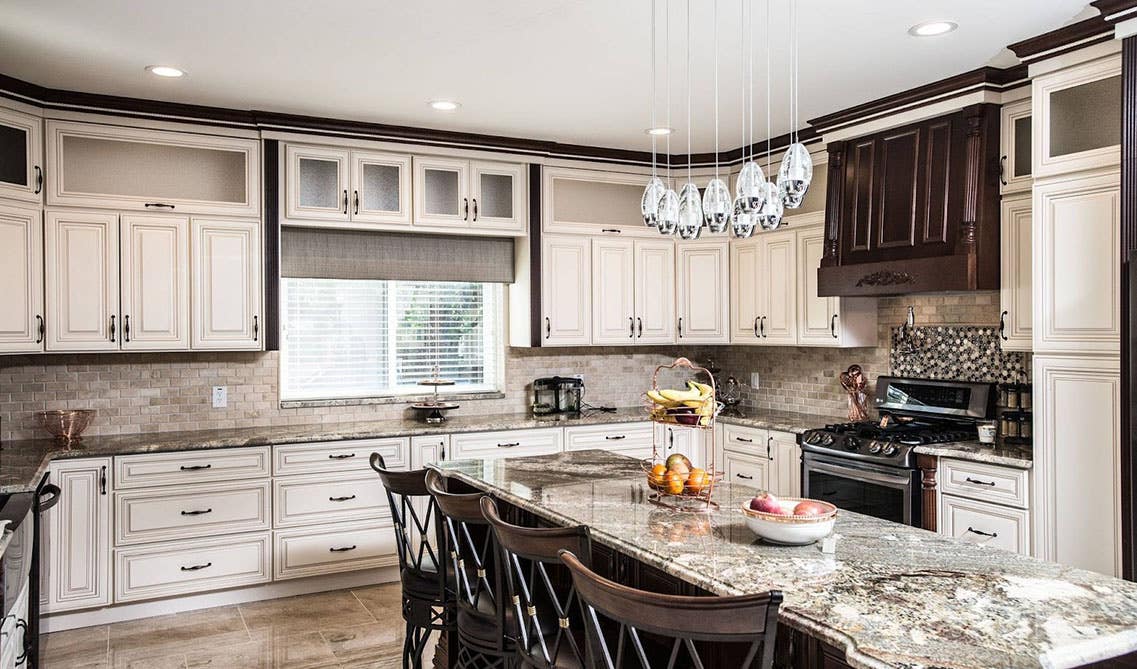
Crown molding finishes the top of wall and tall cabinets. It can sit as a simple cap on the cabinet top, or run up to meet the ceiling so there is no gap. It is the piece most people picture when they think of cabinet molding.
Lily Ann Cabinets
Lily Ann lists crown in the cabinet finish:
- Angle Crown Molding 96 in. in Colorado White Shaker.
- Small Angle Crown, listed as 8 feet long, in White Shaker Elite.
Lily Ann Cabinets

Lily Ann Cabinets: Angle Crown Molding 96 in.
Some cabinet makers also sell a riser or starter molding that goes under the crown to add height. We did not find one in the Colorado White Shaker trim section, so if your gap to the ceiling is large, ask how to fill it before you order.
This page doesn't repeat crown styles. For those, see our kitchen cabinet crown molding ideas. For cutting corners and nailing it up, our crown molding installation guide goes step by step.
Under the Wall Cabinets: Light Rail Molding
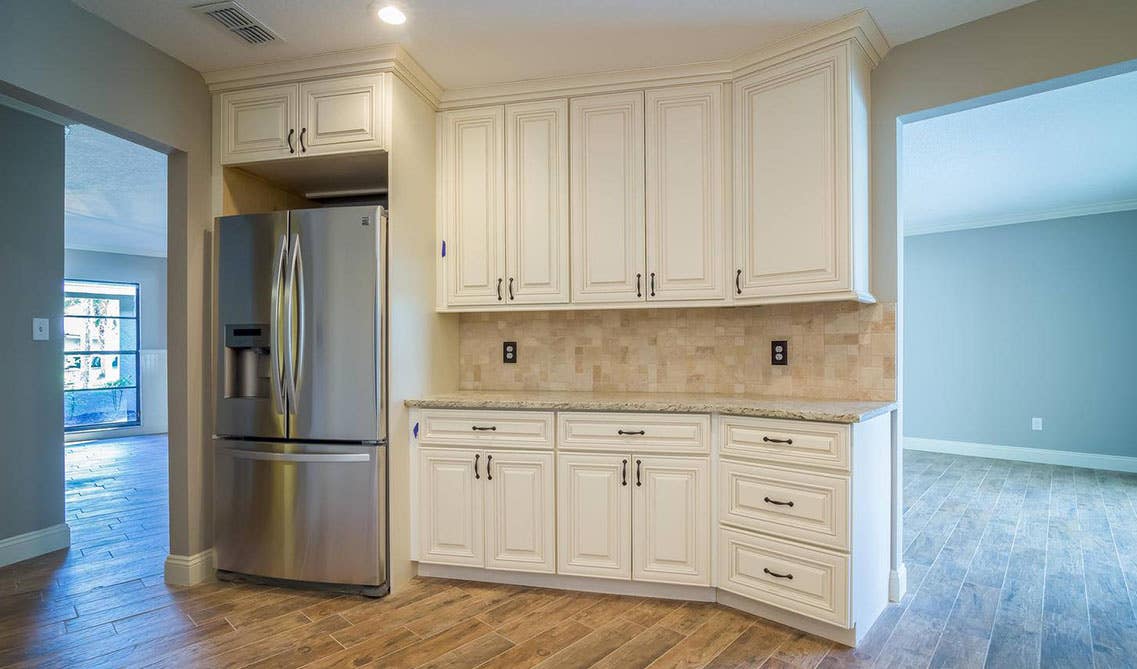
Light rail molding is a strip that runs along the bottom edge of wall cabinets. Its main job is to hide under-cabinet lights, so you see the glow on the counter and not the bulb or LED strip. It also gives the bottom of the cabinets a finished edge, even in a kitchen with no lights there.
Lily Ann Cabinets
Lily Ann lists an Angle Light Rail Molding 96 in. in Colorado White Shaker. The same piece is listed in White Shaker Elite and other Shaker lines. It has a plain, stepped profile that suits Shaker doors.

Lily Ann Cabinets: Angle Light Rail Molding 96 in.
Two things to check before you order:
- Clearance. Light rail hangs below the cabinet. A cabinet seller's guide warns to check that the space left underneath still fits your countertop appliances, like a stand mixer or coffee maker.
- Lights first. Pick the lights before the trim, so the rail is tall enough to hide them. Our under cabinet lighting guide compares the options, and Lily Ann's cabinet lighting section has the fixtures.
Over the Sink or Window: Cabinet Valances
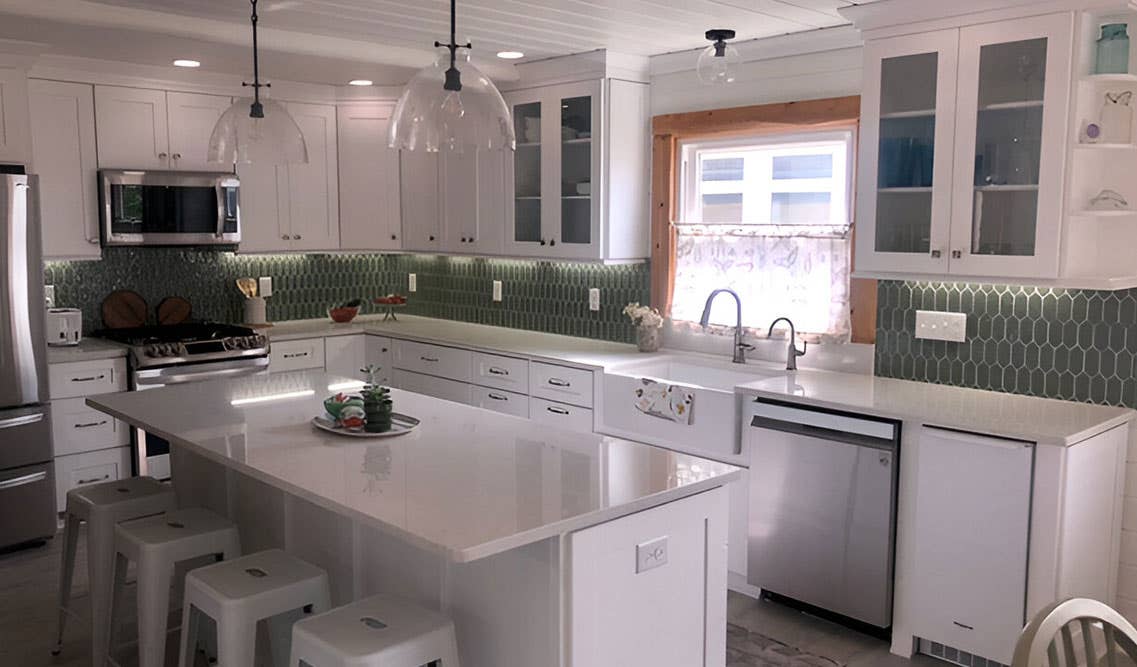
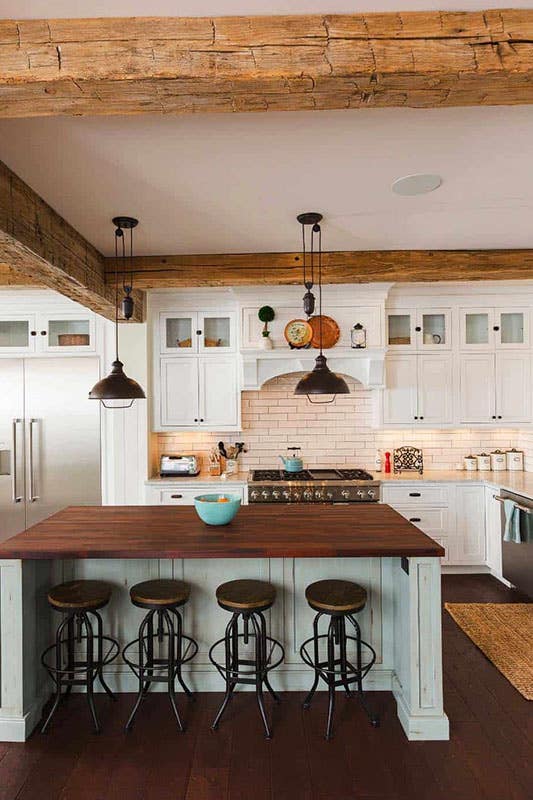
A valance is a decorative board that spans the open space between two wall cabinets, most often over a sink or window. It ties the two cabinets together so the run looks continuous.
Lily Ann lists three valances in Colorado White Shaker:
- Arched Valance 48 in.: 48 inches wide, 9 inches high, 3/4 inch thick.
- Arched Valance 60 in.: 60 inches wide, 9 inches high, 3/4 inch thick.
- Furniture Valance 36 in.: 36 inches wide, 9 inches high.
Lily Ann Cabinets

Lily Ann Cabinets: Arched Valance 48 in.
Measure the space between the two wall cabinets where the valance will go, then pick the width that covers it. Ask your installer how they will fit it if your opening falls between the listed widths.
Closing Gaps: Fillers and Scribe Molding
Cabinets come in set widths, and walls rarely line up with them. Fillers and scribe molding take care of the leftover space.
Fillers
A filler is a flat strip in the cabinet finish that goes between a cabinet and a wall, or between a cabinet and an appliance. It is cut to the width you need. Besides closing the gap, a filler keeps a door from hitting the wall and gives drawers room to open all the way. Our cabinet installation guide shows where fillers go during the install.
Lily Ann lists Colorado White Shaker fillers in two widths and two lengths, all 3/4 inch thick:

Lily Ann Cabinets: Wall Filler 3 x 42 in.
The 42-inch length suits the side of a wall cabinet. The 96-inch length gives you enough to cut for taller spots, like the side of a pantry cabinet. The same section also lists overlay wall fillers and a fluted filler with grooves down its face, for a more decorative look.
Scribe Molding
Scribe Molding is a thin strip, listed at 3/4 inch wide, 96 inches long and 1/4 inch thick. It covers small gaps where a straight cabinet edge meets a wall, floor or ceiling that isn't straight. One cabinet seller's guide describes scribe as slightly flexible, so it can follow a wall that bows a little.

Lily Ann Cabinets: Scribe Molding
Use a filler for a gap you can measure in inches. Use scribe for a thin, uneven gap you can see but can't easily cut a filler to match.
Finishing Exposed Sides: Skin Panels, End Panels and Decorative Door Panels
Any cabinet side you can see once the kitchen is done needs a finished face. That includes the end of a run, the back of an island and the side next to a refrigerator.
Skin Panels
A skin panel is a thin, finished sheet that covers the side of a cabinet. Lily Ann lists:
- Wall Skin Panel 42 in.: 15 inches wide, 42 inches high, 1/4 inch thick.
- Base Skin Panel 24 in.: 24 inches wide, 34-1/2 inches high, 1/4 inch thick.

Lily Ann Cabinets: Base Skin Panel 24 in.
End Panels Beside Appliances
End panels are thicker and deeper, made to finish a run next to an appliance:
- Dishwasher End Panel: listed as a return panel 3 inches wide, 34-1/2 inches high and 24 inches deep.
- Refrigerator End Panel: 3/4 inch wide, 96 inches high and 30 inches deep.
Decorative Door Panels
A decorative door panel looks like a cabinet door but doesn't open. It makes a plain side, like the end of an island, match the doors on the front. Lily Ann lists a Wall Decorative Door Panel at 11-1/2 x 41 inches and a Base Decorative Door Panel at 23-1/2 x 29-1/4 inches, both 3/4 inch thick.
Lily Ann Cabinets
Corners and Seams: Corner Molding, Quarter Round and Batten
Where two panels meet, or where a panel wraps a corner, you get a raw edge or a visible line. Small strips cover them:
- Outside Corner Molding: 1 x 1 inch, 96 inches long. It caps an outside corner, like the corner of an island.
- 135 Degree Outside Corner Molding: 96 inches long, for an angled corner rather than a square one.
- Inside Corner Molding: 3/4 x 3/4 inch, 96 inches long, for an inside corner.
- Quarter Round Molding: 3/4 x 3/4 inch, 96 inches long.
- Batten Molding: 3/4 inch wide, 96 inches long, 1/4 inch thick. It covers the seam where two panels butt together.

Lily Ann Cabinets: Outside Corner Molding
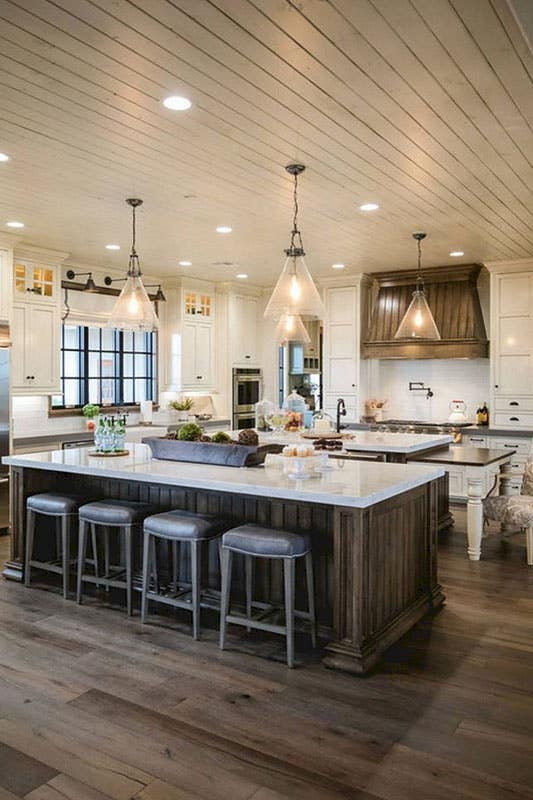
An island back is where these usually add up: skin panels across the back, batten over the seams, and outside corner molding on the two corners.
At the Floor: Toe Kick and Furniture Base Molding
Lily Ann Cabinets
Toe Kick
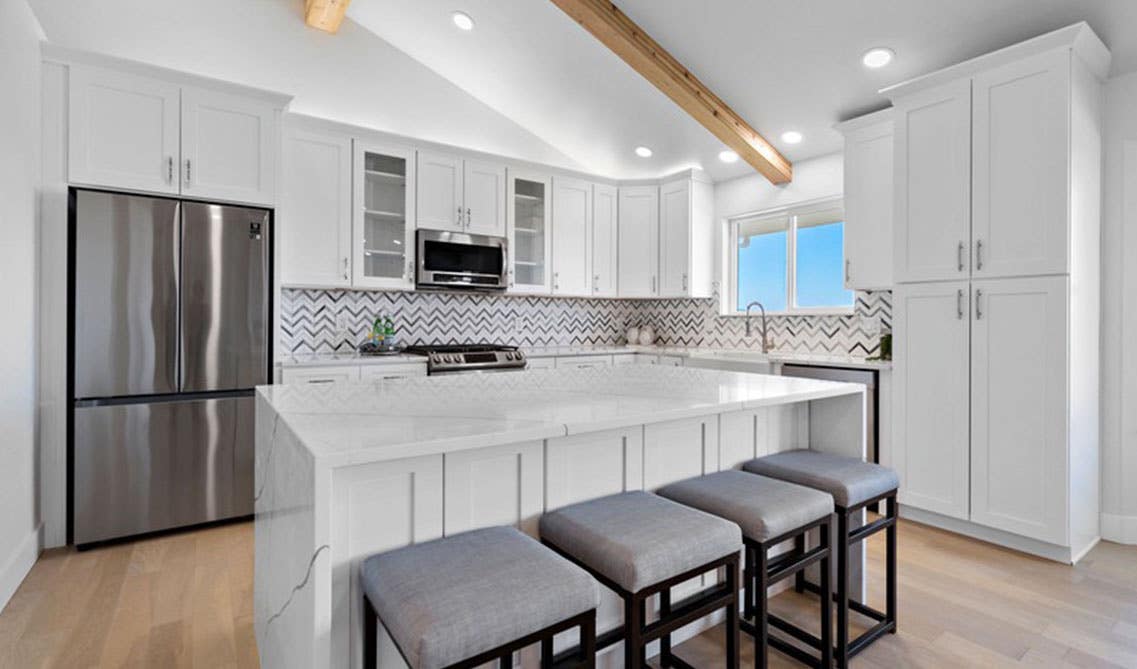
Base cabinets sit on a recessed base so your feet can tuck under the counter. The toe kick is the finished strip that covers that recess. Lily Ann's Toe Kick 96 in. is listed at 96 inches wide, 4-1/2 inches high and 1/4 inch thick, cut to length on site. For recess sizes and fitting a toe kick on an uneven floor, see our cabinet toe kick guide.

Lily Ann Cabinets: Toe Kick 96 in.
Furniture Base Molding
Furniture base molding goes at floor level with a shaped top edge, so an island or a run of cabinets looks like a piece of furniture instead of a box. Lily Ann's Furniture Base Molding 96 in. is listed at 96 inches wide, 4-1/2 inches high and 5/8 inch thick.

Lily Ann Cabinets: Furniture Base Molding 96 in.
The same trim section also lists furniture details like leg posts, bun feet and corbels for islands. Several were out of stock in Colorado White Shaker on September 15, 2026, so check the listing before you plan around one.
Which Trim Does Your Kitchen Actually Need?
Not every piece is optional. One cabinet seller's guide says fillers, toe kicks and skin panels are usually needed to finish an install, while crown and light rail molding are optional add-ons. In plain terms:
- Usually needed: fillers where cabinets meet walls, toe kick along every base run, and panels on any cabinet side you can see.
- Often needed: scribe molding on uneven walls, and corner molding or batten on an island back.
- Style choices: crown molding, light rail molding, valances and furniture base molding.
A Quick Trim Checklist Before You Order
- Walk each wall. Note every spot where a cabinet stops short of a wall or appliance. Those get fillers.
- Find every visible side. The ends of runs, the island back and the side by the fridge need skin panels, end panels or decorative door panels.
- Measure the base runs. Add up the length of all base cabinets that need a toe kick, then divide by 96 inches to count strips. Round up.
- Check the island. Count its corners for corner molding and its panel seams for batten.
- Decide on under-cabinet lights. If yes, add light rail to the bottom of each wall cabinet run.
- Measure the gap to the ceiling. That tells you how much crown you need and whether it will close the gap.
- Measure over the sink or window. Pick a valance width that spans it.
- Ask about spares. Corners and cuts use up length, so ask your installer if an extra strip makes sense.
Not sure how it adds up? Lily Ann's free 3D kitchen design service can lay out your cabinets and trim from your measurements before you order.
Match the Trim to Your Cabinet Finish
Trim looks right when its color and sheen match the doors. The simplest way to get that is to buy the trim in the same door style as your cabinets. Lily Ann lists panels, fillers and trim for each line, like Colorado White Shaker panels, fillers and trim.
If you are adding trim to cabinets you already own from another brand, a close match is harder. See the finish in person first with a full-size sample door.
Shop Cabinet Trim and Molding
Every piece on this page, from crown and light rail to fillers, panels, corner molding and toe kick, is listed in the cabinet finish. For the parts of the cabinet itself, such as the box, face frame, doors and drawers, see our kitchen cabinet anatomy guide. Each product link above opens the exact listing with its size, so you can check stock and add it to your order in one place.
















Comments