

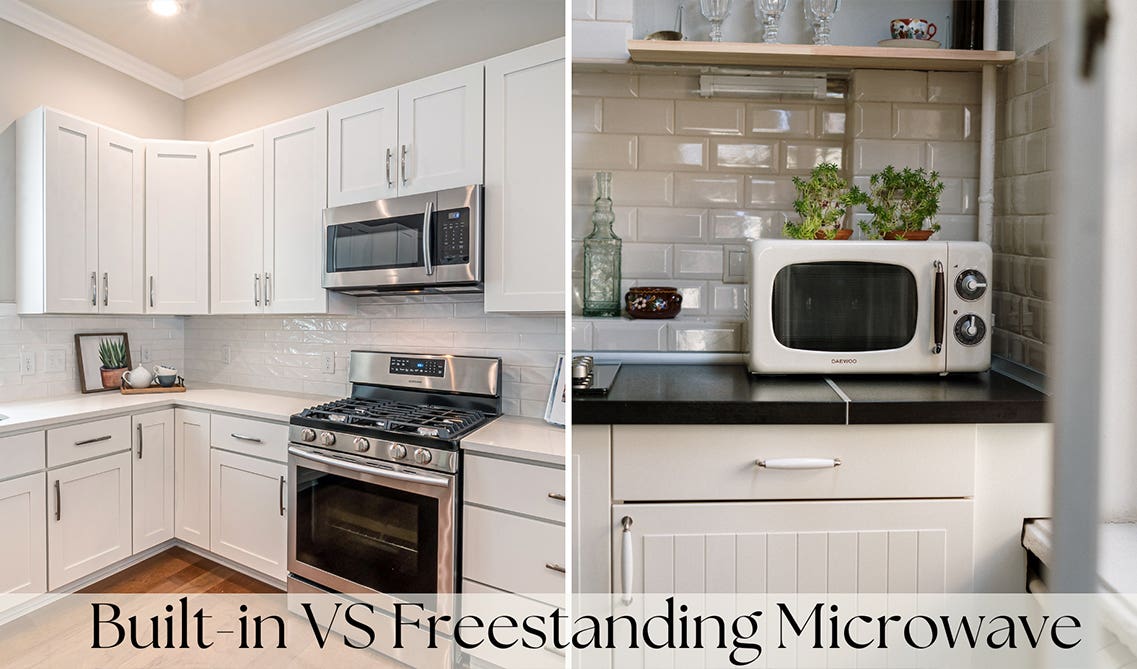
A built-in microwave cabinet has a cutout sized to a microwave's trim kit, so the appliance sits flush with the surrounding cabinetry — in a wall cabinet, island, or tall cabinet. A freestanding microwave cabinet is any cabinet, shelf, or cubby that holds a regular countertop microwave with no matching cutout, so it isn't permanently tied to one appliance and can be moved or swapped. Built-ins cost more and usually need a dedicated electrical circuit and professional installation; freestanding cabinets are more affordable and DIY-friendly.
- Built-in vs. freestanding: built-in cabinets have a cutout sized to a trim-kit microwave; freestanding cabinets hold any countertop microwave on an open shelf or in a cubby, no cutout needed.
- Real cost gap: a trim-kit built-in microwave starts around $489 before the trim kit, and a built-in drawer runs $800–$1,400+ (Lily Ann's own Forno drawer is $1,299); a countertop microwave for a freestanding cabinet is usually under $150.
- Depth matters: built-ins need about 15–16 inches of cabinet depth vs. the 12 inches a standard upper cabinet offers, which is why they go in base cabinets, islands, or a deeper wall unit.
- Sizing: built-in trim kits and cabinet openings come in 24, 27, and 30-inch widths; Lily Ann's own 30-inch microwave base cabinet has a 27-inch-wide opening sized for the most common trim kit.
- Electrical: built-ins typically need a dedicated 15-amp, 120-volt outlet; freestanding units plug into any standard outlet.
- Freestanding wins on flexibility (move it, swap it, no professional install); built-in wins on countertop space and a seamless look.
- Lily Ann Cabinets carries 24-inch and 30-inch microwave base cabinets with a defined cutout, wall microwave shelf cabinets, and Forno built-in microwave drawers for a built-in look with no wall cutout.
When you're picking a microwave for your kitchen, the bigger decision often isn't the brand or the wattage — it's whether the microwave gets built into your cabinetry or sits in a cabinet as a freestanding, countertop-style unit. The two options look different, cost different amounts, and need different cabinet specs, so it's worth understanding the real tradeoffs before you order cabinets or a microwave.
This guide compares built-in and freestanding microwave cabinets head-to-head: what each one actually is, the real cost and size differences, and which one fits your kitchen. If you already know you want a built-in or freestanding cabinet and are looking for placement ideas — island, under-counter, upper cabinet, eye-level versus below the counter — see our microwave cabinet ideas guide and our 6 microwave cabinet ideas for an organized kitchen instead; this page stays focused on the built-in vs. freestanding comparison itself.
What Are Built-In Microwave Cabinets?
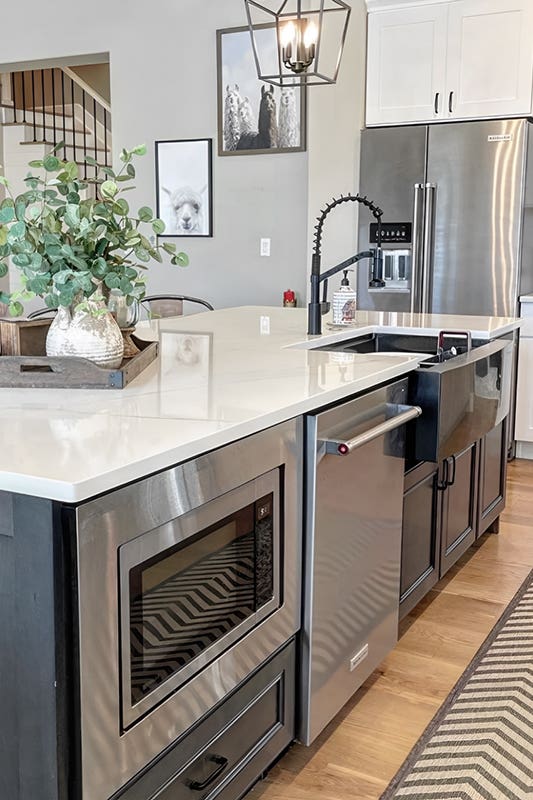
Built-in microwave cabinets are designed to hold a microwave that's integrated into your kitchen's cabinetry, using a cutout sized to the microwave's trim kit. These cabinets are typically planned into the overall layout of your kitchen — above the countertop, in an island, or in a wall — so the microwave sits flush with the surrounding doors and drawers instead of sticking out.
Built-in microwaves also need more room behind the cabinet face than most people expect: a standard upper cabinet is about 12 inches deep, but most built-in microwaves need roughly 15 to 16 inches of depth. That's why built-ins usually go into base cabinets, islands, or a wall cabinet built specifically deeper than the rest of the run, rather than a standard 12-inch upper.
Planning a wall oven as well? Here is how to choose an oven cabinet that fits your oven.
Pros of Built-In Microwave Cabinets:
- Sleek and Modern Appearance: Since the microwave is integrated into the cabinetry, it creates a streamlined, cohesive look in your kitchen.
- Space-Saving: Tucking the microwave into cabinetry frees up valuable countertop space.
- Customization Options: You choose exactly where the microwave sits — wall cabinet, island, or tall cabinet — for the most accessible, functional spot in your layout.
Cons of Built-In Microwave Cabinets:
- Higher Cost: Built-in microwaves and the cabinetry to house them cost more than freestanding options — see the real numbers below.
- Installation: A built-in microwave typically needs a dedicated electrical circuit and is best installed by a professional, adding to the overall cost.
What Are Freestanding Microwave Cabinets?
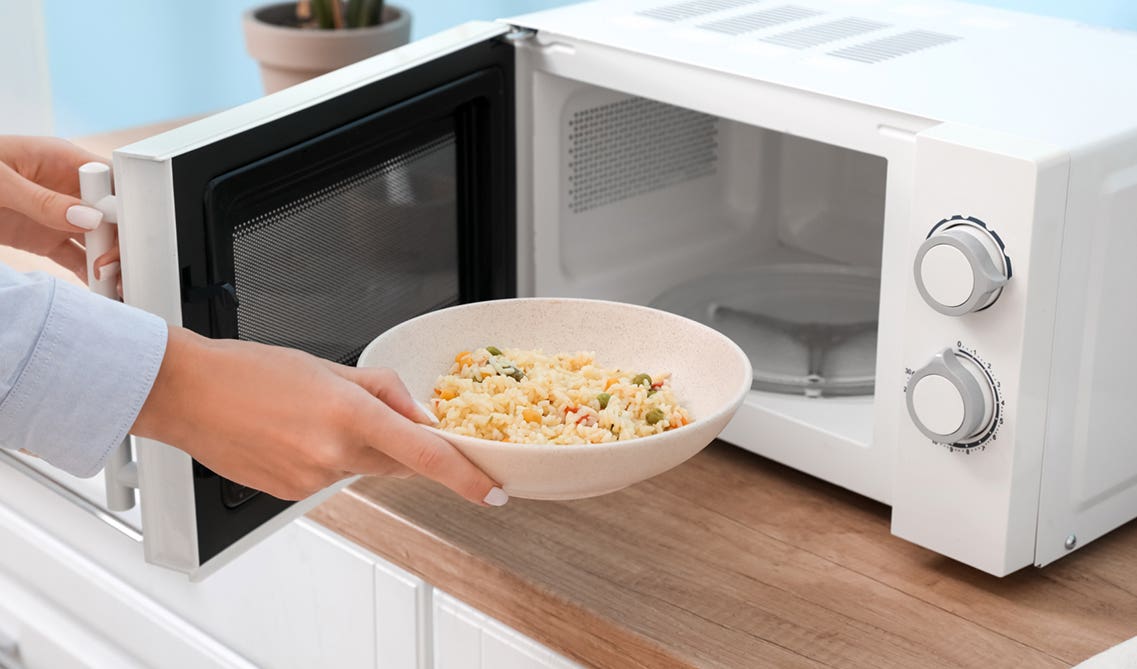
Freestanding microwave cabinets are stand-alone cabinets that hold a regular countertop microwave on a designated shelf or in a cubby, with no cutout or trim kit involved. Because they're not built around one specific microwave's dimensions, they aren't permanently tied to that appliance and can be moved around the kitchen — or hold a different microwave later — if needed.
Pros of Freestanding Microwave Cabinets:
- Affordability: Both the cabinet and the microwave itself tend to be more budget-friendly than a built-in setup.
- Flexibility: Since nothing is permanently cut or installed, you can swap the microwave or move the cabinet without redoing cabinetry.
- Easy Installation: No professional installation is required — a good fit for DIYers.
Cons of Freestanding Microwave Cabinets:
- Bulkier Appearance: A freestanding microwave cabinet is less integrated into the kitchen design, which can look less streamlined.
- Limited Placement: You may have fewer good spots for it, especially in a kitchen tight on counter or floor space.
What Size Cabinet Fits a Built-In Microwave?
Built-in microwave trim kits come in three standard widths — 24, 27, and 30 inches — sized to match wall-oven and standard cabinet openings. On Lily Ann Cabinets' own 30-inch microwave base cabinet, the actual cabinet opening is 27 inches wide by 17 to 20 inches tall; its 30-inch-wide wall microwave shelf cabinet opens to 27 inches wide as well. Both are sized for the most common 27-inch trim kit (verified against Lily Ann's live catalog, September 2026). Always check your specific microwave's installation manual for its exact cutout size before ordering a cabinet.
Yes — a 30-inch-wide cabinet is one of the three standard built-in microwave sizes, and it's the one most built-in trim kits are designed around. A 30-inch nominal cabinet having a smaller, 27-inch opening is normal, not a mismatch: the trim kit is what covers the gap between the microwave's body and the cabinet opening, so it looks flush once installed.
General buying-guide data from major appliance brands puts nominal built-in widths at 24, 27, or 30 inches, with wall/upper openings typically 15 to 24 inches tall and base-cabinet height around 34-1/2 inches — consistent with the two Lily Ann cabinets below, which are 34-1/2 inches tall.
Built-In vs. Freestanding: The Real Cost and Depth Differences
A trim-kit built-in microwave commonly starts around $489 before the trim kit itself, based on national buying-guide pricing from major appliance retailers (current as of September 2026); a built-in microwave drawer — the style that skips a wall cutout entirely by installing under a counter or in an island — typically runs $800 to $1,400 or more. Lily Ann's own Forno Capoliveri 30-inch microwave drawer is $1,299.00 as of September 2026, which falls right in that range. A standard countertop microwave for a freestanding cabinet is usually well under $150. Add the cost of a dedicated 15-amp, 120-volt electrical outlet and professional installation for a built-in, and the price gap widens further — a freestanding microwave just plugs into any standard outlet.
| Feature | Built-In | Freestanding |
|---|---|---|
| Cabinet opening | Custom-cut, 24/27/30-inch wide to match a trim kit | Any open shelf or cubby, no cutout needed |
| Typical cost | ~$489+ for a trim-kit unit, $800–$1,400+ for a drawer, plus install | Under $150 for the microwave itself |
| Cabinet depth needed | About 15–16 inches | 12 inches (standard upper) or more |
| Electrical | Dedicated 15-amp, 120-volt outlet recommended | Any standard kitchen outlet |
| Installation | Professional install recommended | DIY-friendly, no cutting |
| Flexibility | Permanent, matches the surrounding cabinetry | Movable; swap microwaves anytime |
Built-In vs. Freestanding Microwave Cabinets: Which Is Right for You?
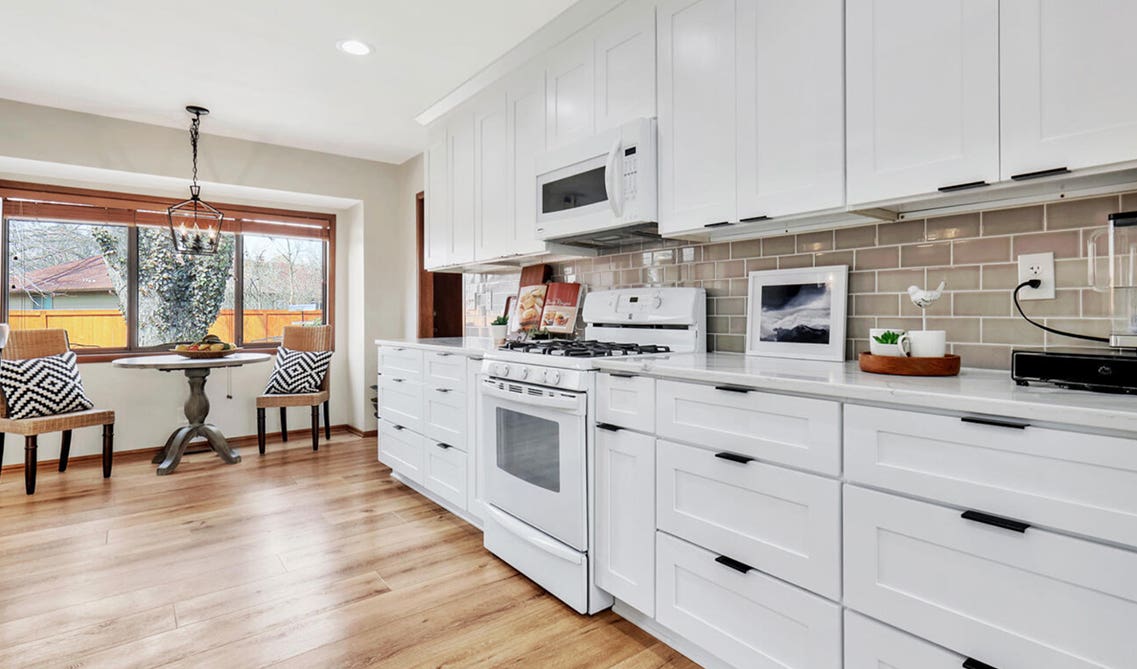
When choosing between built-in and freestanding microwave cabinets, it comes down to your budget, kitchen layout, and how permanent you want the setup to be. If you want a sleek, space-saving look and don't mind paying more for a custom-fit solution and installation, a built-in microwave cabinet is the better choice. If you'd rather keep costs down, install it yourself, and stay flexible to move or swap the microwave later, a freestanding microwave cabinet makes more sense.
Learn More: Everything You Need To Know About Buying New Kitchen Cabinets
Lily Ann Cabinets' Built-In and Freestanding Microwave Options
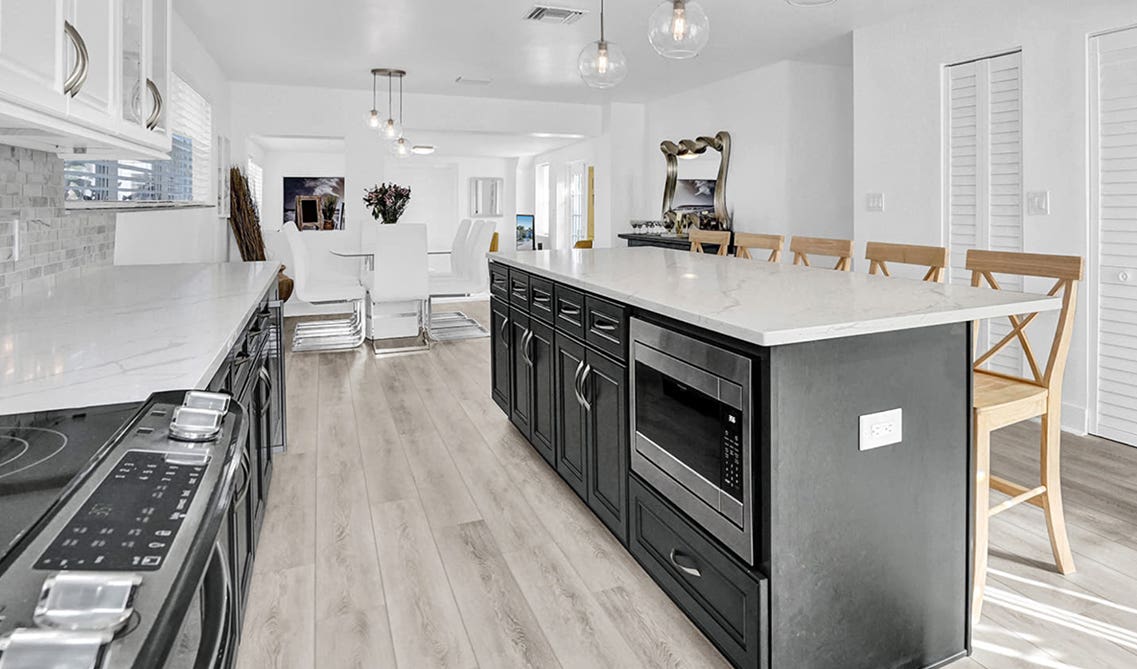
If you decide a built-in microwave cabinet is right for your kitchen, Lily Ann Cabinets carries microwave base cabinets in multiple widths, all customizable to match the rest of your cabinetry. As of September 2026, current listings include a 24-inch microwave base cabinet ($312.85) and a 30-inch microwave base cabinet with a 27-inch by 17-to-20-inch opening ($414.06), plus a 30-inch-wide wall microwave shelf cabinet for an eye-level built-in look.
Prefer a built-in look without cutting a wall cabinet opening at all? Lily Ann also carries the Forno Capoliveri 30-inch microwave drawer ($1,299.00), which installs flush under a counter or in an island. Prefer freestanding instead? Search our full microwave cabinet selection for cabinets sized to hold any countertop microwave on an open shelf.
Either way, Lily Ann Cabinets backs every order with design help, easy-to-follow installation instructions, and live customer support.
The Takeaway
Whether you go with the sleek, integrated look of a built-in microwave cabinet or the flexibility and lower cost of a freestanding one, the right choice depends on your budget, your kitchen's layout, and how permanent you want the setup to be. Once you've settled on built-in vs. freestanding, our microwave cabinet ideas guide and 6 microwave cabinet ideas for an organized kitchen cover exactly where to put it. For more on planning the rest of your kitchen around your appliances, see Lily Ann Design Tips: Creating the Perfect Kitchen for Family Gatherings.
We'd love to help with your kitchen. Contact Lily Ann Cabinets today for a free design quote.











Comments