


Plywood is the best material for the cabinet box, with solid wood for stained doors and drawer boxes and MDF for painted doors. Particleboard is cheaper, but the particleboard industry's own trade group says it does not recover once water swells it. Material is only half of durability: KCMA's certification test also cycles doors and drawers 25,000 times and loads wall cabinets with 600 pounds.
- Best box material: plywood. Its layers run in alternating directions, which holds it steady as moisture changes.
- Best door material: solid wood under stain; MDF (or a wood frame with an MDF panel) under paint.
- Particleboard and MDF swell for good. Their own trade group says the swelling is not reversible, so keep them away from water.
- Hinges and glides fail first. KCMA cycles them 25,000 times in its certification test for that reason.
- Heat and water do the damage: self-cleaning ovens and wet towels on the sink door are the two habits to watch.
- Five questions beat any material label: box, hardware, drawer joints, interior finish, KCMA certification.
- Lily Ann's spec: 1/2" birch plywood box, 5/8" dovetailed solid wood drawers, soft-close adjustable hinges, full-extension glides and a UV-coated veneer interior, listed on the in-stock collection pages we checked (Oct 16, 2026).
The best material for kitchen cabinets is plywood for the box, with solid wood for stained doors and MDF for painted doors. Particleboard is the budget choice, but once water swells it, it does not shrink back. After the material, durability comes down to hinges, drawers, finish and installation.
Most guides stop at a list of materials. This one goes a step further and asks where each material actually fails, and what the kitchen cabinet industry's own durability test checks. Every durability claim below comes from a named source: the Kitchen Cabinet Manufacturers Association (KCMA), the Composite Panel Association (CPA, the particleboard and MDF industry's own trade group), The Wood Database, or Lily Ann's own spec and care pages.
The Best Material for Each Part of a Cabinet
No single material is best everywhere. Plywood is the best box material because its cross-layered veneers hold it steady as moisture changes. Solid wood is best for frames, stained doors and drawer boxes. MDF is best for painted door panels. Particleboard and MDF both swell for good once soaked, so neither belongs where water sits.
| Material | Best used for | Where it fails | What protects it |
|---|---|---|---|
| Plywood | The box: sides, bottom, back | Standing water. It is still wood, so a soaked sink-base bottom can be damaged | A finished interior; wiping spills around the sink and dishwasher |
| Solid hardwood | Face frames, door frames, stained doors, drawer boxes | Humidity swings. Wood swells and shrinks by different amounts across and along the grain, so a wide flat panel can move, cup or split | Narrow parts, and an engineered center panel in wide doors |
| MDF | Painted door panels and slab doors | Water at an edge or seam. Once MDF swells, the swelling is not reversible | A sealed, watertight edge; no wet towels hung on doors |
| Particleboard | Budget boxes and dry shelves | The same one-way swelling as MDF, and more swelling than solid wood | Keep it away from the sink base; seal both faces |
| Thermofoil (vinyl over MDF) | Low-cost smooth doors | Heat and seams. Self-cleaning oven heat can discolor it, and water past a seam swells the core and bubbles the finish | Heat shields, or open nearby doors during a self-clean cycle |
| Laminate or melamine over particleboard or MDF | Slab doors, cabinet interiors | The edge banding seam lets water in; a sheet on one face only can warp the panel | Laminate on both faces; watertight edges |
Sources: CPA, "Dimensional Stability of Particleboard and MDF" (2023) for one-way swelling, cross-layering and one-sided laminate; KCMA on the A161.1 certification tests for seamed doors; The Wood Database for solid wood movement; Medallion Cabinetry's published care guide for thermofoil and oven heat; Lily Ann's cabinet care guide for spills and wet towels.
We cover each material on its own page rather than repeat it here: see why plywood cabinet boxes hold up, MDF vs solid wood for doors, particle board vs plywood cabinets, and thermofoil cabinets.
Material Is Only Half of Durability
The cabinet industry's own durability test spends most of its effort on hardware, joints and finish, not on the box material. To earn KCMA's A161.1 certification seal, cabinets go through 14 tests: wall cabinets carry a 600-pound load, doors and drawers are opened and closed 25,000 times under load, and finishes sit under household liquids for 24 hours.
That changes what you should check. Material decides how a cabinet survives an event, like a leak. Hardware, joinery, finish and installation decide how it survives use. KCMA also says 40% to 50% of manufacturers fail on their first attempt to qualify, so these are not easy tests to pass.
The sections below follow the parts KCMA tests, in the order you will notice them in a real kitchen.
1. Hinges and Drawer Glides
Hinges and glides are the only cabinet parts that move, and they move every day. KCMA cycles doors and drawers 25,000 times under load because, in its words, glides and hinges are components that frequently fail in uncertified products after just one year of use.
What to look for on a spec sheet:
- Soft-close. The door or drawer slows down before it shuts instead of slamming.
- Adjustable concealed hinges. These let a door be brought back into line after the house settles. Without adjustment, a door that drifts stays crooked.
- Full-extension undermount glides. The glides sit under the drawer, and full extension means the back of the drawer comes all the way out.
You can't judge any of this from a photo, so ask for it in writing. Lily Ann lists soft-close adjustable hinges and full-extension, soft-close under-mount drawer glides on the collection pages we checked (Oct 16, 2026). More on why in the importance of soft-close hinges and drawer slides.
2. Drawer Boxes and Joints
A drawer box carries weight and gets yanked every day, so how its corners are joined matters as much as what it is made of. A dovetail joint interlocks the corner pieces; a stapled or butt-jointed box relies on the fasteners alone. KCMA's drawer test runs 25,000 loaded cycles.
Two things to check:
- Joint type and material. "5/8" dovetailed solid wood" is a specification. "Wood drawer" is not.
- How the drawer front attaches. Ask whether it is screwed on from inside the box.
Lily Ann publishes 5/8" dovetailed solid wood drawer construction on the collection pages we checked, which is a fair standard to hold any quote to.
3. The Sink Base, Where Water Decides
The sink base is where box material earns its keep. A slow leak or wet towels keep water on the cabinet, and the Composite Panel Association says particleboard and MDF that swell from water or high humidity do not fully recover when they dry. That is why plywood and a finished interior matter most here.
What protects it:
- A plywood box. Plywood alternates the grain direction of each veneer layer, which the CPA describes as the key way to control swelling and shrinking. Our guide to judging a plywood cabinet box covers the specs that matter.
- A finished interior. Sealed, not raw. Lily Ann's in-stock collection pages we checked list a "Natural Wood Veneer, UV Coated" interior.
- Good habits. Lily Ann's care guide says to wipe up spills around the sink and dishwasher as they happen, and not to drape damp dish towels over the sink base door, because over time that moisture can permanently damage it.
- A look under the sink now and then. It takes seconds and catches a drip before it reaches the cabinet bottom.
4. The Finish, Where Wear Shows
Long before anything breaks, a kitchen starts to look worn at the finish: around handles, on door edges and near heat. KCMA tests finishes by leaving vinegar, grape juice, coffee and alcohol on them for 24 hours, and by putting cabinets in a high-humidity "hotbox" to check for blistering or discoloring.
Heat is the finish's other enemy. Lily Ann's care guide warns that cabinets next to a self-cleaning oven can suffer finish damage during a cleaning cycle, and recommends removing the doors and drawers next to or above the oven while it runs. It also says Lily Ann applies UV inhibitors to all its wood cabinetry, so the finish itself will not change in sunlight, though the wood under it may.
Cleaning matters as much as use. The same guide says to use a damp cloth, a mild detergent with warm water for stubborn marks, and to dry right away. Never use abrasive cleaners, scouring pads or powdered cleansers. Full routine in how to clean wood cabinets.

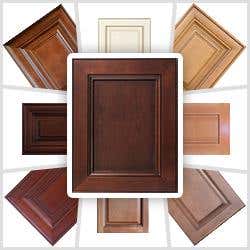
Lily Ann Cabinets: Craftsman Mocha Shaker
5. Installation, the Defect You Cannot Fix Later
A cabinet installed out of level or out of square is twisted, and a twisted box never hangs its doors right, however good its hinges are. KCMA even builds this into its test: the base front joint loading test simulates the forces on cabinets screwed together against a bowed wall during installation.
Three installation points that decide long-term durability:
- Level and shim at the floor, front to back and side to side, before fixing anything. Do not force a box square with screws.
- Fix into studs through the back rail.
- Join neighboring cabinets to each other as well as to the wall, so the run behaves as one piece.
If you are fitting them yourself, installing RTA cabinets walks through the sequence, and 10 kitchen cabinet mistakes to avoid covers the ones that cause lasting damage.
What Does Not Predict Durability
Three shortcuts people use that do not hold up:
- Price alone. KCMA certifies cabinets at every price point, from stock builder-grade lines using particleboard to custom shops using premium plywood. A certified budget cabinet has passed the same tests as a certified premium one.
- "All wood" or "solid wood" as a phrase. Most quality cabinets use more than one material, each where it works best. A description can say "solid wood" while the spec block lists an engineered door panel, so read the spec block.
- How it looks in a photo. Hinges, glides, drawer joints and interior finish are the parts KCMA tests hardest, and none of them show in a picture.
For material-by-material depth, our ultimate guide to cabinet materials covers each in turn.
The Five-Question Test
If you take one thing from this page, take these five questions. They match the parts that actually fail, and a seller who answers all five straight away is telling you something.
- What is the box, and how thick? Looking for: plywood, 1/2" or 3/4", with a named species.
- What are the hinges and glides? Looking for: soft-close, adjustable concealed hinges, full-extension undermount glides.
- How are the drawer boxes made? Looking for: solid wood, dovetailed, with a stated thickness.
- Is the interior finished? Looking for: yes, and how: veneer, UV coated, or matching the door.
- Is the line KCMA certified? If yes, it has passed the 14 tests above. If not, the first four answers matter even more.
Lily Ann publishes the first four on its collection pages; you can read them on Colorado White Shaker, Craftsman Natural Shaker or any other line, and hold every other quote to the same questions.
Browse the range at RTA kitchen cabinets, or order a full-size sample and check the drawer joint and the interior finish with your own hands.
Frequently Asked Questions
Plywood is the best material for the cabinet box, solid wood is best for stained doors, frames and drawer boxes, and MDF is best for painted door panels. Particleboard costs less, but the particleboard industry's own trade group says it does not recover once water or high humidity swells it, so it is a poor fit near the sink. Pair the right material with good hinges, dovetailed drawers and a finished interior.
For the box, plywood. Its veneer layers run in alternating directions, which the Composite Panel Association describes as the main way to limit swelling and shrinking, while swollen particleboard and MDF do not fully recover. For doors, frames and drawer boxes, solid hardwood. Durability also depends on parts no material choice fixes: KCMA's certification test cycles doors and drawers 25,000 times because hinges and glides are what often fail first.
The most durable cabinets combine a plywood box with a finished interior, solid wood frames and drawer boxes, dovetailed drawer joints, and soft-close adjustable hinges with full-extension glides, installed level. A KCMA certification seal is the easiest outside check: certified cabinets have passed 14 tests, including a 600-pound wall cabinet load and 25,000 door and drawer cycles.
It depends on the finish. Under paint, a solid wood frame with an engineered (MDF) center panel is the usual choice, because a wide solid panel moves with humidity and can crack the paint at the joints. Under stain, solid hardwood: among the common cabinet woods we checked, hickory (Janka 1,880) and hard maple (1,450) are the hardest to dent, per The Wood Database. Keep any MDF or thermofoil door's edges sealed and away from steam and oven heat.
Quality shows in the spec sheet, not the brand name: a plywood box with a stated thickness, dovetailed solid wood drawers, adjustable soft-close hinges, full-extension glides and a finished interior. The one independent check is KCMA's A161.1 certification, which tests structure, door and drawer operation and finish. KCMA says 40% to 50% of manufacturers fail on their first attempt.
The ones whose moving parts, wet places and installation were done right. In practice: adjustable soft-close hardware, dovetailed drawer boxes, a plywood box with a sealed interior, and a level, shimmed installation. KCMA's certification test exists to simulate a lifetime of use, and it spends most of its effort on exactly these parts.
We could not find an independent, sourced lifespan figure for kitchen cabinets, and the numbers quoted online contradict each other. What you can control is what shortens a cabinet's life: a slow leak under the sink nobody checked, a raw interior, downgraded hardware and a run installed out of square. KCMA-certified cabinets are tested to simulate a lifetime of use.
Usually the hardware: hinges and drawer glides, because they are the only parts that move. KCMA cycles doors and drawers 25,000 times under load in its certification test and says these parts frequently fail in uncertified cabinets after just one year of use. The sink base is the part that fails suddenly rather than slowly, and the cause is water.
Not for the box. Solid wood swells and shrinks by different amounts across and along the grain, which the Composite Panel Association says can cause practical problems in wide panels. Plywood alternates the grain direction of each layer to hold the panel steady. Solid wood is the right choice for narrow parts under load: face frames, door frames and drawer boxes.
Yes. A kitchen cabinet interior takes steam, cooking grease and the occasional spill, and a finished interior can be wiped clean. Under the sink, a raw particleboard or MDF bottom that gets wet can swell for good, which the Composite Panel Association says does not fully recover on drying. It is also invisible in a showroom, which is why it gets cut.
Often. Hinges and glides are replaceable parts. A drawer box that has come apart can be reglued or replaced while keeping the front. A worn finish can be refinished or the doors refaced. What is hard to recover is a swollen particleboard or MDF sink base, since that swelling does not reverse, and a run that was installed out of square.
Yes, a lot. Kitchen walls and floors are rarely true, so a cabinet fixed without shimming is twisted from day one: its doors won't sit flush and its drawers run unevenly. KCMA's certification includes a base front joint loading test that simulates the forces on cabinets screwed together against a bowed wall. Level and shim before fixing, screw into studs, and join neighboring cabinets to each other as well as to the wall.











Comments